Isla de los Estados Argentina Staten Island
6
Cruises availables
At departure or passage at this port
Lindblad Expeditions (6 Cruises)
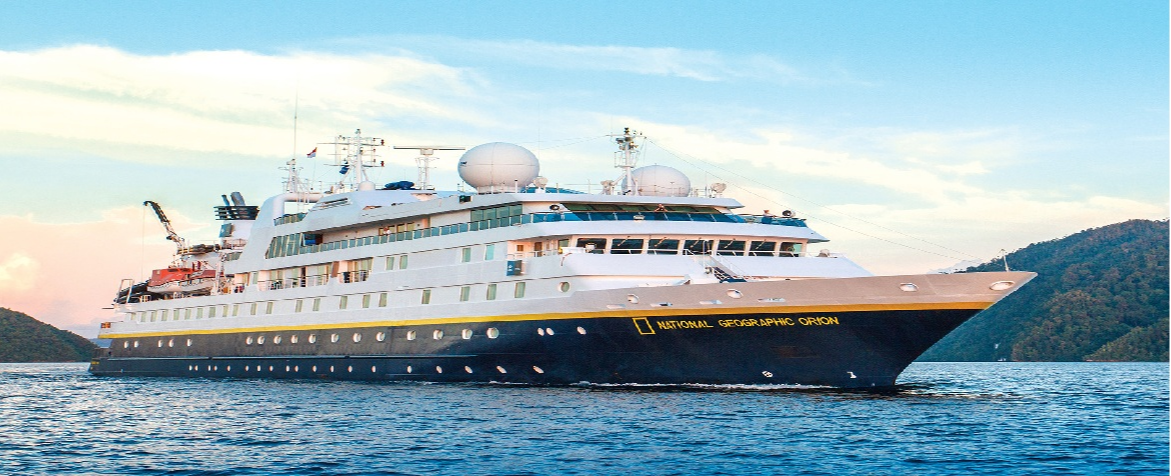
National Geographic Orion
6 Cruises

Isla de los Estados | Cruise Port Guide
Frequently Asked Questions
Twenty-nine kilometres east of Tierra del Fuego, in Argentina. It is a ridge of black mountains and fjords battered by wind, designated a reserve, whose only permanent occupants are a small navy detachment rotated several times a year.
It is the one that inspired him. The San Juan de Salvamento light, lit in 1884 on the island's northeast point, was Argentina's first lighthouse in southern waters. Jules Verne never set foot here.
No. It is a replica installed in 1998 by a French team devoted to Verne. The original was dismantled and is preserved in Ushuaia.
By crossing the Le Maire Strait, a stretch of water with violent tidal currents and short steep waves. Only small expedition ships venture here, and fewer than a thousand travellers set eyes on these coasts each year.
It is a nature reserve with controlled access : landings are limited and supervised by the expedition teams. Every outing depends entirely on conditions, and expedition leaders always keep a backup plan.
A deep bay holding the remains of old military installations and a 19th century penitentiary, later moved to Ushuaia. Zodiacs work their way in when the sea allows.
An anchorage nested like a Russian doll : a narrow entrance, then an inner basin ringed by forest, where only waterfalls break the silence. Some itineraries attempt to enter it.
Magellanic penguins waddling on the shores, sea lions sprawled among the rocks, cormorants diving in squadrons through the channels. Offshore, the blow of hunting orcas is not a rare sight.
Low, dense southern forest, twisted by the wind, clinging to the slopes. Nothing grows straight here : the wind decides the shape of the trees.
Sailors of old called these waters the graveyard of ships, and old charts carried warnings here rather than routes. In the 19th century the mariner Luis Piedrabuena kept a rescue base nearby for castaways.


