Providencia Island Colombia
Providencia Island, Colombia | Cruise Port Guide
Frequently Asked Questions
By tender. No pier can take cruise ships: they anchor off the reef and tenders land passengers at Santa Isabel, the main town. That lack of infrastructure explains everything else about the call.
Far from everything, halfway between mainland Colombia and the coast of Central America. This Colombian volcanic island is protected within the Seaflower Biosphere Reserve recognised by UNESCO.
A town on a human scale: brightly painted wooden houses rarely more than two storeys, fishermen selling the morning catch, schoolchildren in uniform, scooters hooting by way of greeting. A few grocers, a church, a police post, and you have seen it.
Spanish and a lilting English creole. The raizal population, descended from Africans and British settlers, keeps alive this legacy of a history in which English puritans, privateers and planters followed one another.
A brightly coloured floating footbridge that crosses an arm of the sea at the end of town, linking Providencia to the small island of Santa Catalina. On the far side, a coastal path leads towards Morgan's Head, a rock whose profile suggests a human face rising from the water.
Because the privateer made these waters a base in the seventeenth century. Islanders still enjoy saying his treasure lies somewhere under the hills. True or not, the legend adds a buccaneering flavour to the walk over to Santa Catalina.
At Cayo Cangrejo, an islet ringed by clear water where boat excursions stop, within Old Providence McBean Lagoon national park. You swim among parrotfish, sea fans and, with luck, a passing turtle.
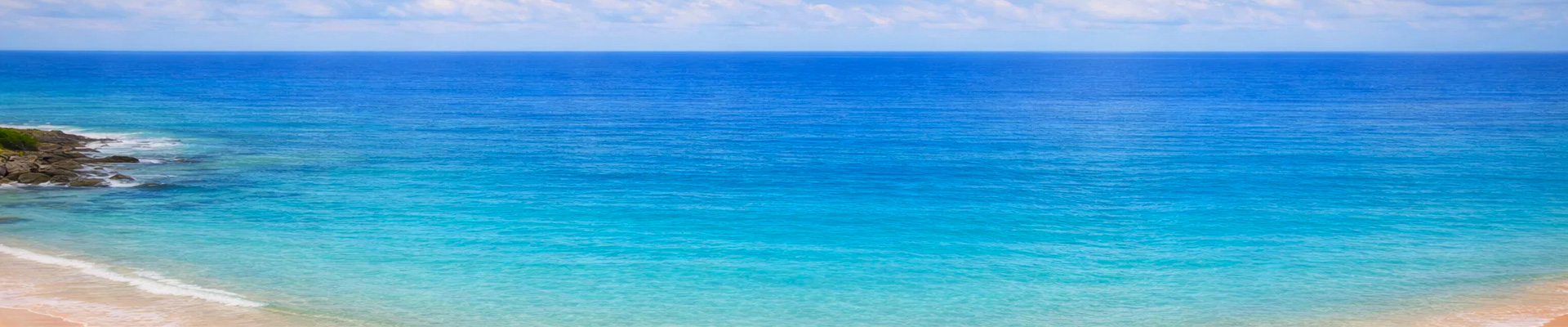
It stretches some thirty kilometres, making it one of the largest barrier reefs in the Caribbean Sea. The seabed shifts from turquoise to deep blue within a few metres, and even from the surface the sight fills a morning.
On the single road that circles the island in under twenty kilometres. Mototaxis and golf carts double as guides, commentary and photo stops included in the fare. To the southwest, Bahía Suroeste offers leaning coconut palms and golden sand; Manzanillo stays wilder.
December to April, the driest and calmest season. The Caribbean hurricane season runs from June to November, and on an island where everything depends on tenders, weather can alter or cancel the landing.


