
Star Clippers
- A-Rosa Cruises
- AmaWaterways
- AmaBella
- AmaCello
- AmaCerto
- AmaDahlia
- AmaDante
- AmaDara
- AmaDolce
- AmaDouro
- AmaKristina
- AmaLea
- AmaLilia
- AmaLucia
- AmaLyra
- AmaMagdalena
- AmaMagna
- AmaMaya
- AmaMelodia
- AmaMora
- AmaPrima
- AmaReina
- AmaSerena
- AmaSiena
- AmaSintra
- AmaSonata
- AmaStella
- AmaVenita
- AmaVerde
- AmaVida
- AmaViola
- Zambezi Queen
- American Cruise Lines
- American Constellation
- American Constitution
- American Eagle
- American Glory
- American Harmony
- American Heritage
- American Legend
- American Liberty
- American Melody
- American Patriot
- American Pioneer
- American Pride
- American Serenade
- American Song
- American Spirit
- American Splendor
- American Symphony
- American West
- Aqua Expeditions
- Aqua Blu
- Aqua Lares
- Aqua Mare
- Aqua Mekong
- Aqua Nera
- Aria Amazone
- Atlas Ocean Voyages
- Atlas Adventurer™
- World Navigator
- World Traveller
- World Voyager
- Aurora Expeditions
- Douglas Mawson
- Greg Mortimer
- Sylvia Earle
- Avalon Waterways
- Avalon Affinity®
- Avalon AlegriaSM
- Avalon Artistry II®
- Avalon Creativity®
- Avalon Envision
- Avalon Expression®
- Avalon Felicity®
- Avalon Illumination®
- Avalon Imagery II®
- Avalon ImpressionSM
- Avalon Luminary®
- Avalon MyanmarSM
- Avalon PanoramaSM
- Avalon Passion®
- Avalon Poetry II®
- Avalon SaigonSM
- Avalon Siem ReapSM
- Avalon Tapestry II®
- Avalon Tranquility II®
- Avalon View
- Avalon Visionary®
- Avalon VistaSM
- Century Legend
- Delfin III
- MS Farah
- MS Infinity
- MS Sonesta St.George
- Treasure of Galapagos
- Azamara Club Cruises
- Azamara Journey
- Azamara Onward
- Azamara Pursuit
- Azamara Quest
- Carnival Cruise Line
- Carnival Adventure
- Carnival Breeze
- Carnival Celebration
- Carnival Conquest
- Carnival Dream
- Carnival Ecstasy
- Carnival Elation
- Carnival Encounter
- Carnival Fantasy
- Carnival Fascination
- Carnival Festivale
- Carnival Firenze
- Carnival Freedom
- Carnival Glory
- Carnival Horizon
- Carnival Imagination
- Carnival Inspiration
- Carnival Jubilee
- Carnival Legend
- Carnival Liberty
- Carnival Luminosa
- Carnival Magic
- Carnival Miracle
- Carnival Panorama
- Carnival Paradise
- Carnival Pride
- Carnival Radiance
- Carnival Sensation
- Carnival Spirit
- Carnival Splendor
- Carnival Sunrise
- Carnival Sunshine
- Carnival Tropicale
- Carnival Valor
- Carnival Venezia
- Carnival Vista
- Mardi Gras
- Celebrity Cruises
- Celebrity Apex
- Celebrity Ascent
- Celebrity Beyond
- Celebrity Century
- Celebrity Constellation
- Celebrity Eclipse
- Celebrity Edge
- Celebrity Equinox
- Celebrity Flora
- Celebrity Infinity
- Celebrity Millennium
- Celebrity Reflection
- Celebrity Silhouette
- Celebrity Solstice
- Celebrity Summit
- Celebrity XCEL
- Celebrity Xpedition
- Celebrity Xperience
- Celebrity Xploration
- Celestyal Cruises
- Celestyal Discovery
- Celestyal Journey
- Costa Cruises
- Costa Atlantica
- Costa Classica
- Costa Deliziosa
- Costa Diadema
- Costa Fascinosa
- Costa Favolosa
- Costa Fortuna
- Costa Luminosa
- Costa Magica
- Costa Mediterranea
- Costa neoClassica
- Costa neoRiviera
- Costa Pacifica
- Costa Serena
- Costa Smeralda
- Costa Toscana
- Costa Victoria
- CroisiEurope
- Georgy Chicherin
- Lev Tolstoy
- MS Amalia Rodrigues
- MS Anne-Marie
- MS Beethoven
- MS Belle de Cadix
- MS Botticelli
- MS Camargue
- MS Cyrano de Bergerac
- MS Danièle
- MS Déborah
- MS Douce France
- MS Elbe Princesse
- MS Elbe Princesse II
- MS Fernao de Magalhaes
- MS France
- MS Galateia
- MS Gerard Schmitter
- MS Gil Eanes
- MS Infante Don Henrique
- MS Jeanine
- MS Kronstadt
- MS L'Europe
- MS La Boheme
- MS Lafayette
- MS Leonard de Vinci
- Ms Loire Princesse
- MS Madeleine
- MS Michelangelo
- MS Miguel Torga
- MS Mistral
- MS Modigliani
- MS Mona Lisa
- MS Monet
- MS Princesse d'Aquitaine
- Ms R.E Waydelich L.J
- MS Raymonde
- MS Renoir
- MS Rhone Princess
- MS Rostropovich
- MS Seine Princess
- MS Symphonie
- MS Van Gogh
- MS Vasco de Gama
- MS Victor Hugo
- MS Vivaldi
- MV La Belle de L'Adriatique
- Mv La Belle Des Oceans
- MV Zimbabwean Dream
- Paragon
- RV African Dream
- RV Brasilian Dream
- RV Ganges Voyager
- RV Indochine
- RV Indochine II
- RV Kalaw Pandaw
- RV Kindat Pandaw
- RV Lan Diep
- Rv Star Of Luxor
- Sb Dahabieh Abydos
- Toum Tiou I
- Toum Tiou II
- Zafiro
- Crystal Cruises
- Crystal Bach
- Crystal Debussy
- Crystal Esprit
- Crystal Grace
- Crystal Mahler
- Crystal Mozart
- Crystal Ravel
- Crystal Serenity
- Crystal Symphony
- Cunard
- Queen Anne
- Queen Elizabeth
- Queen Mary 2
- Queen Victoria
- Disney Cruise Line
- Disney Adventure
- Disney Believe
- Disney Destiny
- Disney Dream
- Disney Fantasy
- Disney Magic
- Disney Treasure
- Disney Wish
- Disney Wonder
- Emerald Waterways
- Emerald Astra
- Emerald Azzurra
- Emerald Dawn
- Emerald Destiny
- Emerald Harmony
- Emerald Kaia
- Emerald Liberte
- Emerald Lumi
- Emerald Luna
- Emerald Radiance
- Emerald Sakara
- Emerald Sky
- Emerald Star
- Emerald Sun
- Emerald Xara
- Explora Journeys
- Explora I
- Explora II
- Explora III
- Explora IV
- Explora V
- Explora VI
- HX Expeditions
- MS Fram
- MS Fridtjof Nansen
- MS Roald Amundsen
- MS Santa Cruz II
- MS Spitsbergen
- Holland America Line
- ms Amsterdam
- ms Eurodam
- ms Koningsdam
- ms Maasdam
- ms Nieuw Amsterdam
- ms Nieuw Statendam
- ms Noordam
- ms Oosterdam
- ms Prinsendam
- ms Rotterdam
- ms Veendam
- ms Volendam
- ms Westerdam
- ms Zaandam
- ms Zuiderdam
- Hurtigruten
- MS Finnmarken
- MS Kong Harald
- MS Lofoten
- MS Midnatsol
- MS Nordkapp
- MS Nordlys
- MS Nordnorge
- MS Nordstjernen
- MS Otto Sverdrup
- MS Polarlys
- MS Richard With
- MS Trollfjord
- MS Vesteralen
- Lindblad Expeditions
- Charaidew II
- Connect
- Delfin II
- Delfin III
- Evolve
- Lord of the Glens
- National Geographic Delfina
- National Geographic Endeavour II
- National Geographic Endurance
- National Geographic Explorer
- National Geographic Gemini
- National Geographic Islander II
- National Geographic Orion
- National Geographic Quest
- National Geographic Resolution
- National Geographic Sea Bird
- National Geographic Sea Lion
- National Geographic Venture
- Oberoi Philae
- Sea Cloud
- Sea Cloud II
- Sun Goddess
- The Jahan
- MSC Cruises
- MSC Armonia
- MSC Bellissima
- MSC Divina
- MSC Euribia
- MSC Fantasia
- MSC Grandiosa
- MSC Lirica
- MSC Magnifica
- MSC Meraviglia
- MSC Musica
- MSC Opera
- MSC Orchestra
- MSC Poesia
- MSC Preziosa
- MSC Seascape
- MSC Seashore
- MSC Seaside
- MSC Seaview
- MSC Sinfonia
- MSC Splendida
- MSC Virtuosa
- MSC World America
- MSC World Asia
- MSC World Atlantic
- MSC World Europa
- Margaritaville at Sea
- Beachcomber
- Islander
- Paradise
- Norwegian Cruise Line
- Norwegian Aqua
- Norwegian Aura
- Norwegian Bliss
- Norwegian Breakaway
- Norwegian Dawn
- Norwegian Encore
- Norwegian Epic
- Norwegian Escape
- Norwegian Gem
- Norwegian Getaway
- Norwegian Jade
- Norwegian Jewel
- Norwegian Joy
- Norwegian Luna
- Norwegian Pearl
- Norwegian Prima
- Norwegian Sky
- Norwegian Spirit
- Norwegian Star
- Norwegian Sun
- Norwegian Viva
- Pride of America
- Oceania Cruises
- Oceania Allura
- Oceania Aurelia
- Oceania Insignia
- Oceania Marina
- Oceania Nautica
- Oceania Regatta
- Oceania Riviera
- Oceania Sirena
- Oceania Sonata
- Oceania Vista
- Paul Gauguin Cruises
- M/S Paul Gauguin
- Ponant
- L'Austral
- Le Bellot
- Le Boreal
- Le Bougainville
- Le Champlain
- Le Commandant Charcot
- Le Dumont d'Urville
- Le Jacques Cartier
- Le Laperouse
- Le Lyrial
- Le Ponant
- Le Soleal
- Spirit of Ponant
- Princess Cruises
- Caribbean Princess
- Coral Princess
- Crown Princess
- Dawn Princess
- Diamond Princess
- Discovery Princess
- Emerald Princess
- Enchanted Princess
- Golden Princess
- Grand Princess
- Island Princess
- Majestic Princess
- Ocean Princess
- Pacific Princess
- Regal Princess
- Royal Princess
- Ruby Princess
- Sapphire Princess
- Sea Princess
- Sky Princess
- Star Princess
- Sun Princess
- Regent Seven Seas Cruises
- Seven Seas Explorer
- Seven Seas Grandeur
- Seven Seas Mariner
- Seven Seas Navigator
- Seven Seas Prestige
- Seven Seas Splendor
- Seven Seas Voyager
- Riviera Travel
- MS Adriatic Sky
- MS Adriatic Sun
- MS Douro Elegance
- MS Douro Splendour
- MS Emily Bronte
- MS Equator
- MS Geoffrey Chaucer
- MS George Eliot
- MS il Mare
- MS Jane Austen
- MS Lord Byron
- MS Mendula
- MS Oscar Wilde
- MS Riviera Radiance
- MS Riviera Reflection
- MS Riviera Resplendence
- MS Riviera Rose
- MS Thomas Hardy
- MS William Wordsworth
- MV Felicita
- Royal Caribbean Cruises
- Adventure of the Seas
- Allure of the Seas
- Anthem of the Seas
- Brilliance of the Seas
- Empress of the Seas
- Enchantment of the Seas
- Explorer of the Seas
- Freedom of the Seas
- Grandeur of the Seas
- Harmony of the Seas
- Icon of the Seas
- Independence of the Seas
- Jewel of the Seas
- Legend of the Seas
- Liberty of the Seas
- Majesty of the Seas
- Mariner of the Seas
- Navigator of the Seas
- Oasis of the Seas
- Odyssey of the Seas
- Ovation of the Seas
- Quantum of the Seas
- Radiance of the Seas
- Rhapsody of the Seas
- Serenade of the Seas
- Sovereign of the Seas
- Spectrum of the Seas
- Splendour of the Seas
- Star of the Seas
- Symphony of the Seas
- Utopia of the Seas
- Vision of the Seas
- Voyager of the Seas
- Wonder of the Seas
- Scenic Cruises
- Scenic Amber
- Scenic Aura
- Scenic Azure
- Scenic Crystal
- Scenic Diamond
- Scenic Eclipse
- Scenic Eclipse II
- Scenic Gem
- Scenic Ikon
- Scenic Jade
- Scenic Jasper
- Scenic Jewel
- Scenic Opal
- Scenic Pearl
- Scenic Ruby
- Scenic Sapphire
- Scenic Spirit
- Scenic Tsar
- SeaDream Yacht Club
- Seadream I
- Seadream II
- Seabourn Cruise Line
- Seabourn Encore
- Seabourn Odyssey
- Seabourn Ovation
- Seabourn Pursuit
- Seabourn Quest
- Seabourn Sojourn
- Seabourn Venture
- Silversea Cruises
- Silver Cloud
- Silver Cloud Expedition
- Silver Dawn
- Silver Discoverer
- Silver Endeavour
- Silver Explorer
- Silver Galapagos
- Silver Moon
- Silver Muse
- Silver Origin
- Silver Ray
- Silver Shadow
- Silver Spirit
- Silver Whisper
- Silver Wind
- Star Clippers
- Royal Clipper
- Star Clipper
- Star Flyer
- Swan Hellenic
- SH Diana
- SH Minerva
- SH Vega
- Tauck Cruises
- Isabela II
- Lupus Mare
- Lupus Mare
- ms Andorinha
- ms Emerald
- MS esprit
- ms Grace
- MS Inspire
- ms Joy
- MS lumière
- MS Reverie
- ms Sapphire
- MS Saudade
- ms Savor
- MS Serene
- ms Treasures
- Santa Cruz II
- Uniworld Boutique River Cruise
- Aria Amazon
- Century Paragon
- Ganges Voyager II
- Mekong Jewel
- Mekong Mystique
- Mekong Navigator
- Queen Isabel
- River Ambassador
- River Baroness
- River Beatrice
- River Duchess
- River Empress
- River Orchid
- River Princess
- River Queen
- River Royale
- River Tosca
- River Victoria
- S.S Audrey
- S.S Elisabeth
- S.S Marlene
- S.S São Raphael
- S.S. Antoinette
- S.S. Beatrice
- S.S. Bon Voyage
- S.S. Catherine
- S.S. Clara
- S.S. Émilie
- S.S. Helen
- S.S. Joie de Vivre
- S.S. La Venezia
- S.S. Maria Theresa
- S.S. São Gabriel
- S.S. Sphinx
- S.S. Victoria
- Uniworld Queen Isabel
- Uniworld SS Antoinette
- Viking Ocean Cruises
- Viking Jupiter
- Viking Mars
- Viking Neptune
- Viking Octantis
- Viking Orion
- Viking Polaris
- Viking Saturn
- Viking Sea
- Viking Sky
- Viking Star
- Viking Sun
- Viking Vela
- Viking Venus
- Viking River Cruises
- Viking Einar
- Viking Fjorgyn
- Viking Helgrim
- Viking Hervor
- Viking Kari
- Viking Longship Gefjon
- Viking Longships Aegir
- Viking Longships Akun
- Viking Longships Alruna
- Viking Longships Alsvin
- Viking Longships Astrid
- Viking Longships Atla
- Viking Longships Baldur
- Viking Longships Beyla
- Viking Longships Bragi
- Viking Longships Buri
- Viking Longships Delling
- Viking Longships Egil
- Viking Longships Eir
- Viking Longships Embla
- Viking Longships Emerald
- Viking Longships Fontane
- Viking Longships Forseti
- Viking Longships Freya
- Viking Longships Gullveig
- Viking Longships Heimdal
- Viking Longships Helgi
- Viking Longships Hemming
- Viking Longships Herja
- Viking Longships Hild
- Viking Longships Hlin
- Viking Longships Idi
- Viking Longships Idun
- Viking Longships Ingvar
- Viking Longships Ingvi
- Viking Longships Jarl
- Viking Longships Kadlin
- Viking Longships Kara
- Viking Longships Kvasir
- Viking Longships Legend
- Viking Longships Lif
- Viking Longships Lofn
- Viking Longships Magni
- Viking Longships Mandalay
- Viking Longships Mani
- Viking Longships Mekong
- Viking Longships Mimir
- Viking Longships Modi
- Viking Longships MS Omar Khayam
- Viking Longships Njord
- Viking Longships Odin
- Viking Longships Osfrid
- Viking Longships Prestige
- Viking Longships Rinda
- Viking Longships Rolf
- Viking Longships Schumann
- Viking Longships Skadi
- Viking Longships Skirnir
- Viking Longships Tialfi
- Viking Longships Tor
- Viking Longships Torgil
- Viking Longships Truvor
- Viking Longships Var
- Viking Longships Ve
- Viking Longships Vidar
- Viking Longships Vilhjalm
- Viking Longships Vili
- Viking Mississippi
- Viking Sigrun
- Viking Spirit
- Viking Tialfi
- Virgin Voyages
- Brilliant Lady
- Resilient Lady
- Scarlet Lady
- Valiant Lady
- Windstar Cruises
- Star Breeze
- Star Legend
- Star Pride
- Wind Spirit
- Wind Star
- Wind Surf
Star Clippers
323
Cruises availables
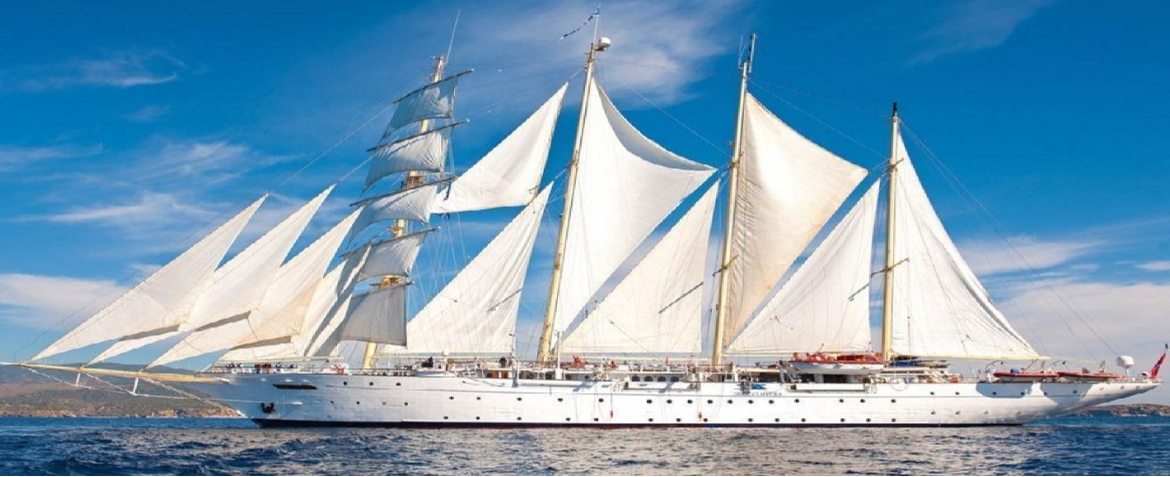
Star Clippers: real sailing ships, square-rigged
Three sailing ships make up the fleet, and they often leave on the same day: the choice turns less on the date than on the cruising region. The number of departures currently on sale is shown at the top of this page. Royal Clipper and Star Flyer and Star Clipper share the calendar. On a fleet of three the choice turns less on the date than on the basin, and the three calendars read better side by side than one ship at a time.
The three ships
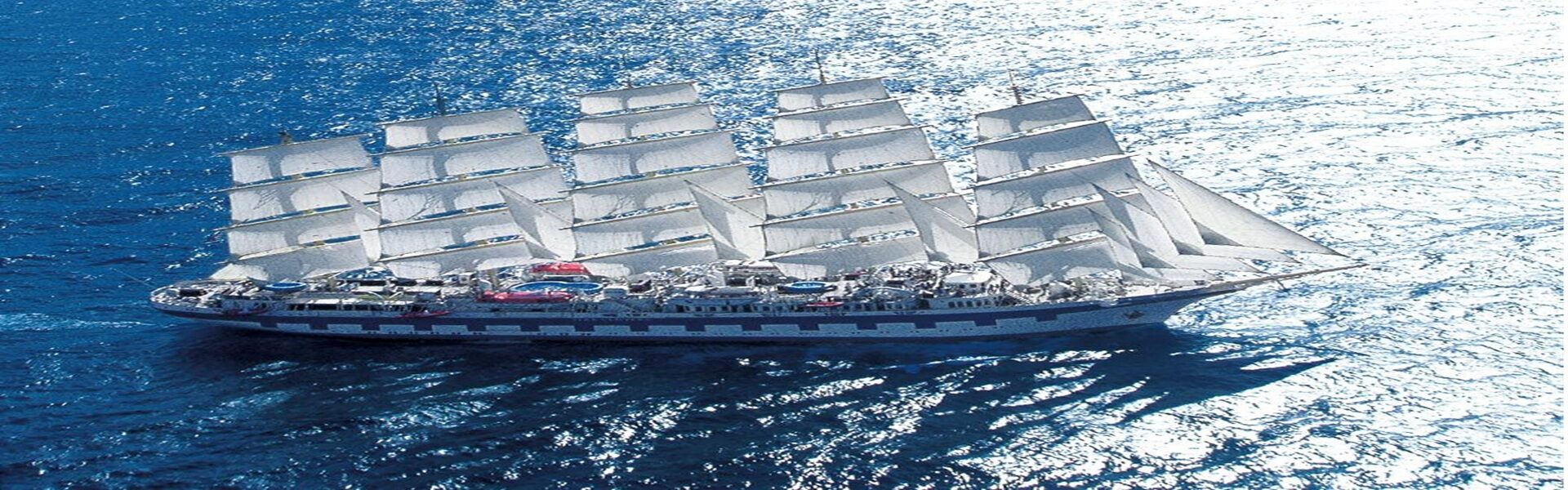
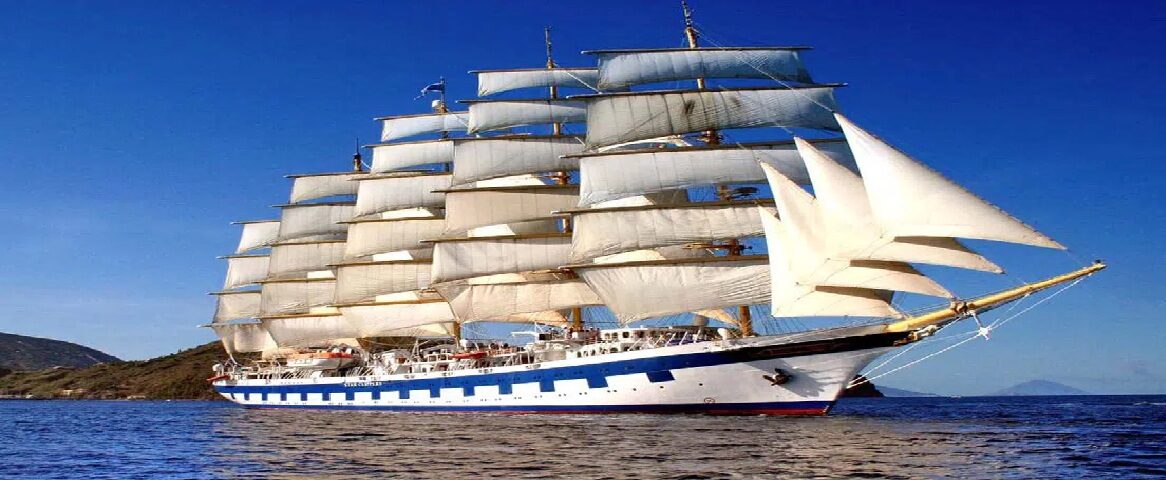
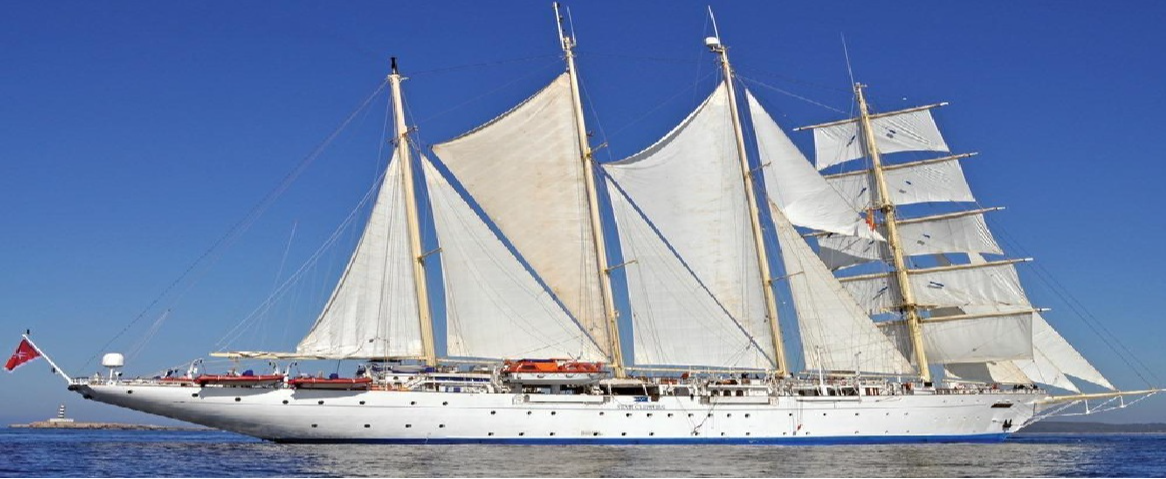
Star Flyer, from 1991, and Star Clipper, from 1992: two four-masted barquentines carrying about 166 passengers, built in Ghent. And Royal Clipper, from 2000: a five-masted full-rigged ship, about 227 passengers and 42 sails, built in the Netherlands. The line was founded in 1989 by Mikael Krafft, a Swedish shipowner, and remains family-controlled: his son Eric became executive chairman in July 2026, when a chief executive from the expedition trade took over.
Royal Clipper and the Preussen
She is inspired by her, she is not her replica, and the line does not claim otherwise. The Preussen was the German five-master of 1902, sunk in the English Channel in 1910; Royal Clipper is the first five-masted full-rigged ship built since. That is already a great deal, and it is more honest than the word "replica" you read elsewhere.
Do they really sail
The line writes that all three sail wherever possible and use engine power when the wind is short, so as to keep to schedule. It publishes no percentage. The figures in circulation come from a single editorial source, not from the line, and we will not invent one. What is established, on the other hand, is that guests may help the crew raise the sails without any obligation, and that a climb to the first crow's nest is offered when the weather allows. The exact conditions — harness, age, weight, waiver — are published nowhere: have them confirmed in writing before promising that climb to a teenager.
Who these ships are not right for
Anyone prone to seasickness: they have no stabilisers and heel under sail, which is the whole point of the product. And anyone who needs a wheelchair: no elevator, no accessible cabin, most calls at anchor by tender, sometimes with a wet landing. The contract of carriage does not write "not accessible"; it obliges the guest to declare their condition, allows the line to require an able companion and reserves its right to refuse boarding. It falls to your advisor to say this plainly before booking, and that is what we are doing here.
Two practical details
Shore excursions are booked on board only, not in advance: a guest used to arranging everything from home should know that. And if you want a larger sailing ship, with an elevator and accessible cabins, look instead at Windstar Cruises — knowing that half its fleet has no sails at all.


