Triton Bay West Papua Indonesia

18 Cruises availables At departure or passage at this port

Triton Bay, Indonesia | Cruise Port Guide

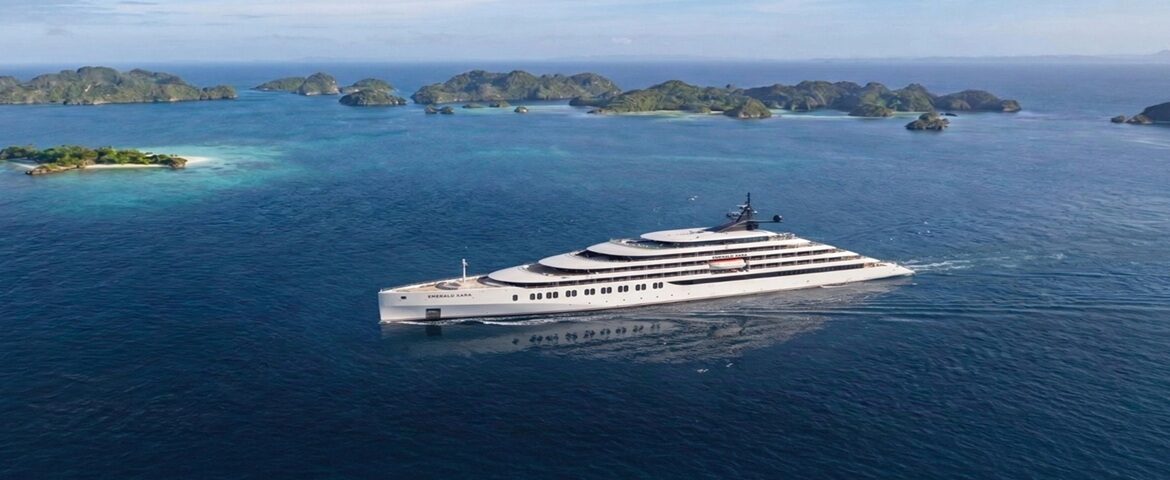
Beneath the bagans, the fishing platforms anchored off Kaimana, whale sharks sometimes come to suck at the anchovy nets the way you would siphon an aquarium. It is for encounters like these that expedition ships drop anchor in Triton Bay, in the south of Indonesian West Papua. Here, there is no pier, no welcoming committee, no shop: the call is experienced entirely from the water, by Zodiac, in fins and in silence, in a maze of limestone islets set on an emerald-green sea.

A maze of karst and jungle

In the morning, the inflatable boats weave between hundreds of pinnacles capped with dense forest, carved into mushroom shapes by the waves. The rock walls drip with orchids and ferns; hornbills cross the channels with loud wingbeats and flocks of white cockatoos dot the canopy. Some passages narrow so much that the guide cuts the engine to paddle forward, in a silence broken only by bird calls. The bay belongs to the Bird's Head Seascape, one of the richest marine areas on the planet, and this abundance can be felt right up to the surface: every islet seems to overflow with life. Some crews also lower kayaks and paddleboards to explore the inner lagoons, basins of calm water enclosed in the limestone.

Fins, snorkels and coral gardens

Here, the nourishing sea strikes a special deal with travellers: loaded with nutrients, it offers shorter visibility than elsewhere, but a stunning density of life. Snorkelling along the drop-offs, you glide over gardens of soft corals in candy colours, black coral bushes and clouds of fusiliers so dense they veil the light. Hawksbill turtles graze on sponges without a care for the swimmers. To the most attentive, guides sometimes point out a walking shark moving along on its fins as if on legs, a species found almost nowhere else but this region. As for the whale sharks, the teams scan the bagans at daybreak; when the fishermen report a visit, the Zodiacs approach quietly and swimmers slip into the water at a respectful distance from the largest fish in the world. The encounter is never guaranteed: that is the rule of expedition travel, and the price of the greatest memories.

Cliffs that speak

Between swims, the Zodiacs run along cliffs where hands, fish and suns painted in red ochre have watched boats go by for thousands of years. This rock art, still poorly dated, bears witness to a very ancient human presence on these shores, which are almost deserted today. A few fishing hamlets, including Lobo at the head of the bay, live facing these painted walls; depending on the itinerary, a visit allows you to exchange smiles and songs with residents who see a handful of ships go by each year. Restraint is in order: here you are the rare guest of a world that is self-sufficient.

Evening at anchor

When the sun sets behind the pinnacles, the waters turn violet and the lamps of the bagans light up one by one on the horizon, like a garland laid on the sea. On deck, the onboard naturalists go over the day's sightings as the first cries of the flying foxes rise. Then, without the slightest light pollution for dozens of kilometres around, the sky unfolds a starry vault of a kind rarely seen. Triton Bay is not told in monuments or distances: it is measured in fin kicks and held breaths. Those who return speak less of a place than of a privilege, that of having swum for a few hours in a world that has remained much as it was on the very first morning.

Frequently Asked Questions

You don't, in the usual sense. There is no pier, no welcome party and no shop. Expedition ships anchor in southern Indonesian West Papua and the whole call is lived from the ship, by zodiac, by fin and in silence.
A maze of limestone islets on an emerald-green sea. Hundreds of karst towers capped with dense forest, undercut into mushroom shapes by the waves, their walls dripping with orchids and ferns. Some passages narrow so far that the guide cuts the engine and paddles.
It is possible, with no guarantee at all. Beneath the bagan fishing platforms anchored off Kaimana, whale sharks sometimes come to suck anchovies from the nets. Teams scan the bagans at first light; when the fishermen report a visit, the zodiacs approach quietly.
Shorter than elsewhere, and that is the bargain this sea offers: rich in nutrients, it trades clarity for an astonishing density of life. Soft corals in sweet-shop colours, black coral bushes, fusilier shoals so thick they dim the light.
A small epaulette shark that moves along on its fins as if on legs, found almost nowhere else. Guides point it out to the most attentive swimmers along the drop-offs. Hawksbill turtles, meanwhile, graze on sponges without paying swimmers any attention.
Yes. Between snorkelling stops, the zodiacs run along cliffs where hands, fish and suns painted in red ochre have watched boats pass for millennia. The art, still poorly dated, attests to a very old human presence on shores that are now almost empty.
Sometimes. A few fishing hamlets, including Lobo at the head of the bay, live opposite the painted walls. Depending on the itinerary, a visit allows an exchange of smiles and songs with people who see a handful of ships a year. Restraint is called for: you are the rare guest of a world that is complete without you.
The water turns violet as the sun drops behind the karst towers, and the bagan lamps come on one by one across the horizon like a string of lights laid on the sea. Then, with no light pollution for tens of kilometres in any direction, the sky opens into a star field you rarely get to see.
Yes, on some ships. Certain crews break out kayaks and paddleboards to explore the inner lagoons, those still-water basins enclosed in limestone. It is one of the finest ways to enter the maze at first light.
Everything, since there is nothing ashore: mask and snorkel if you prefer your own, a dry bag, water-resistant sunscreen, a hat. No shops, no ATMs, no signal. The programme depends on swell and tide, and is often settled the evening before.