Kaiteriteri NZ New Zealand, Abel Tasman NP
New Zealand
Kaiteriteri | Cruise Port Guide
Frequently Asked Questions
Ships, usually small ones, anchor in the bay and transfers land passengers steps from the beach, at the threshold of Abel Tasman National Park.
Because it comes from the granite of the surrounding hills. That grainy gold gives the bay a light that seems set up for photography.
A boat trip out to Split Apple Rock and the fur seal colonies, or a section of the Abel Tasman coast track with a water-taxi return. Those who stay in the village have the beach, which is no bad choice.
New Zealand's smallest national park, just north of Kaiteriteri: a coast of golden coves, granite headlands and forest where tree ferns lean down to the water. It is named for the Dutch navigator who sighted this coast in 1642.
A huge granite boulder sitting in the water, cleanly cut in two like an apple under a knife. Geology speaks of frost and fissures; Māori legend, of a quarrel between gods. It is the first stop on every boat trip.
The beach serves as the terminal: boats load straight off the sand. One drops you in a cove, you walk the coast for an hour or two, and another picks you up further along at Anchorage or Medlands. Timetables are posted near the sand.
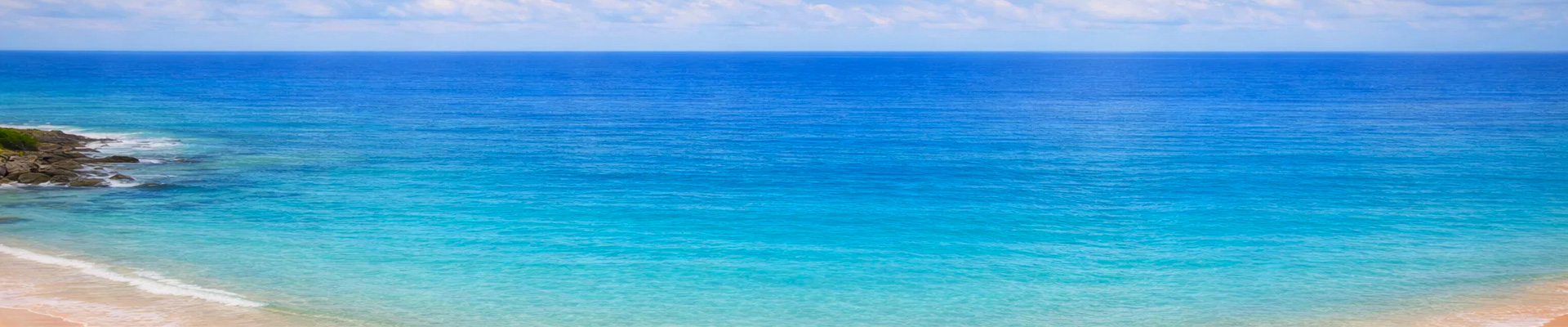
Yes, in the austral summer. The main beach curves in a golden arc where the water deepens through shades of blue, from the pale shallows to open sea. The rest of the year, it is for walking barefoot.
Few: under five hundred permanent residents, a handful of cafes and a campground legendary among New Zealand families. Nobody comes here to shop.
Yes, and it is one of the best ways to see this coast: paddling cove to cove at water level, sometimes escorted by a hurrying shag or a little blue penguin out hunting.
The New Zealand dollar, and English — Māori is also an official language. Cards work at the cafes and with the boat operators.


