



Tenerife or the Caribbean: where to spend three winter weeks
Since 31 October 2026 a traveller from Montreal can land in the Canary Islands without changing planes. That opens a door which used to be closed, and it raises a question nobody in Quebec was asking last year: for a long winter stay, is it the Dominican Republic or Tenerife?
The short answer fits in one sentence. The Caribbean stays unbeatable for two weeks of straightforward heat with nothing to decide, and Tenerife gets interesting as soon as you talk about three weeks or more, provided you know you will not be eating on a wristband.
Here are the real differences, the ones that change a day on the ground.
The comparison at a glance
| Tenerife | Caribbean (Punta Cana, Cancún, Varadero) | |
|---|---|---|
| Flight from Montreal | 7 h nonstop, one Saturday a week | 4 to 5 h, several departures daily |
| Time difference | 5 hours | None or one hour |
| Meal plan | Half board most of the time | All-inclusive is the norm |
| Sea in February | 19 to 20 °C | 26 to 27 °C |
| Daytime air | 19 to 22 °C in the south | 28 to 30 °C |
| Hurricanes | Outside the corridor | June to November season |
| Outside the hotel | Towns, trails, a volcano, ferries | Organised excursions mostly |
| Length of stay | 90 days per 180 (Schengen) | Often six months |
Seven hours of flying, and one departure a week
Air Canada runs AC956 out of Montreal on Saturdays at 21:00, arriving at Tenerife South at 09:00 the next morning. The return, AC957, leaves on Sundays at 10:55. The season runs from 31 October 2026 to 24 April 2027, and Toronto gets two departures a week rather than one.
A single weekly departure changes two practical things. Your stay is counted in multiples of seven days, which makes a long stay natural and a short one awkward. And if your flight falls through, the next one is a week away, which makes insurance and a single file with one advisor more useful here than anywhere else.
The aircraft is an Airbus A321XLR with two cabins: 14 lie-flat seats in Signature Class and 168 in economy. Premium Economy, the compromise many of our clients buy on long flights, does not exist on this aircraft.
Half board against all-inclusive: the difference you feel daily
Here is the point that separates a happy client from one who calls their advisor on day three.
In the Canaries the usual formula is half board: breakfast and dinner at the hotel buffet, the rest on you. The Air Canada Vacations long-stay package, 23 days between Puerto de la Cruz and Costa Adeje, follows that rule exactly with 21 breakfasts and 21 dinners. All-inclusive exists in the large southern resorts, without ever having been the norm the way it is in the Dominican Republic.
For a two-week holiday where the goal is to decide nothing, the Caribbean all-inclusive wins hands down. You get off the bus, you eat, you swim, your wallet stays in the room.
Over three weeks the maths flips. Twenty-one evenings at the same buffet wears thin. In Tenerife you eat at the hotel when you are tired and walk down to the village when you want grilled fish at the harbour in Los Abrigos, or lunch at a guachinche, one of those winegrower's canteens in the hills that serve whatever was cooked that morning. Plenty of long-stay travellers prefer that freedom after week two.
The rule to remember: have the hotel's exact meal plan confirmed before booking. It is the line in the contract that sets the daily budget of a long stay, and the one nobody reads.
The climate: what you gain and what you give up
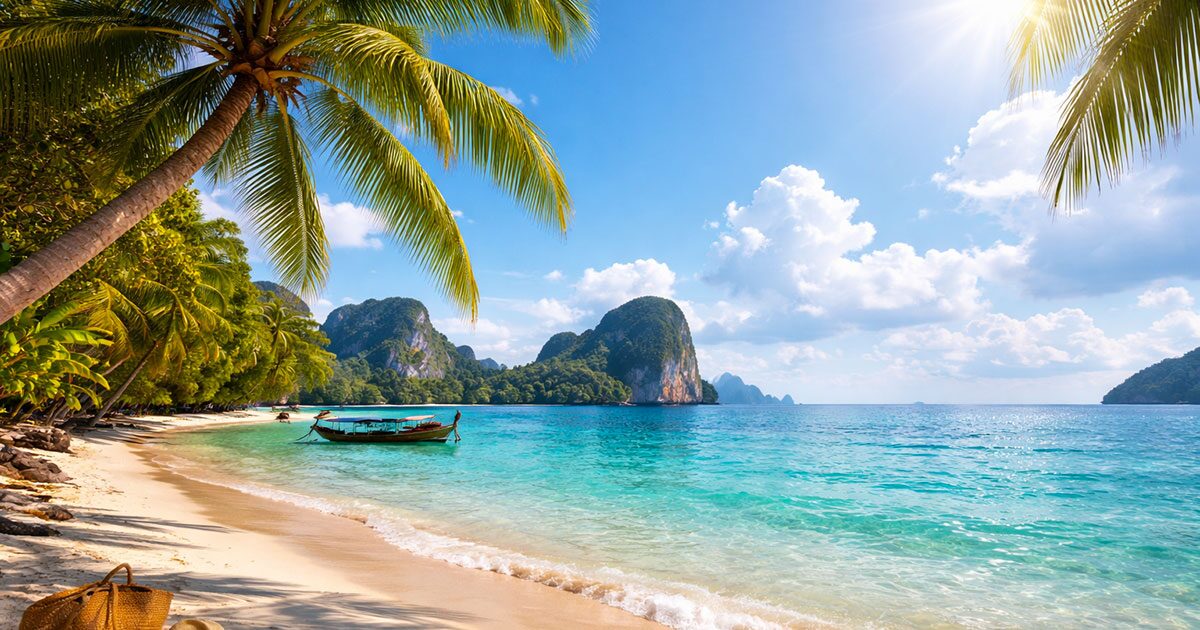
Let us drop the illusions first. The sea off Tenerife sits near 19 or 20 degrees in February, against 26 or 27 in the Antilles. Daytime air runs 19 to 22 degrees on the south coast, against 28 to 30 in Punta Cana. Anyone coming for the heavy heat of a Quebec July will be disappointed.
What you gain lies elsewhere. The south of the island is dry from January to April, close to desert, with clear skies most days. There is no hurricane season, because the Canaries sit outside the Atlantic storm corridor: the last serious hit was 2005, the one after that 2022. There is no sargassum season either, the brown weed that ruins whole weeks of holiday in Mexico and the Dominican Republic.
The north of the island plays a different tune: 17 to 19 degrees, greener, cloudier, with rain in November and December. The trade winds hit the volcano and drop their moisture on that side. Locals call the low cloud the panza de burro, the donkey's belly, and it often lifts by mid-afternoon.
One phenomenon to know: the calima, a breath of Saharan dust that reaches the archipelago for a good part of the year. The sky turns milky, the air dries out, and it passes in two or three days.
What Tenerife has that the Caribbean does not
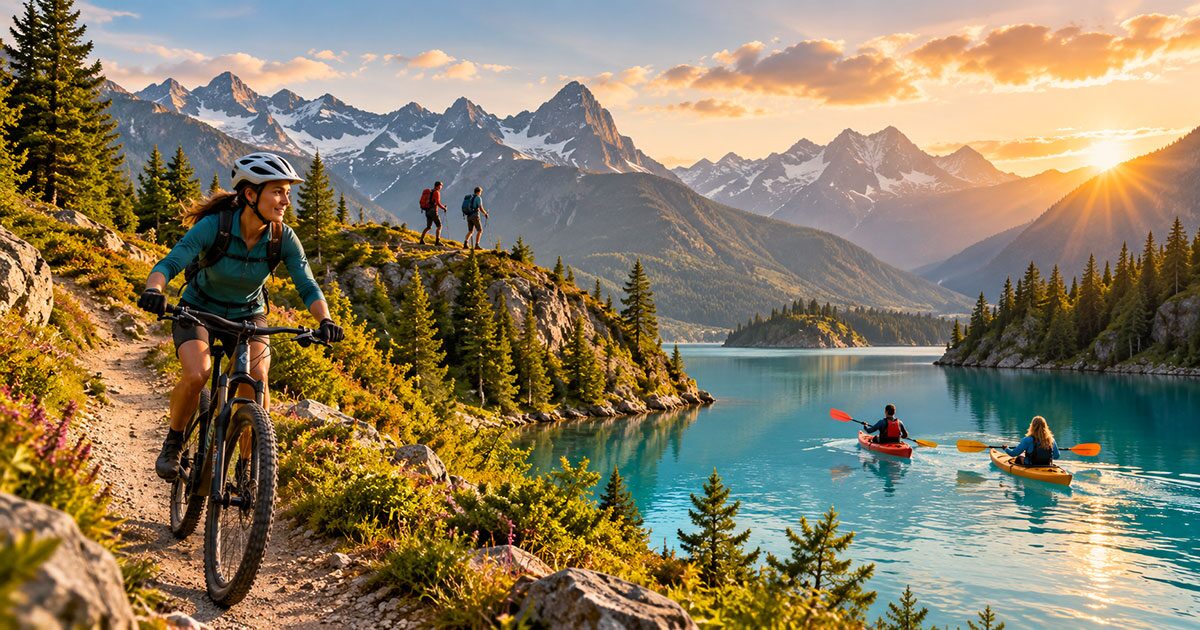
A Caribbean long stay plays out between the beach, the pool and the buffet, and that is perfectly fine for two weeks. Over twenty-one days the island starts to shrink.
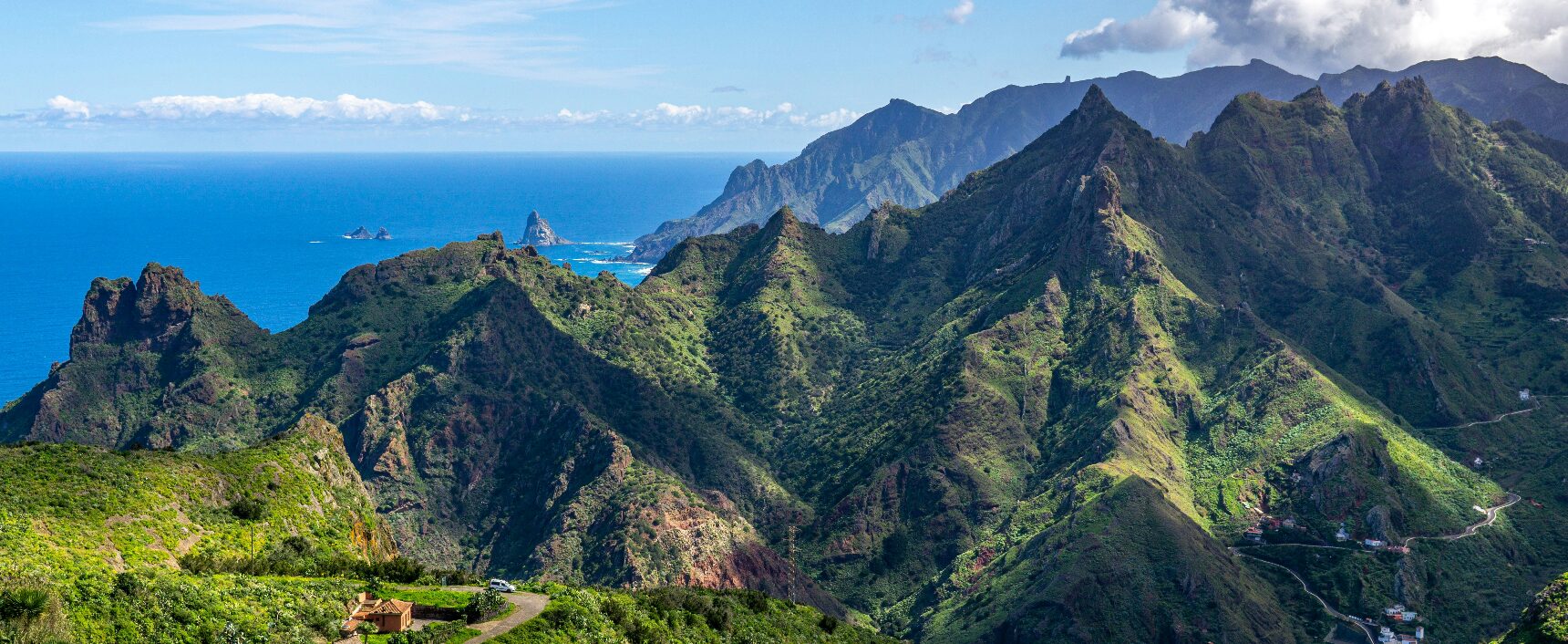
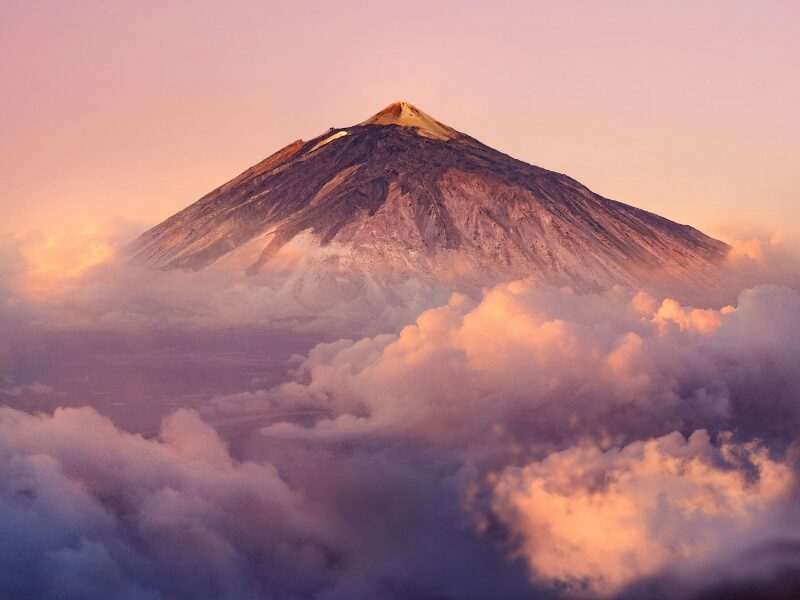
Tenerife does the opposite. You can have breakfast by the sea and walk through laurel forest by noon. Teide reaches 3,715 metres, the highest summit in Spain, inside a national park UNESCO-listed since 2007. The Anaga massif in the northeast is a biosphere reserve where the trails follow the ridge through mist. The village of Masca clings to the floor of a ravine, and the road to it is worth the drive on its own.
The sea gives something different too. The channel between Tenerife and La Gomera holds short-finned pilot whales and bottlenose dolphins year round, and the area carries Whale Heritage Area status from the World Cetacean Alliance. These are resident populations, not seasonal visitors.
And the ferries change everything on a long stay. From Los Cristianos, La Gomera is about fifty minutes away, up to five sailings a day, and La Palma two and a half hours. A neighbouring island becomes a day trip, which has no equivalent from a resort in Punta Cana.
What the Caribbean keeps for itself
Let us be honest in the other direction, because Tenerife loses on several fronts.
Heat first, plainly and without appeal. Then the number of departures: several flights a day to the south against one Saturday service to Tenerife, which gives flexibility to leave, to return and to recover from a problem. Then the time difference, five hours against zero, which costs two or three nights on arrival and as many on the way home, a real factor for someone of seventy.
Length of stay above all. The Caribbean often lets a Canadian in for six months. The Schengen area stops at 90 days in any 180, on a rolling window that also counts your other European trips. Someone who spent two weeks in Paris in June arrives in Tenerife with 76 days on the clock, not 90. That is the trap that does the most damage, and the count happens before booking rather than at the border.
Price, finally, compares badly. A Caribbean all-inclusive shows one number that covers nearly everything; a Canarian stay shows a lower number that leaves lunches and drinks outside. Two ways of counting, two totals closer than people expect. Your advisor will do the full calculation rather than the shop-window comparison.
Who Tenerife suits
After thirty years of listening to clients come home, the profile takes shape quickly.
- The three-week-plus winter traveller. Half board becomes an advantage rather than a gap, and the island holds enough to fill twenty days without repeating itself.
- The walker. Ridge trails, a volcano, laurel forest, ravines. Nothing in the Antilles compares.
- Anyone who has done the south. After eight winters in Punta Cana and Cayo Coco, the appetite for something else arrives, without any appetite for crossing to Asia.
- The couple who want out of the compound. Towns, markets, public restaurants, buses, easy car rental. You live in a place rather than in a resort.
And the profile the Caribbean still serves best: families with young children who want the pool and the wristband, the one-week traveller, anyone chasing heat above all, and anyone who hates jet lag.
Entry rules: what changed this year
A Canadian passport is enough, with no visa, for 90 days in any 180-day period in the Schengen area. The passport must stay valid at least three months beyond your planned exit date.
Since 10 April 2026 the European Entry/Exit System has been fully operational: at your first Schengen border crossing they take your photograph and fingerprints. Allow extra time at arrivals, especially after an overnight flight. ETIAS, the system people have been discussing for years, still has no confirmed launch date; avoid building a trip around its calendar.
The Government of Canada rates the Canary Islands at "take normal security precautions", one level below mainland Spain. Check the current advisory on travel.gc.ca before you leave.
Insurance remains essential. Private clinics often ask for payment on the spot, repatriation from an Atlantic archipelago is expensive, and Quebec's public plan reimburses a tiny fraction of care received abroad.
Going further
- The full Tenerife guide: when to go, where to stay, the Teide permit, the ferries.
- The Canary Islands: the whole archipelago, from Lanzarote to El Hierro.
- The all-inclusive south from Quebec: the other half of the comparison.
- New flight routes from Quebec: what is being added in 2027.
Talk to your travel advisor
A brand-new destination, one flight a week, a meal plan that differs from the Caribbean and a 90-day counter to watch: four good reasons to go through someone who does this for a living. Our advisors confirm the hotel meal plan, keep flight and hotel on one file, count your Schengen days, and stay reachable if the trip goes sideways.
Call us at 1-866-628-6241 or find an advisor near you. Voyages AquaTerra, Quebec licence 702703.
Published 8 September 2026. Schedules and entry rules verified on that date, both subject to change.


