The World’s Great Treks
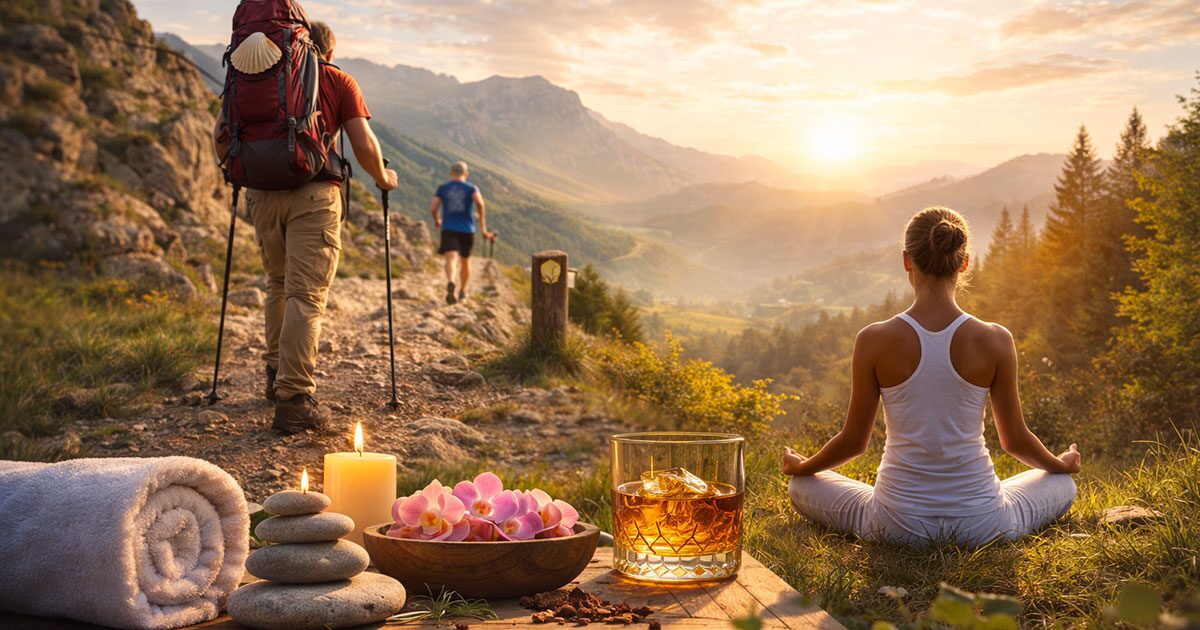
You do not choose them by scenery. You choose them by consecutive walking days, daily elevation gain, altitude and the kind of night — staffed refuge, carried tent, hotel. Two equally famous treks can demand entirely unrelated preparation.
Tour du Mont-Blanc — the most civilised
Eleven days around the massif, through France, Italy and Switzerland, with a refuge or a village at the end of every stage. You sleep warm, you eat warm, you carry a light pack. The daily climb is serious, but no section requires technical skill. It is the great trek most accessible to a fit person who has never trekked.
The Inca Trail — the one booked a year ahead
Four days to Machu Picchu, and the only trail on this list with a daily entry quota. The numbers that matter: 500 people per day in total, of whom only 200 are trekkers — the other 300 are guides and porters. The trail closes for the whole month of February for maintenance and ecological recovery.
Three rules follow, and they surprise people. The permit is sold only through a licensed operator: you cannot book it yourself. It is issued in your name and tied to your passport number. And it is non-refundable, non-changeable and non-transferable.
The practical consequence few anticipate: if you renew your passport between booking and departure, the number no longer matches. You must tell the operator well in advance, or the permit becomes unusable. For high-season departures between May and September, permits often sell out five to seven months ahead. The rest of the country is covered in our Peru and Machu Picchu guide.
The GR20 — the hardest in Europe
The traverse of Corsica, around fifteen days, with a deserved reputation: rocky sections, chains in places, high daily elevation and basic refuges. This is not a trek for discovering trekking, it is an objective for someone who has already walked several consecutive days in mountains.
Torres del Paine — Patagonia and its wind
The W circuit takes four to five days, the full circuit eight or nine. Wind is the factor everyone underestimates: it changes the difficulty of a day completely. Refuges and campsites are booked separately from the park, and they fill far ahead for the southern season.
Everest Base Camp — altitude is the only real difficulty
The trail is not technically hard. Altitude governs everything: base camp sits above 5,300 metres, and the itinerary must include acclimatisation days or risk acute mountain sickness. A trek shortened to save days is a dangerous trek.
The Milford Track — the most regulated
In New Zealand, four days in one imposed direction, with a limited number of daily starts and huts booked in advance. Bookings for the season open on a fixed date and fill within hours.
When should you book?
This is the question that decides everything. The Inca Trail and the Milford Track require being online the day permits open. Torres del Paine and the Tour du Mont-Blanc need several months for the refuges. The GR20 tolerates more flexibility outside July and August.
The gear that makes the difference
Boots, broken in over at least fifty kilometres before departure — never new. Socks, doubled if you are prone to blisters. A breathable waterproof, because rain is the one variable you do not control. And a pack whose weight stays under a fifth of your body weight.
Organising the trip from Quebec
Two of these treks, the Inca Trail and the Milford Track, cannot be booked directly from Quebec without an operator. The others are mostly a matter of calendar. An adviser can line the flights up with the permit dates — doing it the other way round is the main cause of cancellation.
Voyages AquaTerra holds a Quebec travel agency licence. Our clients are covered by the Compensation Fund for Customers of Travel Agents, under the conditions set out in the regulation. Call an adviser at 1-866-628-6241.


