Bejaia Algeria
Algeria

1 Cruises availables At departure or passage at this port

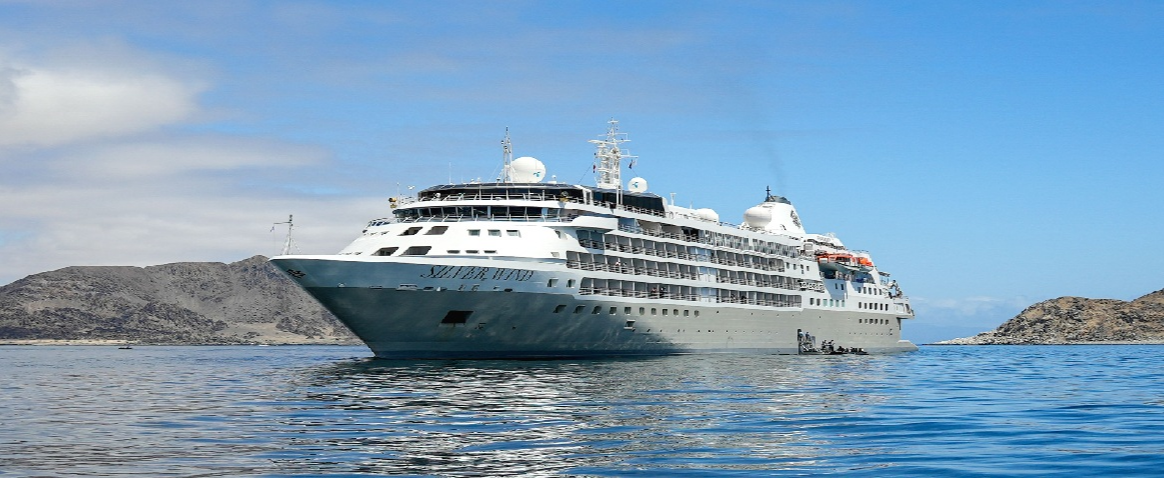
The French word "bougie," meaning candle, comes from this city's name. In the Middle Ages, the wax produced here lit up all of Europe, and it was also within these walls that a young man from Pisa named Leonardo Fibonacci learned the Arabic numerals he would go on to spread across the continent through his Liber Abaci. Béjaïa, set against the mountains of Kabylia facing a wide Mediterranean bay, was the capital of the Hammadid kingdom in the 11th century and one of the great intellectual centres of its time. Still a rare stop on Mediterranean itineraries, this port call generously rewards the curious travellers who make it, and the arrival sets the tone: the ship sails into a harbour ringed by peaks where clouds cling to the summits.

From Place Gueydon to the Kasbah

From the docks, a short climb of a few minutes leads up to Place Gueydon, a city balcony suspended above the fishing harbour. Locals gather here over coffee to watch the trawlers come in, in a slow-moving ballet, while the smell of warm flatbread and olive oil drifts up from the first food stalls; the view, meanwhile, stretches all the way to the ridges enclosing the bay. A little higher up begins the Kasbah, a recently restored 12th-century citadel: narrow lanes, a mosque with Berber lines, remnants of the Hammadid ramparts and a Spanish fort all tell nine centuries of rivalry and exchange between the two shores of the Mediterranean. It was within these walls that Fibonacci, son of a representative of Pisa's merchants, studied with the city's calculation masters before going on to transform Western mathematics.

Gouraya, the Mountain of Monkeys

Above the rooftops rises Mount Gouraya, the heart of a national park designated a biosphere reserve. The winding road, carved out above the sea, leads to lookout points where the whole bay unfolds with its succession of headlands, and the trails cross scrubland fragrant with pine and mastic trees. The local stars remain the Barbary macaques, which can be observed up close at Monkey Peak, often gathered in family groups along the guardrails, feeding them is strictly forbidden, for their own good as much as for visitors' safety. Plan for a car with a driver or an organized excursion: distances add up quickly in the mountains, and the road itself is worth taking in.

Cap Carbon, the Lighthouse of Superlatives

Farther along the coastal road, Cap Carbon juts into the sea, a spur of rock pierced by a natural arch through which small boats can pass in calm weather. At its summit stands a lighthouse from 1907, perched 220 metres above the waves, making it one of the tallest lights in the Mediterranean. The final walk takes a bit of stamina, but the reward, reddish cliffs, deep water, the ship looking tiny at anchor below, ranks among the great images of Algeria.

Kabyle Flavours

Back in town, it's time to eat: couscous with vegetables fresh from the market, sardines landed that same morning and grilled over charcoal, semolina cakes with honey and prickly pears depending on the season, all served without fuss and at friendly prices. The terraces serve excellent espresso alongside almond and orange-blossom pastries, and conversation flows easily, often in French, around a source of local pride: this city has given a great deal to the world, and it likes to tell that story. The warm, straightforward Kabyle welcome is one of the lasting memories of the port call.

As the ship pulls away from the dock, seagulls trailing the stern, you watch the evening light set Gouraya ablaze and reflect that this understated bay lit up Europe twice over: once with its candles, and once with its numbers. Few cities, on either shore of this sea, can say as much without raising their voice.

Frequently Asked Questions

At the port of Béjaïa, in a bay ringed by the mountains of Kabylia. From the quays you climb in a few minutes to Place Gueydon, a terrace hanging above the fishing harbour.
Partly. Place Gueydon and the casbah are reachable on foot from the quays, with a bit of a climb. Mount Gouraya and Cap Carbon require a car with driver or an organized excursion : distances add up quickly in the mountains.
Two options. The town on foot : Place Gueydon, the 12th century casbah, the stalls and the terraces. Or the mountains by vehicle : Mount Gouraya, Monkey Peak and Cap Carbon, which take up most of a half day.
A viewpoint in Gouraya National Park, a designated biosphere reserve, where you can watch Barbary macaques up close, often sitting in family groups on the parapets. The rule is firm : do not feed them, for their sake and yours.
A rocky headland pierced by a natural arch that small boats slip under in calm weather, and a 1907 lighthouse perched 220 metres above the sea, one of the highest in the Mediterranean. The final walk takes a bit of breath.
This is where the young Pisan Leonardo Fibonacci, son of a representative of the Pisan merchants, studied with the city's masters of calculation and learned Arabic numerals, before spreading them across Europe through his Liber Abaci.
Because in the Middle Ages the wax produced here lit all of Europe. The French name of the city, Bougie, ended up naming the candle itself.
Yes, often. Conversations start easily in French on the terraces. Arabic and Tamazight, very much alive in Kabylia, are the country's official languages.
The Algerian dinar, in cash. Foreign cards are poorly accepted outside major establishments.
Couscous with market vegetables, sardines landed that morning and grilled over coals, semolina cakes with honey and prickly pears in season. The terraces serve excellent espresso with almond and orange blossom pastries.