Prek Bang Kong Cambodia
Cambodia

18 Cruises availables At departure or passage at this port

Prek Bang Kong, Cambodia | Cruise Port Guide

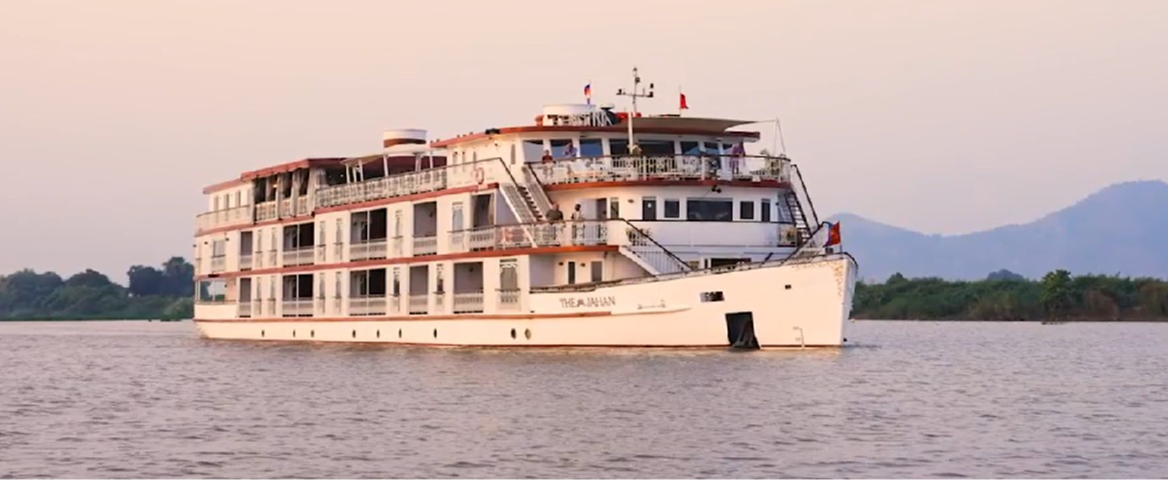
Long before docking, you hear the steady clacking of looms. Prek Bang Kong is not a port in the usual sense: it is a riverside village upstream from Phnom Penh, where Mekong riverboats set their gangway directly on the bank. No terminal, no line of taxis — a dirt path, houses on stilts and children waving. That is precisely why boats stop here.

The silk village

The community has lived from weaving for generations, and the visit follows the thread, quite literally. Beneath the wooden houses, in the shade of the stilts, women work at traditional looms whose rhythm sets the pace of life in the lanes. Family workshops gladly show every step: raising silkworms on their trays of mulberry leaves, boiling and unwinding the golden cocoons, dyeing the skeins and finally weaving ikat patterns that require days of patience for a few centimetres of fabric. You watch the birth of checked kramas, the cotton and silk scarves Cambodians wear in every circumstance, as well as ceremonial sampots with shimmering reflections. Leaving with a scarf bought from the weaver herself, after watching it take shape thread by thread beneath the shuttle, gives the souvenir a value no shop can offer.

Walking through everyday Khmer life

Between workshops, the walk crosses a rural Cambodia that classic tours rarely show. Chickens and zebu roam freely, mango trees shade the yards, and motorbikes loaded with crops weave between the puddles in the rainy season. The local pagoda, with its gilded gabled roofs and naive murals, serves as a landmark and gathering place; it is not unusual to meet monks in saffron robes there or a school class reciting its lessons aloud. Local guides also speak, with restraint, of the country's painful memory and gladly answer questions about daily life: the price of rice, children's schooling and the whims of the monsoon. These simple conversations are often the real gift of the stop.

The river, the backbone

From the bank, you grasp what the Mekong and the Tonle river mean for these communities: a transport route, a reserve of fish and a calendar of floods that fertilize the gardens. The most astonishing phenomenon remains the seasonal reversal of the Tonle Sap: in the rainy season, the swollen Mekong pushes the river back upstream and fills Cambodia's great lake, before the current reverses again in the dry season. Motorboats dart from one bank to the other, nets dry on poles, and the cultivated banks unfold corn, beans and banana trees depending on the season. It is a discreet landscape without monuments, rewarding those who take the time to observe it.

Making the most of this river stop

  • Wear shoes that are easy to slip off: you remove them to enter the pagoda as well as homes.
  • Covered shoulders and knees are appreciated within the religious grounds.
  • Small bills in riels or U.S. dollars make it easier to buy fabrics directly from families.
  • Ask permission before photographing the weavers up close; a smile opens every door.

The stop is short, often half a day, and that may be its strength. When the gangway is raised and the village returns to its looms, everyone keeps a sound in their memory rather than an image: the patient clacking of wooden shuttles that, generation after generation, keeps weaving life along the riverbank. Some places are visited; this one is listened to.

Frequently Asked Questions

Straight onto the riverbank upstream from Phnom Penh. There is no terminal and no taxi rank: the gangway lands on a dirt track between the stilt houses.
Not in the usual sense. It is a riverside village where Mekong river ships tie up, with no port infrastructure at all. That is precisely what makes the call worthwhile.
The stop often runs half a day and is entirely on foot: visiting the weaving workshops under the houses, walking the village lanes, stopping at the local pagoda and talking with the village guides.
Handwoven silk and cotton. Family workshops show every stage: the worms raised on trays of mulberry leaves, the cocoons boiled then unwound, the skeins dyed, and finally the weaving of ikat patterns.
Days of patience for a few centimetres of cloth. That is what gives value to a piece bought straight from the weaver after watching it appear thread by thread under the shuttle.
Yes. Its gilded gabled roofs and naive murals are the village landmark. Bring shoes that slip off easily and cover shoulders and knees: you remove your shoes to enter the pagoda as well as the houses.
Cambodian riel and US dollars, in small bills. Fabrics are bought directly from the families in cash: no cards are accepted in the village.
Ask before photographing anyone close up; a smile usually opens every door. The weavers are generally happy to be watched at work.
The dry season, November to April, when the village dirt tracks stay passable. In the rainy season motorbikes weave between puddles and the lanes turn muddy.
A checked krama, the cotton and silk scarf Cambodians wear in every circumstance, or a ceremonial sampot with its shifting sheen. Many travellers say what stays with them is a sound: the patient clack of the wooden shuttles.