Daphne Island Galapagos
Ecuador
115
Cruises availables
At departure or passage at this port
Celebrity Cruises (115 Cruises)
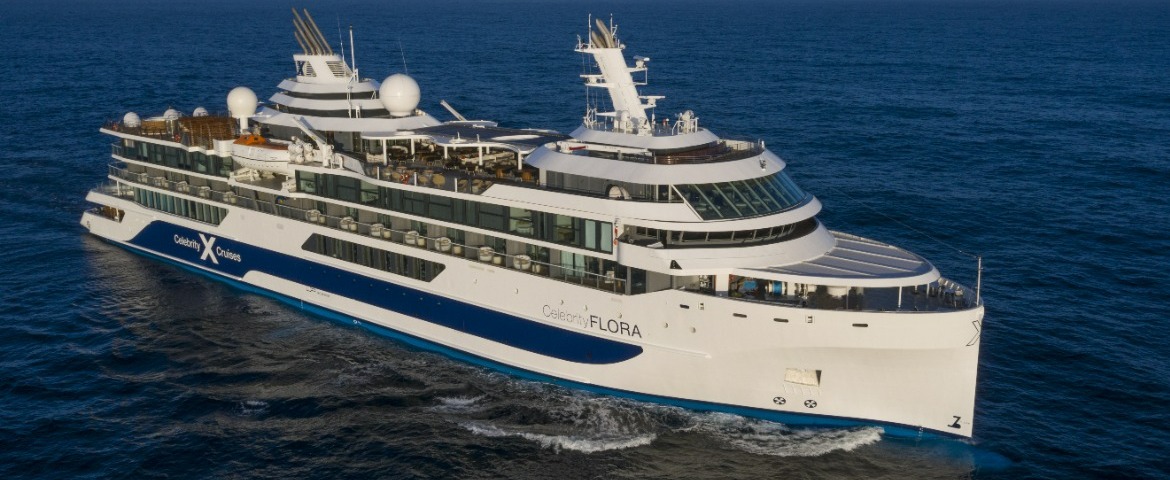
Celebrity Flora
115 Cruises

| 4 July | 8 days | Round-trip from Baltra Island, Ecuador |
From
16332$
|
| 11 July | 8 days | Round-trip from Baltra Island, Ecuador |
From
20839$
|
| 18 July | 8 days | Round-trip from Baltra Island, Ecuador |
From
16572$
|
Frequently Asked Questions
No. Landing is reserved for holders of a special permit, almost exclusively researchers. The island is watched, circled and contemplated from the deck or from an inflatable boat.
Because it is a natural laboratory of immense value. For more than forty years, biologists Peter and Rosemary Grant tracked Darwin's finches there bird by bird. Their work documented evolution by natural selection in real time: after a drought, the beaks of survivors changed size within a single generation.
Between Santa Cruz and Santiago islands, in the centre of the Galápagos archipelago, Ecuador. It is a cone of brown ash so regular it looks drawn with a compass.
The ship slows at a respectful distance and then makes a slow circuit of the volcano, typically one to two hours. Some itineraries include a zodiac outing at the foot of the cliffs when the swell allows.
Blue-footed boobies nesting right down on the crater floor, frigatebirds inflating red pouches on the ridges, red-billed tropicbirds recognisable by their long white tail streamers, and Galápagos shearwaters skimming the water by the hundred.
Binoculars above all, sun protection and, for photographers, a camera with a telephoto lens. Without binoculars the island stays a handsome brown cone; with them, every ledge reveals its residents.
The open decks, on the side announced by the crew. Morning or late afternoon light gives the relief more shape and takes the edge off the equatorial heat.
Yes, but know what you are getting. It is an observation sail, not an excursion: no trail, no swimming, no contact with animals. Anyone looking for action will be disappointed; anyone who likes to watch at length will find one of the trip's most memorable moments.
A rock formed from compacted volcanic ash. It makes up the slopes rising toward the crater and shifts colour with the angle of the sun, moving from beige to rust as the day goes on.
Yes. The Ecuadorian naturalist guides carried on every ship authorised in the archipelago narrate the geology, point out nests and recount the research campaigns. That commentary is what turns a slow rotation into a natural history lesson.


