Montereau-Fault-Yonne France
17
Cruises availables
At departure or passage at this port
CroisiEurope (17 Cruises)
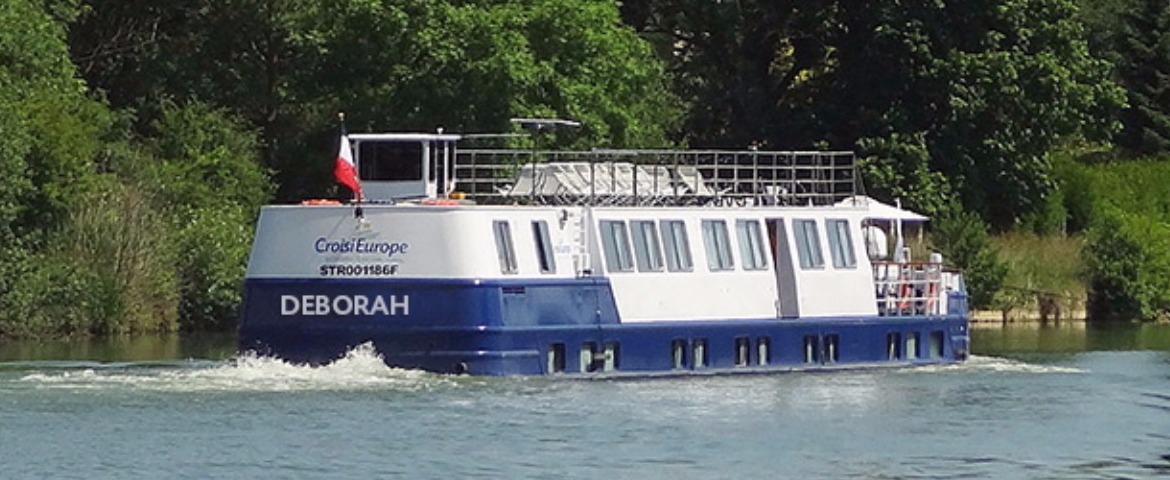
MS Déborah
17 Cruises

| 31 March | 7 days | One-way from Paris City to Sens-Yonne |
450-628-6241
Call us
|
| 31 March | 6 days | One-way from Paris City to Sens-Yonne |
450-628-6241
Call us
|
| 2 June | 7 days | One-way from Sens-Yonne to Paris City |
450-628-6241
Call us
|
| 2 June | 6 days | One-way from Sens-Yonne to Paris City |
450-628-6241
Call us
|
| 14 July | 7 days | One-way from Sens-Yonne to Paris City |
450-628-6241
Call us
|
| 14 July | 6 days | One-way from Sens-Yonne to Paris City |
450-628-6241
Call us
|
Frequently Asked Questions
On the right bank at the foot of the old town, facing the confluence. The river landing occupies one of the finest spots on the upper Seine, and the historic centre begins less than ten minutes away on foot.
It describes the geography: the Yonne comes to « fail », that is to pour, into the Seine. The town's whole history lies in that meeting of two rivers.
Because the Emperor fought here in February 1814 one of his last victorious battles during the campaign of France. The bronze equestrian statue, raised under the Second Empire, overlooks the junction of the bridges.
Tradition holds that, under fire on the heights, he told his soldiers that the cannonball able to kill him had not yet been cast.
The collegiate church, the statue and the quays combine into a loop of about an hour and a half. The faience museum and the climb to Surville easily round out a half day.
It is the church of Notre-Dame-et-Saint-Loup, begun in the 12th century, raising its Gothic chevet above the rooftops. It keeps a Renaissance doorway and a light-filled nave, freely open.
Because for two centuries the town was one of the great names in French fine earthenware. Its factories exported plates and services across Europe, rivalling Creil, whose marks it long shared.
Yes, a municipal museum devoted to this industrial adventure displays moulds, rare pieces and workshop archives. For anyone who loves tableware, it unlocks the whole working town.
Yes, the Surville plateau above the right bank, the very spot from which Napoleon directed the battle. It is a twenty-minute walk or a few minutes by taxi. The panorama takes in the confluence, the rooftops and the hillsides of the upper Seine.
About 80 kilometres downstream. Fontainebleau and its forest are some twenty kilometres away.


