Ouges France
6
Cruises availables
At departure or passage at this port
CroisiEurope (6 Cruises)
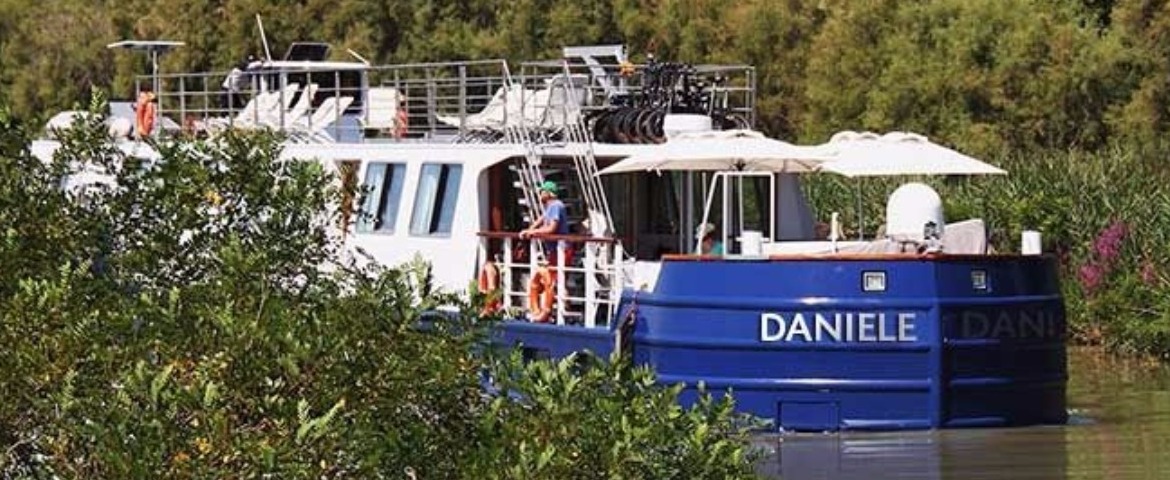
MS Danièle
6 Cruises

| 1 April | 6 days | Round-trip Fine Food and Wines on a Cruise through the Burgundy Region |
450-628-6241
Call us
|
| 1 April | 7 days | Round-trip from Dijon, France |
450-628-6241
Call us
|
Ouges France | Burgundy Canal & Dijon River Cruise Guide
Frequently Asked Questions
On the Burgundy canal, 7 or 8 kilometres south of Dijon. Cruise barges call here between Dijon and the Saône, in cereal country that vineyard maps tend to overlook.
Few, and it is best to know it: a church, three washhouses and two locks. The programme lies in the gentleness of the place, not in a list of sights.
The tour of the three washhouses through the village streets, the church, then an hour walking or cycling the towpath. If the Dijon excursion is offered, it fills the half day.
The estate, once called Olgea, belonged to a viscount of Dijon before being ceded to the monks of Cîteaux abbey, lords of the place until the Revolution. From that monastic rule survives the church, whose choir is said to have been built in the 13th century by the monks.
The one on rue de la Fontaine, built in 1850 and restored, with its slate roof carried on two columns; the stone one on the central square, dated 1843, with five broad classical arcades; and a third entirely of wood, of rustic simplicity, in the hamlet of Petit-Ouges.
It is a 242-kilometre waterway between the Yonne and the Saône, crossing the commune through two locks known as Grand-Ouges and Petit-Ouges.
Yes, a small museum set in the vaulted cellar of the Petit-Ouges lock house, devoted to the canal, its workers and the boating life of the past. It shows what this water highway meant in the 19th century, carrying timber, stone and wine to Paris.
Yes. It runs straight between two lines of trees, used by cyclists, anglers and pairs of mallards. An hour in either direction is enough to grasp the charm of the Burgundy canals.
Yes, several itineraries combine the call with a visit to the former capital of the dukes of Burgundy. Depending on the programme, the excursion goes by coach or by bicycle along the towpath.
The ducal palace, the Baltard-style market halls, the owl on rue de la Chouette — stroked with the left hand to make a wish — and the mustard shops where you can make up your own jars.


