Royan France

38 Cruises availables At departure or passage at this port

CroisiEurope (34 Cruises)

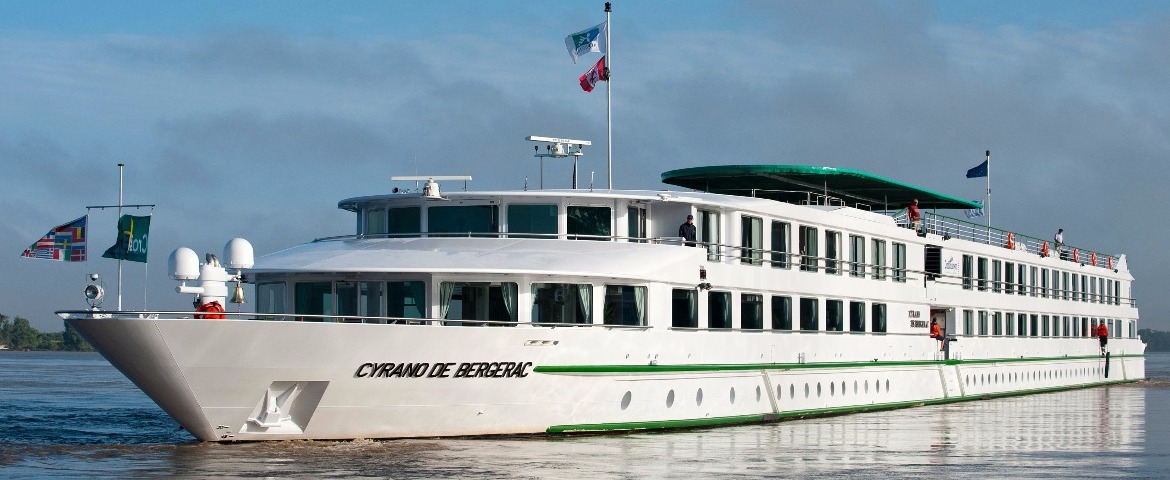
Cruise CE Croisieurope MS Cyrano de Bergerac ship

MS Cyrano de Bergerac

172 Passengers
Visit the ship's page

Royan France | Atlantic Coast & Charente Heritage Cruise Guide

Concrete can be poetic. Royan proves it on every street corner: white cement sails, daring curves, rotundas facing the ocean. Destroyed in January 1945 by the bombings aimed at the German pocket in the estuary, the Charente-Maritime seaside resort reinvented itself in the 1950s with an architectural freedom rare in France. The result, long misunderstood, is now protected and studied: Royan has become an open-air museum of the fifties, set on five fine-sand beaches.

Arriving between estuary and ocean

The seaside town occupies the north bank of the Gironde, the largest estuary in Western Europe, where it opens onto the Atlantic. Cruise vessels calling in the area anchor or dock depending on their size; the centre and the seafront are a few minutes from the port, where pleasure boats and excursion launches sit side by side. Everything essential can then be explored on foot, along a seafront drawn in an arc above the Grande Conche.

Notre-Dame, a concrete cathedral

It's impossible to miss: Notre-Dame Church raises its tall raw-concrete walls above the rooftops, like the prow of a ship. Built in the mid-1950s by architect Guillaume Gillet, it astonishes once you step through the door: a soaring nave, stained-glass windows that bathe the interior in bluish light, and a sense of verticality that many Gothic cathedrals might envy. The building ranks among the major monuments of French postwar architecture, and even the most sceptical travellers come out silent.

The central market and the 1950s town

Another icon, the central market covers its stalls with a thin concrete shell set on the ground without a single pillar, a 1955 technical feat that locals compare to a seashell or a parachute. Beneath the vault, regional producers lay out Marennes-Oléron oysters, cheeses, fruit and Pineau des Charentes: the place lends itself to a gourmet stock-up as much as to photography. All around, the rebuilt centre unfolds arcaded buildings, modernist villas and the convention centre, in a unity of style that has earned the resort the Ville d'art et d'histoire (Town of Art and History) label.

Conches, villas and seafront

Royan has five conches, crescent-shaped beaches nestled between rocky points. The Grande Conche spreads nearly two kilometres of sand in front of the seafront; the more intimate Pontaillac beach is still surrounded by Belle Époque villas spared by the war, witnesses to the resort's first life in the days of sea bathing in striped costumes. The promenade linking the beaches offers a fine open-air history lesson: a century of seaside architecture in an hour's walk.

Cordouan, the king of lighthouses

Off the estuary stands the Cordouan Lighthouse, the oldest lighthouse in France still in service, a Renaissance masterpiece inscribed as a UNESCO World Heritage Site. Launches leave the port according to the tides to approach it, or even land there at low tide. The excursion depends on the port call schedule, but catching sight of it from the ship's deck, standing alone in the middle of the water, is enough to understand its nickname, the king of lighthouses.

Heading back out to sea

As you leave the harbour, the silhouette of Notre-Dame dominates the coast for a long time, a cement bow pointed toward the sky. Royan leaves a singular memory: that of a resort that transformed its war wound into a manifesto of optimism. You come for the beach; you leave seeing 20th-century architecture in a new light.

Frequently Asked Questions

On the north bank of the Gironde, the largest estuary in western Europe, where it opens to the Atlantic. Cruise vessels anchor or come alongside depending on size; the centre and seafront are minutes from the port.
Yes, the essentials are all walkable along a seafront curved in an arc above the Grande Conche. The Notre-Dame church, the central market and the beaches are all within walking distance.
Because it was destroyed in January 1945 by bombing aimed at the German pocket in the estuary. Rebuilt in the 1950s with architectural freedom rare in France, it now holds the Ville d'art et d'histoire label: an open-air museum of fifties concrete.
The architectural circuit of the centre, on foot. The Notre-Dame church, the central market, the gallery-fronted buildings and the modernist villas make a one to two hour walk. Then add a beach or the stroll out to Pontaillac.
It lifts tall walls of raw concrete above the rooftops like the prow of a ship. Built in the mid-1950s by architect Guillaume Gillet, it astonishes once you step inside: a soaring nave, stained glass bathing the space in blue light, and a verticality many Gothic cathedrals might envy. Even sceptical visitors leave quiet.
A thin concrete shell set on the ground without a single pillar, a 1955 engineering feat locals compare to a seashell or a parachute. Under the vault, producers line up Marennes-Oléron oysters, cheeses, fruit and Pineau des Charentes.
Five conches, crescent beaches tucked between rocky points. The Grande Conche runs nearly two kilometres in front of the seafront; Pontaillac, more intimate, is ringed by Belle Époque villas spared by the war.
Yes, from the ship's deck you can spot it standing alone in the water. Boats leave the port according to the tides to approach it, and even land there at low tide, but the excursion depends entirely on the call's schedule. It is the oldest working lighthouse in France and a UNESCO World Heritage site.
The euro, and cards are accepted everywhere. Some cash remains handy under the central market hall, where a few producers prefer it.
May to September for the beach, though the town's architectural interest does not depend on the season. Spring and early autumn strike the best balance: crisp light on the white concrete and an uncrowded seafront.