Saint-Jean-de-Losne France
7
Cruises availables
At departure or passage at this port
CroisiEurope (7 Cruises)
MS Danièle
7 Cruises
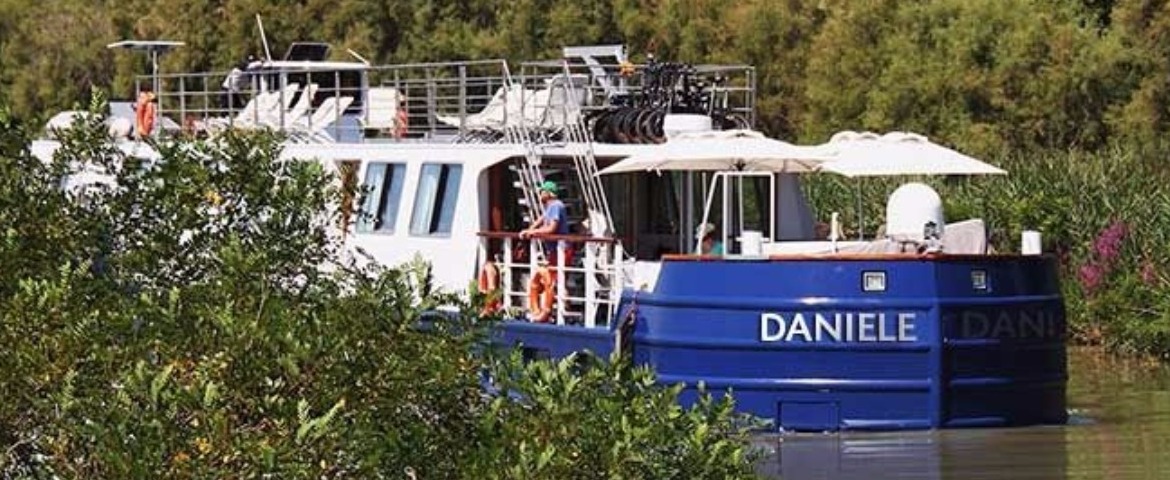

| 1 April | 7 days | Round-trip from Dijon, France |
450-628-6241
Call us
|
| 1 April | 6 days | Round-trip Fine Food and Wines on a Cruise through the Burgundy Region |
450-628-6241
Call us
|
Frequently Asked Questions
At the town quay in the Côte-d'Or, where the Saône meets the Burgundy Canal and crosses the route of the Rhône-Rhine canal. Everything is walkable: the marina basin, the museum and the old centre all sit within ten minutes.
One of the largest inland boating basins in France, with some 650 berths, minutes from the quay. Hire cruisers, retired cargo barges and boatyards share the water. Some owners live aboard year round, which gives the basin the feel of a floating neighbourhood.
The barge museum, then a long wander along the pontoons of the marina basin. Add the church and a terrace facing the river. No transport is needed, which is what makes this call restful.
Housed in a 15th-century building in the old centre: barge models, towing tools, photographs of the families who lived aboard, and a galley reconstructed in a few square metres. You leave looking differently at every boat you pass afterwards. Check opening hours on board, as they vary by season.
The episode that shaped local identity. In 1636, during the Thirty Years' War, the small town held off a vastly larger imperial army, helped by a providential flood of the Saône. Residents still tell the story with undisguised pleasure.
The Saint-Jean-Baptiste church, built in the 16th century, whose glazed tile roof recalls Burgundian tradition. The town's lanes converge on it naturally. The visit is short, about fifteen minutes.
Yes, rentals are available in season. The voie bleue follows the Saône through meadows: a few kilometres are enough to find the calm of hedgerow country, herons included, before turning back for market time.
Food shops in the centre: Époisses cheese, gingerbread and wines from the nearby slopes. The chandleries, where you find anything from a lamp to a canal map, are worth a look even if you buy nothing.
The euro. Cards work in the shops and restaurants of the centre. Keep some cash for the museum and the market.
Honestly, the interest of this call rests entirely on inland waterway life. There is no cathedral and no palace here. What the town offers is the living memory of river people and an unfussy way of sharing it. Burgundy's vineyards shine elsewhere.


