Valence France
2
Cruises availables
At departure or passage at this port
Riviera Travel (2 Cruises)

Port of Valence, France | Cruise Port Guide
Frequently Asked Questions
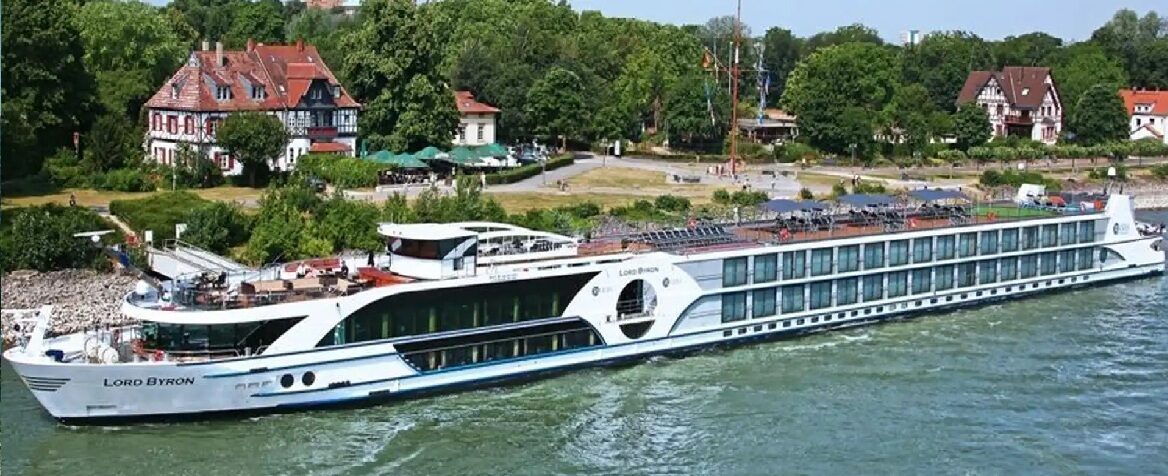
At the Port de l'Épervière on the left bank of the Rhône, the first marina ever built in France. The berth sits in a green setting a short distance from the historic centre: a footbridge, then a few hundred metres along the river, brings you to the Parc Jouvet and the old town.
Yes, the walk is flat and pleasant, following the river and then crossing the Parc Jouvet. Cruise lines often run a shuttle for those who would rather skip it. Once in town, the old quarter is entirely walkable, with a gentle climb up toward the cathedral.
The loop that works: cross the Parc Jouvet, climb to the Champ de Mars esplanade for the view of Crussol castle, then the Saint-Apollinaire cathedral, the Pendentif, the Maison des Têtes and the Peynet bandstand along the Grande Rue. Allow three hours at a strolling pace, four with the museum.
A ruined medieval fortress clinging to a limestone spur on the Ardèche bank, facing the town. You do not visit it on an ordinary port call: you look at it from the Champ de Mars, and it is the image most travellers carry away from Valence, especially late in the day when the sun sets the limestone alight.
A mansion from 1532 whose façade is covered with carved faces representing the winds, fortune and time. It stands on the Grande Rue, on the normal old-town route. You admire it from the street by looking up: it is a façade, not a museum.
Pius VI, held prisoner by the French Directory, died here in 1799 after being moved from Rome. A monument in Saint-Apollinaire cathedral, consecrated in 1095 and one of the oldest Romanesque churches in the region, recalls his stay. That episode also gave the town its suisse, a local shortbread shaped like a papal guard.
It is an orange-blossom shortbread cut in the shape of a papal guard, the town's signature sweet. Bakeries in the centre sell them, a few minutes from the cathedral. It is the easiest edible souvenir to carry back aboard.
Yes. The northern Côtes du Rhône surround the area, and several shore excursions head for the terraced Hermitage vineyards about twenty kilometres upstream. You do have to choose: the vines or the old town. Doing both in a four-hour call means rushing.
Yes, more so than many Rhône calls. The Parc Jouvet, seven hectares of pools, cedars and rose gardens with a bandstand and duck-filled canals, lies on the route between the ship and the old town. It is where local families gather on Sundays, and it breaks the walk in two.
The euro and French. Cards are accepted everywhere in the centre. English is spoken in tourist businesses and at the tourist office, less so in bakeries and neighbourhood markets, where a few words of French go a long way.


