Ua Pou Island Hakahau, Marquesas French Polynesia
French Polynesia
16
Cruises availables
At departure or passage at this port
Paul Gauguin Cruises (8 Cruises)
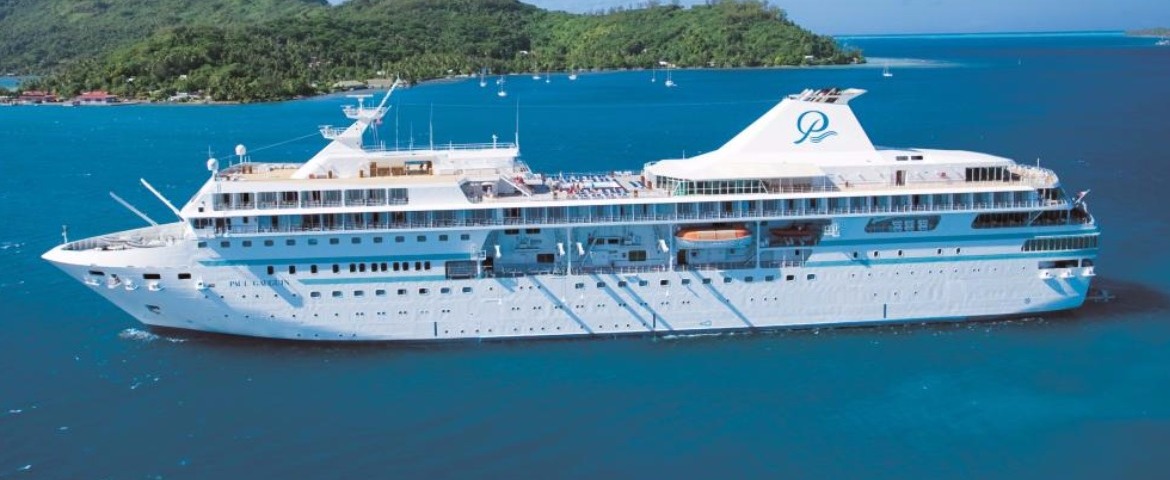
M/S Paul Gauguin
8 Cruises


Ua Pou, Marquesas Islands | Cruise Port Guide
Frequently Asked Questions
At Hakahau, the main village, tucked into a bay sheltered by a breakwater. Depending on the ship and the sea state, you tie up at the mole or land by whaleboat. Either way, everything afterward is on foot, between the town hall, the quay and the frangipani trees.
Its basalt spires, hundreds of metres high, often wearing a turban of cloud. These pinnacles gave the island its name, the two pillars in Marquesan, and culminate at Mount Oave, the highest summit in the Marquesas at 1,203 metres.
Not necessarily. Clouds cling to them much of the time, and travellers watch from the deck for the moment they agree to part. When light strikes the stone columns, the sight alone justifies the crossing from Nuku Hiva, about fifty kilometres to the north.
Its monumental pulpit carved in the shape of a canoe prow, a masterpiece by local artisans in which the wood still seems to be sailing. It is the thing not to miss, and it stands a few minutes from the quay.
A volcanic rock scattered with flower-shaped patterns, found almost nowhere else. Carvers polish it into pendants and decorative pebbles, sold at the village craft centre. It is the island's most distinctive souvenir.
When the mixed cargo ship Aranui calls, residents often offer dances, drumming and polyphonic singing, followed by a Marquesan meal cooked in an earth oven. Hakahau is considered one of the cradles of the Marquesan cultural revival, and it shows.
Yes. A path climbs in about forty minutes to a cross set above the bay. From up there the eye takes in the village, the red tin roofs, the breakwater, the ship at anchor and, in clear weather, the jagged line of the spires.
Yes, at Anahoa beach on the far side of the ridge, where pale sand stretches under the coconut palms. It is the natural continuation of the climb to the cross, and the sand often holds the only footprints of the day. Less energetic visitors stay on the Hakahau waterfront.
Neighbouring hamlets and coastal viewpoints, where every bend recomposes the duel between the spires and the ocean. Guides tell the legends of the rock pillars, homes of the gods in local tradition, and point out the paepae, ancient stone terraces on which houses once stood.
The Pacific franc, in cash. Tikis, war clubs and ornaments from the craft centre, and above all the flower stone, are the characteristic buys. The valleys also overflow with mango, breadfruit, lemon and banana trees whose fruit is traded when the boats come in.


