Pulau Misool Island Indonesia Raja Ampat

19 Cruises availables At departure or passage at this port

Misool, Indonesia | Cruise Port Guide

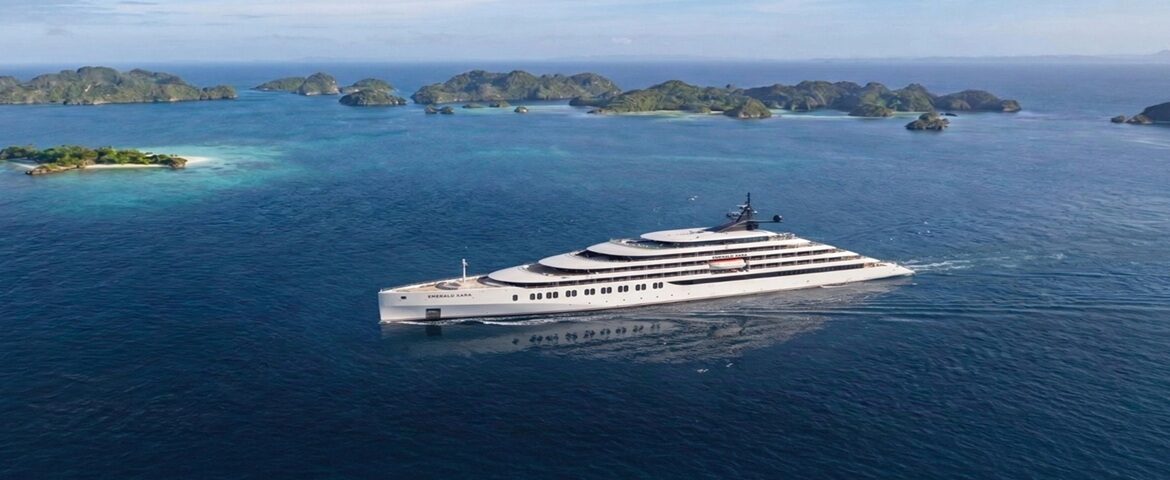
No pier, no village in sight, no posted schedule: at Misool, the port call begins when the Zodiacs hit the water. The expedition ship anchors in the south of Indonesia's Raja Ampat archipelago, in a maze of jungle-topped limestone islets, and the sea itself serves as the terminal. Passengers board in small groups, life jackets snug and cameras in dry bags, for outings that the tide and the light reshape every day.

The limestone maze

The drivers thread the boats between silver-grey pinnacles eroded at their base by the waves, which seem to sit on the water like game pieces. Some passages narrow until they nearly brush the rock; others suddenly open onto lagoons of an unreal green, ringed by cliffs where wild orchids and dwarf palms cling. The Balbulol area, with its stone towers rising from a translucent sea, is among the most striking scenes in the entire archipelago. With the engine off, all that remains is the lapping of the water and the hornbills crossing the sky two by two.

Beneath the surface

Misool lies at the heart of the Coral Triangle, the richest marine zone on the planet, and its reefs are protected by a vast reserve where fishing has been banned for years. The result speaks for itself: from the moment you enter the water, candy-coloured soft corals, giant sea fans, clouds of fusiliers, blacktip reef sharks patrolling the edge of the drop-off. With a little luck, a manta ray glides above your fins, a calm silhouette several metres across. Snorkelling outings are run from the Zodiacs, led by the expedition team, in water so clear and far-reaching it seems faked.

The painted cliffs

Some cliff faces hide a picture book several millennia old. Cruising slowly along the cliffs, the guide points out handprints, fish and ochre figures painted 3,000 to 5,000 years ago, at canoe height, by sea peoples about whom little is still known. Seeing these motifs from a boat, exactly as their creators saw them, creates an unsettling shortcut between eras.

Tomolol Cave

Another highlight of the area: a sea cave whose entrance, as tall as a nave, opens onto an inner pool. You enter by swimming or by Zodiac depending on the tide, beneath vaults bristling with stalactites where the light ricochets in turquoise reflections. Floating on your back in the middle of this stone dome, in a silence barely broken by dripping water, remains for many passengers the most lasting image of the voyage.

An expedition day

The exact program depends on conditions: that's the rule of the game in expedition areas, and part of its charm. The team adjusts the rotations according to the swell, the tide and the latest sightings, and the next day's plan is often decided the evening before, nautical charts in hand. Between outings, the ship's deck becomes a lookout, binoculars in hand, while the guides share their knowledge of this extraordinary ecosystem. Some ships also offer kayaking at sunrise, when the lagoons take on mother-of-pearl hues and the only sounds come from the paddles.

What you bring home

On departure, the pinnacles line up along the horizon, indifferent to the receding wake. Misool offers neither shops nor monuments, and that's precisely its wealth: pristine reefs, paintings without a museum, lagoons with no name on most maps. You leave with the certainty of having seen the world as it was before us, and as it deserves to remain.

Frequently Asked Questions

By zodiac, with no pier and no village in sight. The expedition ship anchors in the south of the Raja Ampat archipelago, in a maze of jungle-topped limestone islets. Passengers board in small groups, life jacket fitted, camera in a dry bag.
No. No pier, no posted schedule, no shops. The sea itself is the terminal, and the outings are redrawn each day by tide and light. You have to accept that flexibility: it is the rule of the game in expedition territory.
Silver-grey karst towers, undercut at the base by the waves, set on the water like game pieces. Some passages narrow until you almost brush the rock, others open suddenly onto lagoons of an unreal green. The Balbulol sector is among the most striking sights in the whole archipelago.
Misool lies at the heart of the Coral Triangle, the richest marine zone on the planet, and its reefs are protected by a large reserve where fishing has been banned for years. The result is obvious the moment you enter the water.
Soft corals in sweet-shop colours, giant sea fans, clouds of fusiliers and blacktip reef sharks patrolling the edge of the drop-off. With luck, a manta ray glides above your fins, a calm shape several metres across.
Yes. Running slowly along the cliffs, the guide points out handprints, fish and ochre figures painted 3,000 to 5,000 years ago, at canoe height. Seeing them from a boat, exactly as their makers did, creates an unsettling shortcut between eras.
A sea cave whose entrance, high as a nave, opens onto an inner pool. You enter by swimming or by zodiac depending on the tide, beneath vaults bristling with stalactites where the light bounces in turquoise reflections. For many passengers it is the most enduring image of the voyage.
No, and that is its charm. The team adjusts the rotations according to swell, tide and what has just been sighted; the next day's plan is often settled the evening before over charts. Some ships offer kayaking at first light.
None. Misool offers neither shop nor monument, and that is precisely its wealth: intact reefs, paintings with no museum, lagoons unnamed on most charts. Bring everything you need before leaving the ship.
A dry bag for the camera, a hat, water-resistant sunscreen, and mask and snorkel if you prefer your own gear. Water shoes help on the rocks. Snorkelling outings are supervised by the expedition team.