Edgeoya Island Svalbard Norway
Norway
8
Cruises availables
At departure or passage at this port
HX Expeditions (8 Cruises)
MS Spitsbergen
8 Cruises
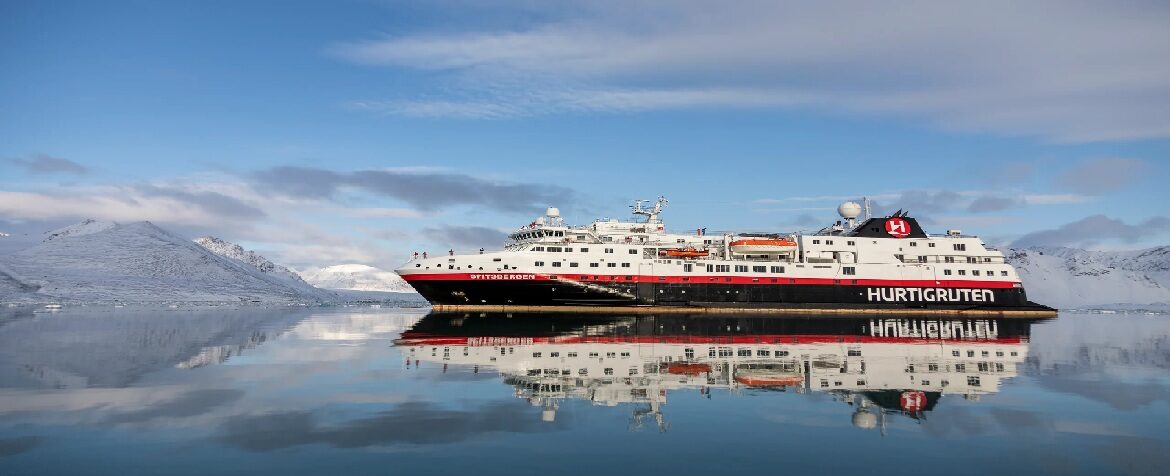

| 12 June | 11 days | Round-trip from Oslo, Norway |
450-628-6241
Call us
|
| 21 June | 14 days | Round-trip from Oslo, Norway |
450-628-6241
Call us
|
| 3 July | 11 days | Round-trip from Oslo, Norway |
450-628-6241
Call us
|
| 24 July | 11 days | Round-trip from Oslo, Norway |
450-628-6241
Call us
|
Edgeøya, Svalbard | Cruise Port Guide
Frequently Asked Questions
Nowhere: no pier, no road, no inhabitants. Edgeøya, the third largest island in Svalbard, is reached by Zodiac, boots on, under the watch of polar guides.
One of the busiest walrus haul-outs in the region, at the island's northwest point. Landings are on the beach at a respectful distance: dozens of massive bodies piled flank to flank, tusks lifting lazily, a chorus of breathing you hear well before you see it.
Often, from the deck, in the Freemansundet strait separating the island from neighbouring Barentsøya. Bears come to rest on the tundra there, drawn by seal or whale carcasses washed onto the shore. Observation is always at a distance, under Svalbard's strict rules.
Yes, at Kapp Lee: the foundations of a Pomor dwelling and several trappers' cabins, including a hexagonal hut set near the haul-out. From the seventeenth century onward, Russian then Norwegian hunters took whales and walruses here by the thousand; the bleached bones on the shore recall it.
Andréetangen, another walrus haul-out along a long sand spit, and Sundneset, with beaches raised by the slow rebound of the land and its bird cliffs. Guided hikes across open ground also lead from the shore up to the heights.
Svalbard reindeer, smaller and stockier than their mainland cousins, grazing on the tundra without much concern. With luck an arctic fox crosses your field of view, and kittiwakes animate the beaches.
No. Swell, fog or the presence of a bear can change the plan within an hour. That uncertainty is part of any polar voyage; expedition leaders always keep an alternative in reserve.
The island lies in one of Europe's strictest nature reserves. Every landing follows a set protocol: safety perimeters, armed guides on watch, limited numbers ashore. You walk little, speak quietly and look a great deal.
Generally little. The tundra is low and spongy, the ground uneven, and the point lies in observation rather than distance covered. Waterproof boots and warm layers are enough; the ship usually supplies the boots.
The Arctic summer, when expedition ships round Svalbard from the east. Ice decides: some seasons close the passage entirely, others open it wide. Nothing on this side of the archipelago can be planned far ahead.


