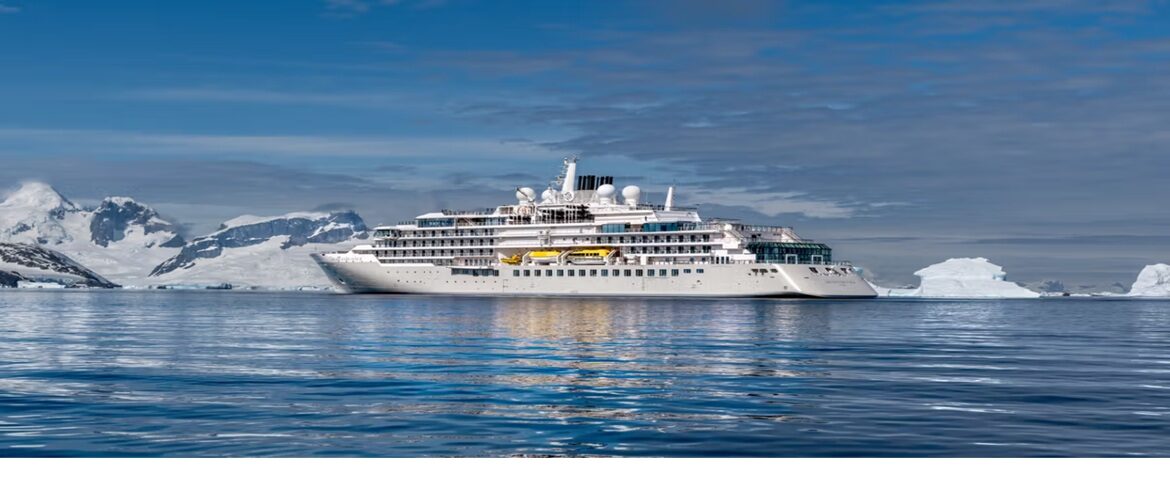
Port of Skarsvåg, Norway | Cruise Port Guide

At this latitude, the trees gave up long ago. Skarsvåg, on the island of Magerøya, at the very top of Norway, claims the title of Europe's northernmost fishing village: fewer than two hundred inhabitants, a tiny harbour, fish-drying racks and low tundra running down to the water. The ships that stop here come for a specific appointment — North Cape is only about fifteen kilometres away — but the village itself holds moments for those who linger that the great cliff doesn't offer.

A harbour at the end of Europe

Coming ashore plunges you straight into Arctic daily life: moored boats, stacked lobster traps, coloured houses facing the bay. The wooden church dates from 1795, proof that people have lived and prayed here since long before tourism. An unexpected curiosity has settled into this setting: a Christmas shop open all year round, filled with handcrafted decorations — polar humour is no legend. A few minutes are enough to walk through the village; then nature takes over.

Kirkeporten, the stone window

From Skarsvåg, a trail of less than an hour's walk leads to Kirkeporten, a natural arch carved into the rock above the sea. Local traditions see it as an ancient Sami sacred site. Framed just right, the opening reveals the silhouette of the famous headland and its distinctive horn: the most original photograph of the entire port call is taken here, far from the crowds, between patches of lichen. The terrain remains easy for anyone with good shoes, and in summer, foragers find crowberries and Arctic blueberries here.

North Cape, a quarter of an hour away

There's no skipping the region's star attraction: the North Cape plateau raises its 307-metre cliff above the Arctic Ocean, about fifteen minutes by road from the hamlet. On the esplanade, the metal globe draws visitors who come to be photographed at what Europe considers, with a touch of geographic licence, its farthest point. The visitor centre documents the history of the site, from explorers to visiting kings. Between late May and late July, the midnight sun circles above the sea; the rest of the season, the low-angled light is spectacle enough.

The birds of Gjesværstappan

Magerøya's other treasure flies. Off Gjesvær, on the island's west side, the islets of the Gjesværstappan reserve host impressive colonies: Atlantic puffins, gannets, razorbills, guillemots — hundreds of thousands of seabirds in season. Boat outings let you approach the cliffs without disturbing them, amid the din of cries and the frank smell of guano. For many passengers, this hour skimming the waves becomes, to everyone's surprise, the dominant memory of the port call.

Port call tips

  • The village can be explored on foot in little time; excursions to the plateau depart from the pier.
  • Kirkeporten trail: less than an hour's walk, closed-toe shoes recommended.
  • Bird safari at Gjesværstappan: book early, spaces are limited.
  • Wind and temperature change abruptly; bring a toque and windbreaker, even in July.

The light of the 71st parallel

As you cast off, your gaze returns one last time to the houses huddled against the bay. You think of the families who fish here, winter included, far beyond the Arctic Circle. North Cape gives the port call its claim to fame; Skarsvåg gives it its human truth. It's this combination — a natural monument and a stubborn village — that makes this Arctic detour more than a box ticked on the map: an encounter with the inhabited limits of the continent.

Frequently Asked Questions

Right in the village harbour on Magerøya island. Skarsvåg is a tiny fishing port: the gangway leads straight onto the houses, fish-drying racks and moored boats. Excursion coaches for the North Cape wait at the pier.
Yes, and that is why ships call here. The North Cape plateau and its 307-metre cliff are about fifteen kilometres away, roughly a 15-minute drive. It is not walkable: take the ship's excursion or an organized transfer.
Easily, and quickly. The village has fewer than two hundred residents and takes minutes to cross. You will find the 1795 wooden church, the working fishing harbour and a Christmas shop open year-round — polar humour is real here.
A natural stone arch above the sea, less than an hour's walk from the village. The ground is easy with proper closed shoes. Framed through the opening, you can see the North Cape headland: it is the most original photo of the call, and almost nobody is there.
Pick one major outing. Either the North Cape with its globe and visitor centre, or the Gjesværstappan bird safari, or the Kirkeporten walk followed by the village. Trying to do all three in half a day ruins all three.
Yes, at Gjesværstappan off Gjesvær on the western side of Magerøya. In season the reserve's islets hold hundreds of thousands of seabirds: Atlantic puffins, northern gannets, razorbills and guillemots. Boat trips have limited seats, so book early.
The Norwegian krone. Norway runs almost entirely cashless: your credit card works everywhere, even for very small purchases. There is no need to exchange currency before the call.
Yes. Norwegian is the village language, but English is spoken fluently, including by excursion guides. French is not — do not count on it.
Late May to late July if you are coming for the midnight sun: at that time it never sets over the North Cape. For the rest of the cruise season, the low raking light of the 71st parallel is spectacle enough. On a summer call there are no northern lights: the sky never gets dark.
Like a cool autumn day, even in July. Wind and temperature shift abruptly at this latitude: warm hat, windbreaker and closed shoes, in layers. Boat trips to the bird colonies are considerably colder than the village.