Traena Husoya Island Norway
Norway

48 Cruises availables At departure or passage at this port

Hurtigruten (48 Cruises)

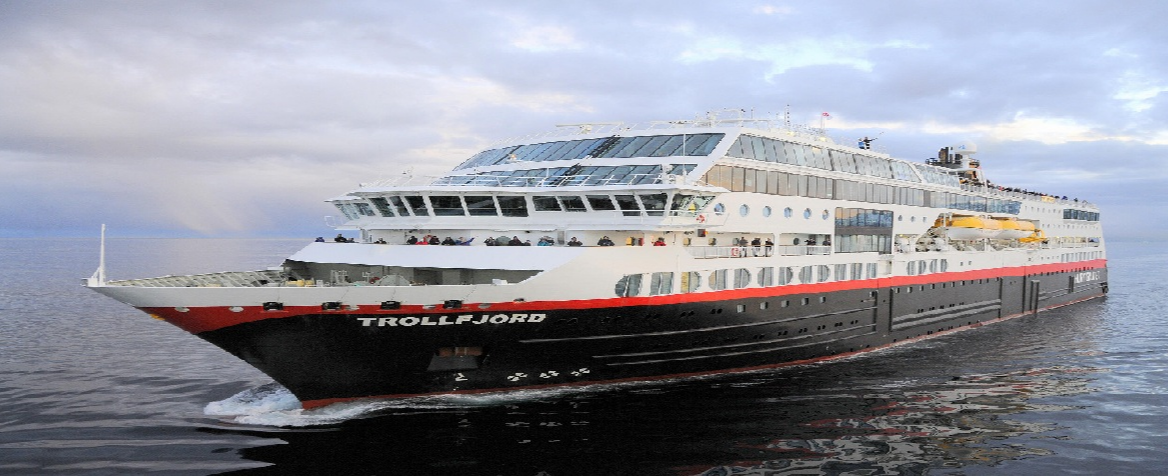
MS Trollfjord.

MS Trollfjord

16140 tons
Visit the ship's page

Træna, Norway | Cruise Port Guide

Long before arrival, stone silhouettes rise from the Norwegian Sea: the peaks of Sanna, jutting like teeth above the horizon. The Træna archipelago, set on the Arctic Circle off the Helgeland coast, is among the oldest fishing communities in the country. Ships anchor offshore and tenders land passengers on Husøya, the main island, where a few hundred people live among fish-drying racks, wooden docks and tiny gardens.

Husøya, a village facing the open sea

The landing opens right onto the heart of the village: colourful houses, a school, a small general store and boats moored in the cove. Everything can be explored on foot in little time, and that is precisely what makes the call so valuable. You observe an island life that is no stage set: stacked crab pots, nets drying and lanes where bicycles replace cars. The residents you meet greet you, often curious to know where the ship anchored in the bay has come from.

The Petter Dass chapel

On a rise overlooking the village stands a recent chapel, built in 1997 in memory of the pastor and poet Petter Dass, the 17th-century bard of northern Norway. Its shape evokes the upturned hull of a boat, a discreet tribute to those the sea has taken over the generations. The interior, simple and bright, frames the neighbouring peaks through an opening facing the open sea. Few places sum up so simply the bond between faith, fishing and mourning in these coastal communities.

Kirkehelleren, the stone cathedral

Opposite, the island of Sanna is home to the archipelago's most astonishing site: Kirkehelleren, a cave with an immense ceiling carved into the cliff, occupied by humans for millennia. Excavations have uncovered traces of occupation dating back to the Stone Age, and the acoustics are such that concerts are held here during the Træna festival, one of the most unusual in Norway. Depending on the excursions offered, a local shuttle sometimes lets you get closer; otherwise, the view from the shore is enough to grasp the strangeness of these mountains rising from the water.

A pocket-sized museum

Near the parish church, a 1910 house holds the local museum. It preserves objects found on the neighbouring island and in the cave, including a gold ring bearing a Latin inscription, discovered in a potato field: a rare testimony to distant contacts in this corner of the sea. The visit takes only a few minutes, but it lends depth to everything you see outside.

At a glance

SiteWhereNote
Husøya villageAt the landingAll on foot
Petter Dass chapelHeights of HusøyaShort walk
Kirkehelleren caveSanna islandDepending on excursion or local shuttle
Træna MuseumNear the church1910 house

Bird time

Around the islets, watch for the eiders, cormorants and terns that nest in large numbers. On Selvær, farther north, about fifty residents still harvest eiderdown using methods passed down from generation to generation. This tiny, patient economy says a great deal about the place: here, people work with nature rather than trying to dominate it.

As you return on board, the peaks of Sanna linger in the wake for a long time. Træna isn't told through great monuments; it leaves its mark in other ways, through the light of the Arctic Circle and the quiet tenacity of those who have lived on these rocks since the Stone Age. Few ports of call offer such a striking shortcut between raw nature and the life that clings to it.

Frequently Asked Questions

By tender. Ships anchor offshore and land passengers on Husøya, the archipelago's main island. The landing opens straight onto the heart of the village: painted houses, a school, a small general store, boats moored in the cove.
On the Arctic Circle, off the Helgeland coast in the Norwegian Sea. The archipelago is among the country's oldest fishing communities, with a few hundred residents on Husøya.
Everything, and quickly. The village is entirely walkable: stacked traps, drying nets, lanes where bicycles replace cars. This is real island life, not a reconstruction. Locals you pass will greet you, often curious about where the anchored ship came from.
A modern chapel built in 1997 on a knoll above the village, in memory of Petter Dass, the pastor and poet who sang of northern Norway in the seventeenth century. Its shape recalls an overturned boat hull, a quiet tribute to those the sea has taken. An opening faces the sea and frames the neighbouring peaks.
A cave with an immense ceiling carved into the cliff of Sanna island, across from the village, inhabited by humans for millennia. Excavations have uncovered Stone Age traces, and its acoustics are such that concerts are held there during the Træna festival.
Not always. Depending on the excursions offered, a local shuttle sometimes gets close; otherwise the view from the Husøya shore is enough to register how strange these mountains standing in the sea really are. Do not book the call for the cave alone.
A very small one, near the parish church in a house from 1910. It holds objects found on the neighbouring island and in the cave, including a gold ring bearing a Latin inscription, discovered in a potato field. The visit takes minutes but gives depth to everything you see outside.
Yes, around the islets: eiders, cormorants and terns nest there in numbers. On Selvær, further north, some fifty residents still harvest eider down using methods passed down through generations.
The Norwegian krone, and credit cards including at the general store. Norway runs almost entirely cashless, even on an Arctic Circle island. No currency exchange is needed.
Anyone comfortable with the absence of major monuments or paid attractions. Træna marks you differently: the Arctic Circle light, the peaks of Sanna lingering in the wake, and the quiet tenacity of people settled on these rocks since the Stone Age. Shoppers and monument hunters should sit this one out.