Wewak PNG Papua New Guinea
Papua New Guinea
16
Cruises availables
At departure or passage at this port
Emerald Waterways (16 Cruises)
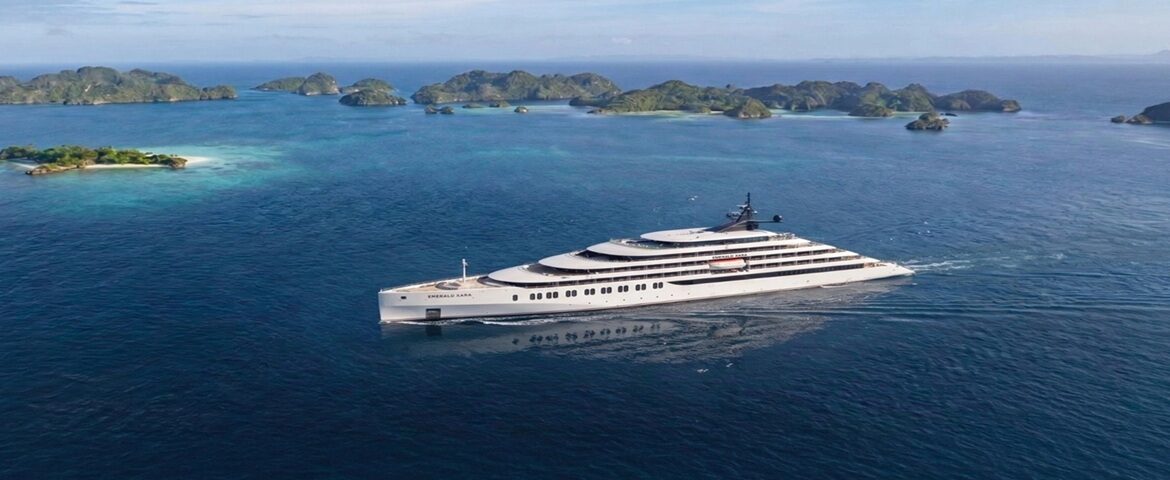
Emerald Xara
16 Cruises


Guide
Frequently Asked Questions
It anchors offshore: passengers come in by tender. Calls are rare here, and the whole town seems to know it.
The centre, yes: the market and waterfront are close to the landing. Mission Hill is a climb, and Cape Wom, some fifteen kilometres away, needs a vehicle.
The market and its Sepik carving, the Japanese memorial on Mission Hill for the view over the whole bay, and Cape Wom if time allows. All three barely fit into half a day.
The former airstrip where Japanese General Adachi surrendered his sword to Australian forces in September 1945, sealing the surrender of his troops. A memorial park preserves the site; the line of the runway is still visible in the short grass.
Sago, smoked fish, fruit sold in small piles on leaves, hand-knotted bilums and above all Sepik carving: masks, ceremonial stools and wooden crocodiles brought down from the river.
Yes, that is its role. Without going upriver you catch the echo of it at the market and during sing-sings: the ancestral crocodile, the spirit houses, carving used as a language.
A great deal. Wewak was one of the main Japanese bases in New Guinea. Salt-eaten artillery pieces still sit on the slopes, and a plain Japanese memorial looks over the town from Mission Hill.
The kina, in small notes. There is no card terminal at the market, and cash is the only practical option.
English and Tok Pisin. A few words of Tok Pisin will make the stallholders smile, though contact comes easily either way.
Coconut-lined beaches run either side of town, and the one at Cape Wom is long and quiet. This is not a beach call, though: the interest of the day is human and historical.


