Port of Corpach, Scotland | Cruise Port Guide

Ben Nevis decides everything here. The highest summit of the British Isles—1,345 metres of granite often capped with clouds—closes the head of Loch Linnhe, and it is beneath its gaze that expedition ships drop anchor before Corpach, at the Caledonian Canal's western entrance. Landing is by tender on a shore where the smell of seaweed mingles with that of peat. You are at the gates of the Highlands, and the scenery makes no effort to hide it.

Telford's Canal

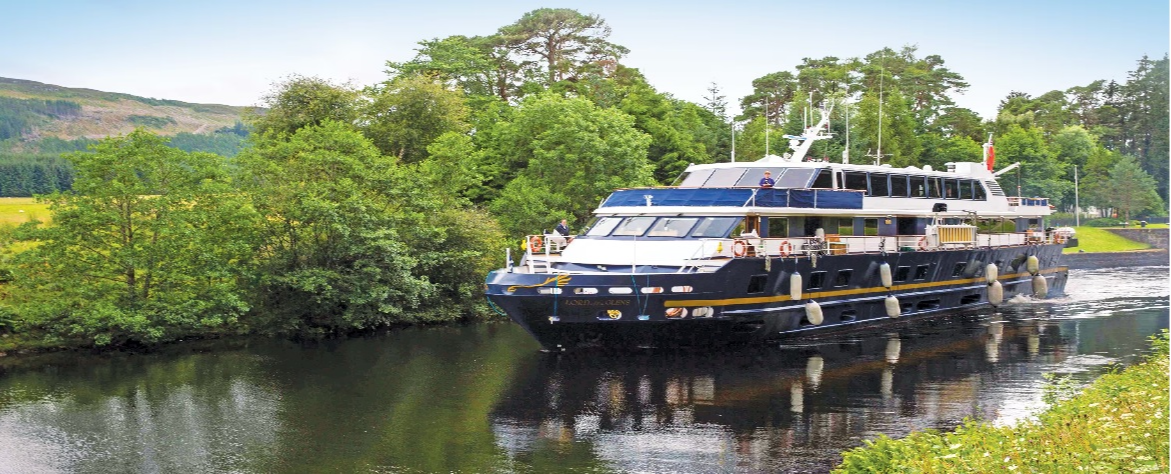
Corpach owes its place on the maps to a titanic undertaking: the Caledonian Canal, dug between 1803 and 1822 under the direction of engineer Thomas Telford to link the two coasts of Scotland and spare ships the dreaded rounding of Cape Wrath and the Pentland Firth. Its entrance basin, its locks and its small lighthouse form a whole traversed on foot in a few minutes from the landing place. Sailing ships wait between two lockages, and lock-keepers still operate gates and sluices under the eyes of the curious.

Neptune's Staircase: The Water Stairway

Three kilometres upstream, at the hamlet of Banavie, the canal climbs twenty metres of elevation at once through a line of eight adjoining locks: Neptune's Staircase, the longest lock stairway in Great Britain. A boat takes about an hour and a half to pass through it, and watching the manoeuvre—hulls rising lock by lock, crews running from bollard to bollard—constitutes a spectacle in itself. The towpath, flat and wide, reaches it pleasantly on foot or by bicycle along the black water.

The Wreck That Fixes the Mountain

On the shore near Caol rests one of the Highlands' most photographed images: the Corpach wreck, an old fishing boat driven ashore by a storm and never claimed. Its rusted hull, laid askew on the shingle facing Ben Nevis, attracts photographers from around the world at dawn. The walk from the landing place takes about twenty minutes and amply rewards the effort—especially at low tide, when the mudflats reflect the mountain.

Fort William: Base Camp

Six kilometres away, Fort William is reached in a few minutes by bus or train. Scotland's small outdoor capital lines mountain shops, pubs and the West Highland Museum, an engaging jumble devoted to Jacobites—notably featuring a secret portrait of Bonnie Prince Charlie, visible only in reflection in a polished cylinder. It is also from its station that the Jacobite steam train departs, made famous by the Harry Potter films, which crosses the Glenfinnan Viaduct en route to Mallaig. Schedules rarely align with a short port-call: enquire before dreaming of it.

Nature as Backdrop

Whether you walk toward Banavie or simply along the shore, the same certainty imposes itself: here, nature is not décor, it is the subject. Motionless herons on the mudflats, curious seals in the loch, light that changes three times in an hour, peaks that appear and disappear in the clouds. The Highlands never give themselves entirely—that is their way of holding travellers.

Before Returning Aboard

One must, leaving Corpach, allow oneself a last look from the tender: the basin, the minuscule lighthouse, and behind them that dark mass that draws clouds. Many passengers go ashore to see a historic work; they return aboard with the feeling of having approached something older and vaster. The Highlands produce that effect, and this anchorage is one of its most discrete thresholds.

Frequently Asked Questions

By tender. Expedition ships anchor off Corpach at the western entrance to the Caledonian Canal, at the head of Loch Linnhe, under the gaze of Ben Nevis.
The highest peak in the British Isles: 1,345 metres of granite often capped by cloud, closing off the head of the loch. It governs everything in this landscape, and the call is spent in its shadow.
A colossal undertaking dug between 1803 and 1822 under engineer Thomas Telford, to link Scotland's two coasts and spare ships the dreaded rounding of Cape Wrath and the Pentland Firth. Its entrance basin, locks and little lighthouse are a few minutes' walk from the landing.
Britain's longest lock flight, at the hamlet of Banavie three kilometres upstream: eight locks in a row lifting the canal twenty metres in one go. A boat takes about an hour and a half to work through, and watching the operation is a spectacle in itself.
Along the towpath, flat and wide, following the dark water: three pleasant kilometres on foot or by bike. No transport is needed.
One of the most photographed images in the Highlands: a former fishing boat driven ashore by a storm and never claimed, its rusting hull lying at an angle on the shingle of nearby Caol, facing Ben Nevis. The walk from the landing takes about twenty minutes, and the site is best at low tide.
Yes, a few minutes by bus or train: Scotland's small outdoor capital lies six kilometres away. It has mountaineering shops, pubs and the West Highland Museum, an endearing jumble devoted to the Jacobites — including a secret portrait of Bonnie Prince Charlie, visible only as a reflection in a polished cylinder.
Rarely. The train leaves from Fort William station and crosses the Glenfinnan Viaduct on its way to Mallaig, but its timetable sits poorly with a short call. Check before you set your heart on it rather than finding out on the day.
The pound sterling and English, with Gaelic on the Highlands' bilingual signs. Corpach being a hamlet, plan your shopping for Fort William.
Yes, for families who enjoy walking and watching. Lock operations fascinate children, the towpath is flat, and motionless herons on the mudflats and curious seals in the loch round out the day. There is, however, no children's museum and no organized attraction.