Laggan, Scotland | Cruise Port Guide

The water rises gently in the lock chamber, the wooden gates open, and the boat glides onto Loch Lochy. At Laggan, in the middle of the Great Glen, navigation becomes an art of slowness. This river cruise stop on the Caledonian Canal doesn't appear on any list of major attractions: it offers something else, complete immersion in the Highlands, between two long stretches of water and an avenue of century-old trees.

The Laggan Locks

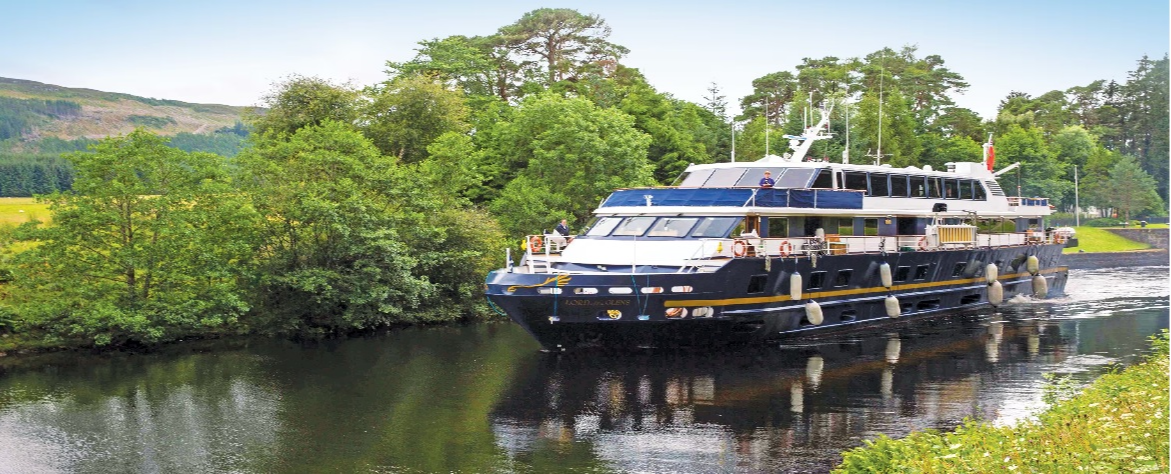
The small ships and hotel barges that travel the canal moor at the foot of the locks, at the southwestern tip of Loch Lochy. The structure, designed in the 19th century by engineer Thomas Telford, links the bodies of water of the great valley to allow crossing Scotland from one sea to the other. Watching boats pass through the lock, mooring lines in hand, is the main spectacle here; the lock-keepers are never short of explanations.

A Barge Turned Inn

Moored near the locks, a 1926 Dutch barge houses a pub-restaurant, the Eagle Barge Inn. You go down a few steps to find brass fittings, banquettes and seafood dishes served on the water. The place sums up the spirit of the stop: improvised, warm, geared toward the boaters and walkers who cross paths there over a pint.

Laggan Avenue, the Green Canopy

Between the two lochs, the canal runs beneath an avenue of trees that many consider the most beautiful stretch of the route. The banks can be followed on foot along the towpath: a flat, silent walk where your gaze shifts from reflections on the water to mossy trunks. In spring as in autumn, the palette narrows to greens and golds, and that is enough.

The Great Glen Way Within Boot's Reach

The long-distance trail that crosses Scotland from Inverness to Fort William passes right through here. From the mooring, several sections lend themselves to a one- to three-hour walk: the north shore of Loch Lochy beneath the forests of Cameron country, or the west shore of Loch Oich toward Invergarry. More ambitious walkers aim for the Clan Cameron Museum at Achnacarry, which tells both the Jacobite saga and the story of the Allied commandos who trained in these hills during the Second World War.

Things to See and Do from the Mooring

  • Watch boats pass through the locks and chat with crews in transit.
  • Follow the tree canopy on foot or by bike along the towpath.
  • Walk a section of the trail, on one shore or the other.
  • Venture as far as Invergarry, a discreet village with ruins steeped in clan history.
  • Sit down at the barge inn on your return, facing the mountains.

A Landscape Steeped in Memory

The great fault line isn't just a backdrop: it served as a route for clans, soldiers and smugglers long before pleasure boaters. The shores of Loch Lochy belong to the historic territory of the Camerons, and every hamlet in the area keeps the memory of the Jacobite uprisings. Sailing here means crossing this memory at the pace of a towing horse.

In the evening, when the mountains stand out against a still-pale sky and the last lock has closed, you understand why some travellers prefer these tiny cruises to the major itineraries: at Laggan, Scotland isn't visited, it's listened to. And its murmur follows travellers long after the lines are cast off.

Frequently Asked Questions

The small ships and hotel barges that work the Caledonian Canal tie up at the foot of Laggan Locks, at the southwest end of Loch Lochy. Laggan is not a seaport: it is an inland navigation stop in the middle of the Great Glen.
Only small craft on the Caledonian Canal: hotel boats, barges and small cruise vessels. No ocean-going ship can reach it. This is a slow-cruising stop, not a big-ship port.
Watch the boats work through the lock and talk to the keepers, then walk the towpath beneath Laggan Avenue. More ambitious walkers take a section of the Great Glen Way: one to three hours along the north shore of Loch Lochy or the west shore of Loch Oich.
The stretch of canal that runs beneath an avenue of century-old trees between the two lochs, widely considered the finest part of the route. The banks are walkable along the towpath: a flat, silent stroll where the eye moves from reflections on the water to mossy trunks.
A 19th-century work designed by engineer Thomas Telford, linking the lochs of the Great Glen so that boats can cross Scotland from one sea to the other. It still operates: watching vessels work through the stone locks is the spectacle of the place.
One, and it is unexpected: a 1926 Dutch barge moored near the locks houses a pub-restaurant. A few steps down you find brass, banquettes and seafood served at water level. That is the spirit of the place: improvised and welcoming.
Yes, exactly here. The long-distance path that crosses Scotland from Inverness to Fort William runs past the mooring, and several sections make good one to three hour walks with little climbing.
The Clan Cameron Museum at Achnacarry, which covers both the Jacobite story and the training of Allied commandos in these hills during the Second World War. It takes a long walk or a lift to get there: it is not next to the mooring.
Yes, for families who enjoy quiet. Watching boats work through the lock fascinates children, the towpath is flat and safe, and cycling is easy. There are, however, no attractions, no shops and no playground.
Pound sterling and English. There is no cash machine and no shop, so bring what you need. The barge pub generally takes cards, but carrying some cash remains sensible in the Highlands.