Baddeck NS Nova Scotia Canada
2
Cruises availables
At departure or passage at this port

Baddeck, Canada | Cruise Port Guide
Frequently Asked Questions
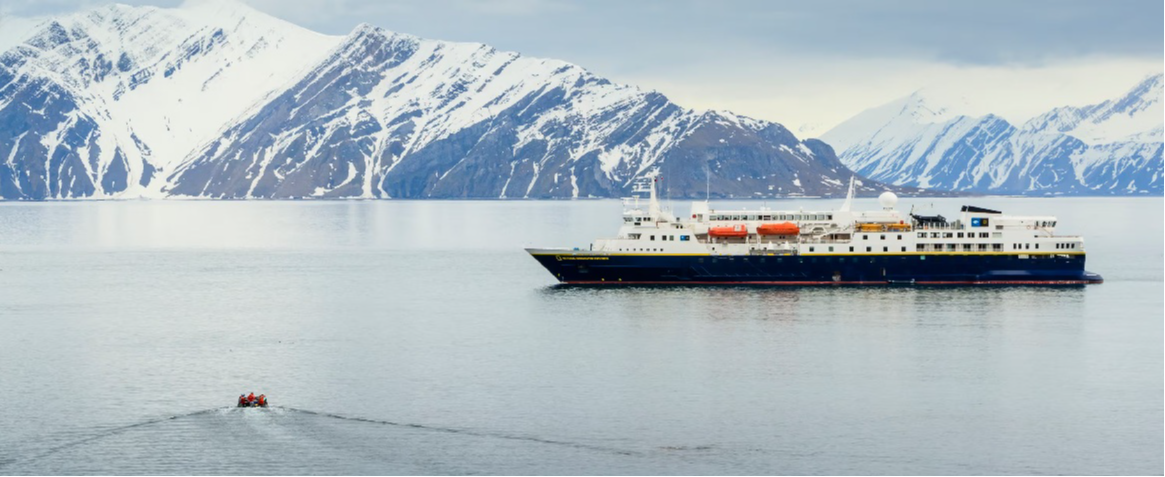
Small ships anchor off the village in the Bras d'Or Lake and land passengers a step from the main street. The waterfront is only a few hundred metres long.
Yes, entirely. Water Street, the wooden wharves and the Alexander Graham Bell National Historic Site are all walkable from the landing, the last about fifteen minutes away.
A vast saltwater expanse at the heart of Cape Breton Island, Canada's largest inland sea and a UNESCO biosphere reserve. Fed by both fresh springs and the sea, it often stays calm when the open ocean is rough.
He spent the last decades of his life here at his Beinn Bhreagh estate across the bay, and carried out some of his boldest experiments on this water. He said he had seen many landscapes around the world but none to surpass this one.
The world's richest Bell collection, run by Parks Canada: telephone prototypes, giant tetrahedral-cell kites, a replica of the Silver Dart that made Canada's first powered flight in 1909, and remains of the HD-4 hydrofoil. Allow two hours.
The Bell site takes two hours, and strolling Water Street and the waterfront another. What is left suits a sailing outing from the wharf, or simply a bench facing the Kidston Island lighthouse.
Yes, outings leave from the wharf in season. The lake has a reputation as an ideal basin for learning to sail, and bald eagles watch the sailors from the pines.
The island and its red and white lighthouse are mainly admired from shore. Seasonal shuttles sometimes run across, but service is not guaranteed on any given day.
Yes, it is the traditional starting point of the scenic route that circles the Cape Breton Highlands. Longer calls sometimes allow an excursion along part of it, between cliffs and fishing coves.
Lobster and mussels lead the menus on Water Street, which also has craft galleries and wool and Celtic music shops. On summer evenings, traditional Cape Breton music often fills the pubs and community halls.


