Chongqing China
14
Cruises availables
At departure or passage at this port
Avalon Waterways (14 Cruises)
Century Legend
14 Cruises
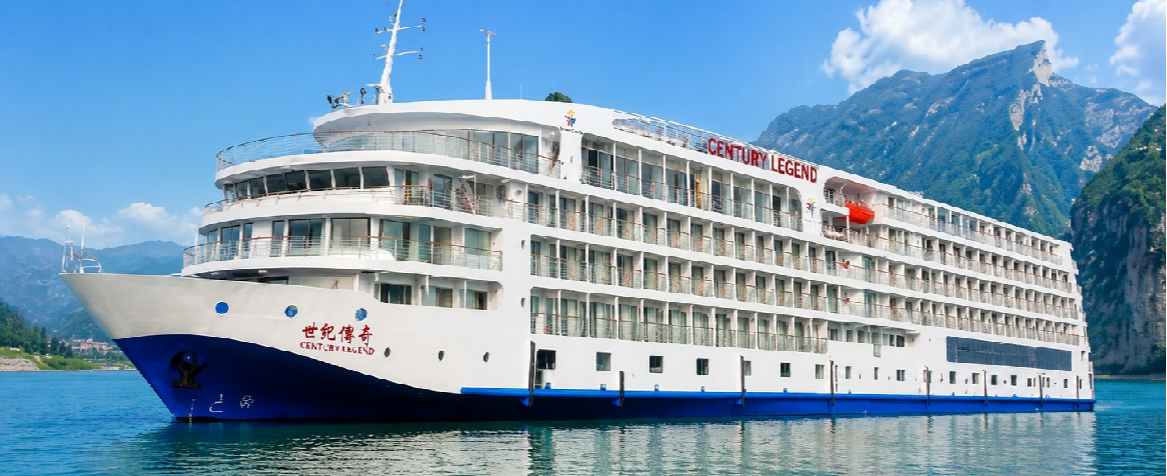

| 14 May | 16 days | One-way from Basel to Shanghai |
450-628-6241
Call us
|
| 15 May | 15 days | One-way from Basel to Shanghai |
450-628-6241
Call us
|
| 4 June | 16 days | One-way from Basel to Shanghai |
450-628-6241
Call us
|
| 5 June | 15 days | One-way from Basel to Shanghai |
450-628-6241
Call us
|
| 10 September | 16 days | One-way from Basel to Shanghai |
450-628-6241
Call us
|
| 11 September | 15 days | One-way from Basel to Shanghai |
450-628-6241
Call us
|
Frequently Asked Questions
At the Chaotianmen quay, at the point where the greener Jialing merges into the yellower Yangtze. The dividing line between the waters stays visible for a long stretch. Boarding usually takes place in late afternoon or evening.
One to two hours, enough time to find your ship among the vessels lined up along the wharf. From the upper deck the departure is worth settling in for early: the city lights up gradually and the facades reflect in both rivers.
Evening boarding leaves a full day. Chaotianmen square and its lookout, the Yangtze cable car, the Three Gorges Museum and, if time allows, the old town of Ciqikou about 18 kilometres out.
Because streets run above rooftops, staircases serve as sidewalks and the metro sometimes passes through buildings. The city is built vertically, in stacked tiers on the hills: no other Chinese metropolis looks like it.
An aerial crossing of the river, the most direct way to grasp Chongqing's geography. A few minutes of overhead views onto water loaded with barges, from the Yuzhong bank in the city centre.
A stack of stilt houses clinging to the cliff, reinvented as galleries of restaurants and shops, on the edge of the Jialing and a short distance from the quay. After dark the whole thing lights up: it is the image most visitors take home.
It is strongly advised. Facing the Great Hall of the People, it covers the river's history, the villages drowned by the reservoir and the cultures of eastern Sichuan. Its models and photographs completely change how you read the landscapes over the following days.
An old town whose lanes date from the late Ming dynasty, above the Jialing, about 18 kilometres from the centre. Restored wooden houses, calligraphy workshops, tea merchants. Metro line 1 has a Ciqikou station a few streets from the entrance.
Spicy noodles and Sichuan hotpot, provided you make peace with the Sichuan pepper that slightly numbs the lips. It is disconcerting the first time, and sought after ever after.
Distinctly. Many travellers pass straight from airport to gangway and miss one of China's most astonishing cities. A day on the ground turns embarkation into a real stage of the journey.


