Yichang China, Yangtze River
14
Cruises availables
At departure or passage at this port
Avalon Waterways (14 Cruises)
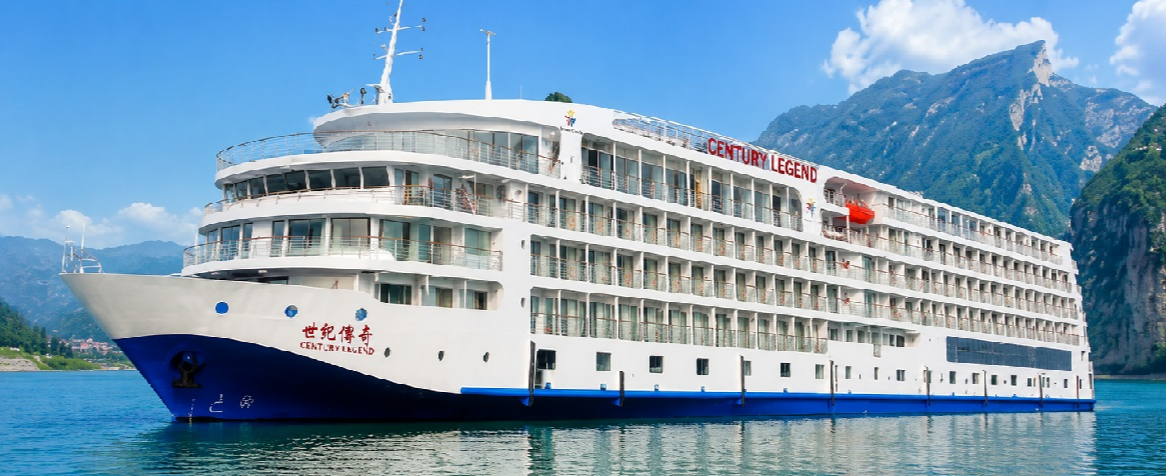
Century Legend
14 Cruises

| 14 May | 15 nights | One-way from Basel to Shanghai |
450-628-6241
Call us
|
| 15 May | 15 days | One-way from Basel to Shanghai |
450-628-6241
Call us
|
| 4 June | 15 nights | One-way from Basel to Shanghai |
450-628-6241
Call us
|
| 5 June | 15 days | One-way from Basel to Shanghai |
450-628-6241
Call us
|
| 10 September | 15 nights | One-way from Basel to Shanghai |
450-628-6241
Call us
|
| 11 September | 15 days | One-way from Basel to Shanghai |
450-628-6241
Call us
|

Port of Yichang | Cruise Port Guide
Frequently Asked Questions
Depending on the line, at the downtown quays a short walk from the riverside promenade, or at Maoping, an hour upstream almost at the foot of the great dam. Shuttles link the two: check your embarkation point before booking anything ashore.
Because nearly every Three Gorges cruise begins or ends there. The airport and high-speed rail stations also put the city within direct reach of Shanghai, Xi'an and Wuhan, which explains the constant traffic of suitcases on the esplanade.
The elder sibling of the great dam, within Yichang itself, which lifts ships some twenty metres. Passing its locks alongside the steel gates is often the first or last thrill of the cruise.
The shaded esplanade that follows the current for several kilometres is walkable from the downtown quays. You watch ordinary river life there: barge trains, anglers, dance groups once it cools, kites above the willows.
A hollowed cliff on the western edge of town, overlooking the mouth of the gorge. Its name comes from three Tang-era poets who carved their verses there, later imitated by Song scholars. Pavilions, stairways and inscriptions cling to the rock face above a jade-coloured bend.
It requires accepting a few flights of steps. The site is not inaccessible, but it is not flat either: wear decent shoes. The reward is one of the finest viewpoints reachable from the city.
A site laid out in a side valley of the Xiling Gorge that recreates river life of the past: stilt houses, sampans moored to the rocks, fishing scenes and traditional songs along a clear stream. It is open-air theatre, openly so, but the cliff backdrop is real.
Navel oranges, the other regional pride: the orchards on the surrounding slopes are among China's most productive, and vendors readily offer a segment to try. In season the esplanade stalls overflow with them.
Yes, around four million people, but rebuilt in broad strokes and without a monumental old core. It reveals itself better on its riverfront than in its modern districts: that is where, between the water and the apartment blocks, you catch its rhythm.
Spring and autumn, April to May and September to October: mild temperatures, less stubborn mist on the river and better visibility in the gorges. Summer is heavy, winter cool and often veiled.


