Guy Fawkes Island Galapagos
Ecuador
56
Cruises availables
At departure or passage at this port
Silversea Cruises (56 Cruises)
Silver Origin
56 Cruises
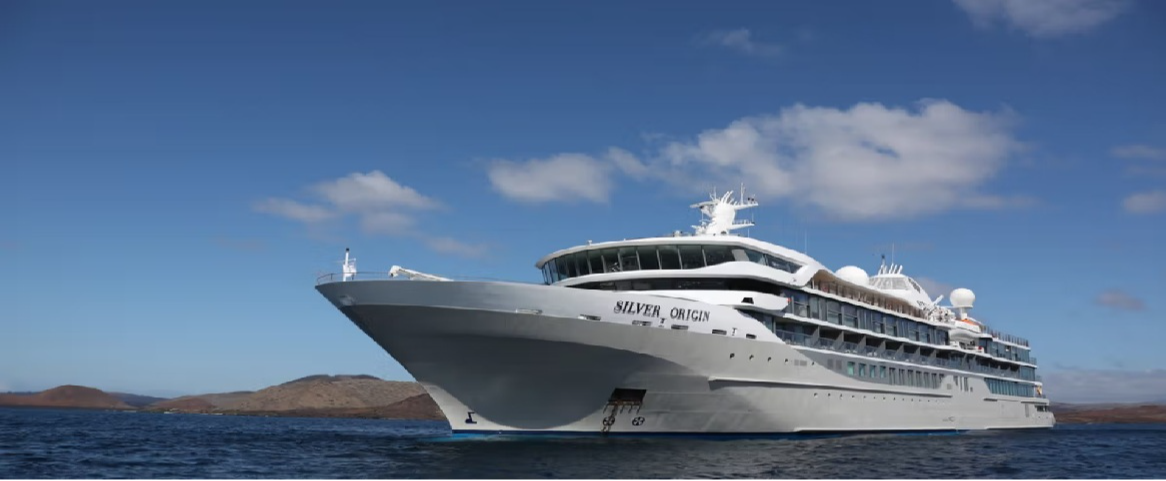

| 9 January | 7 nights | Round-trip from San Cristobal Island, Ecuador |
450-628-6241
Call us
|
| 23 January | 7 nights | Round-trip from San Cristobal Island, Ecuador |
450-628-6241
Call us
|
| 6 February | 7 nights | Round-trip from San Cristobal Island, Ecuador |
450-628-6241
Call us
|
| 20 February | 7 nights | Round-trip from San Cristobal Island, Ecuador |
450-628-6241
Call us
|
| 6 March | 7 nights | Round-trip from San Cristobal Island, Ecuador |
450-628-6241
Call us
|
| 20 March | 7 nights | Round-trip from San Cristobal Island, Ecuador |
450-628-6241
Call us
|
| 3 April | 7 days | Round-trip Galapagos Islands Silver Origin San Cristobal |
450-628-6241
Call us
|
| 17 April | 7 nights | Round-trip from San Cristobal Island, Ecuador |
450-628-6241
Call us
|
| 12 June | 7 nights | Round-trip from San Cristobal Island, Ecuador |
450-628-6241
Call us
|
| 26 June | 7 nights | Round-trip from San Cristobal Island, Ecuador |
450-628-6241
Call us
|
| 4 September | 7 nights | Round-trip from San Cristobal Island, Ecuador |
450-628-6241
Call us
|
| 18 September | 7 nights | Round-trip from San Cristobal Island, Ecuador |
450-628-6241
Call us
|
| 8 January | 7 nights | Round-trip from San Cristobal Island, Ecuador |
450-628-6241
Call us
|
| 22 January | 7 nights | Round-trip from San Cristobal Island, Ecuador |
450-628-6241
Call us
|
| 5 February | 7 nights | Round-trip from San Cristobal Island, Ecuador |
450-628-6241
Call us
|
| 19 February | 7 nights | Round-trip from San Cristobal Island, Ecuador |
450-628-6241
Call us
|
| 4 March | 7 nights | Round-trip from San Cristobal Island, Ecuador |
450-628-6241
Call us
|
| 18 March | 7 nights | Round-trip from San Cristobal Island, Ecuador |
450-628-6241
Call us
|
| 13 May | 7 nights | Round-trip from San Cristobal Island, Ecuador |
450-628-6241
Call us
|
| 27 May | 7 nights | Round-trip from San Cristobal Island, Ecuador |
450-628-6241
Call us
|
| 10 June | 7 nights | Round-trip from San Cristobal Island, Ecuador |
450-628-6241
Call us
|
| 24 June | 7 nights | Round-trip from San Cristobal Island, Ecuador |
450-628-6241
Call us
|
| 6 January | 7 nights | Round-trip from San Cristobal Island, Ecuador |
450-628-6241
Call us
|
| 20 January | 7 nights | Round-trip from San Cristobal Island, Ecuador |
450-628-6241
Call us
|
Guy Fawkes Islets | Cruise Port Guide
Frequently Asked Questions
No, nobody lands there. These two lava crescents and two rocks, northwest of Santa Cruz, offer no beach and no trail. It is a marine-activity site only.
For what lies beneath the surface. The underwater cliffs are among the most alive in the Galápagos archipelago, and expedition ships call here specifically for the snorkelling.
Dark, arid arcs a few dozen metres high, with cactus and lichen clinging to them. They are the remains of volcanic cones eroded by the ocean. The view above water stays spare, almost austere under the garúa, the cool mist that caps the archipelago for part of the year.
Vertical walls dropping into the blue, covered in sponges, corals, sea stars and pencil urchins. Schools of tropical fish pass in dense clouds: goldrimmed surgeonfish, damselfish, parrotfish. With luck, a green turtle, a ray or a whitetip reef shark goes by.
Yes, regularly. They spin centimetres from your mask before vanishing with a flick of a flipper. It is the moment most passengers remember from the stop.
Colder than you would expect on the equator. The wetsuits provided on board are not a luxury: the currents cool the sea noticeably off western Santa Cruz.
Because the currents sweeping western Santa Cruz bring nutrient-rich water up from the depths. That richness feeds the entire chain, from plankton to sharks, and explains the abundance around the islets.
Dinghy outings along the rocks let you watch the few seabirds nesting on the ledges and the sea lions hauled out on the low rocks. It is modest by comparison: the substance of this site is underwater, and it is worth knowing that before choosing.
As everywhere in the Galápagos National Park: naturalist guides at all times, limited group sizes, no contact with wildlife or the seabed. That rigour, applied for decades, is why the animals pay visitors no attention at all.
That of the essential complement. The famous islands offer their iguanas, blue-footed boobies and giant tortoises; these islets reveal what the ocean builds quietly around every volcanic rock.


