Biarritz France
6
Cruises availables
At departure or passage at this port
CroisiEurope (6 Cruises)
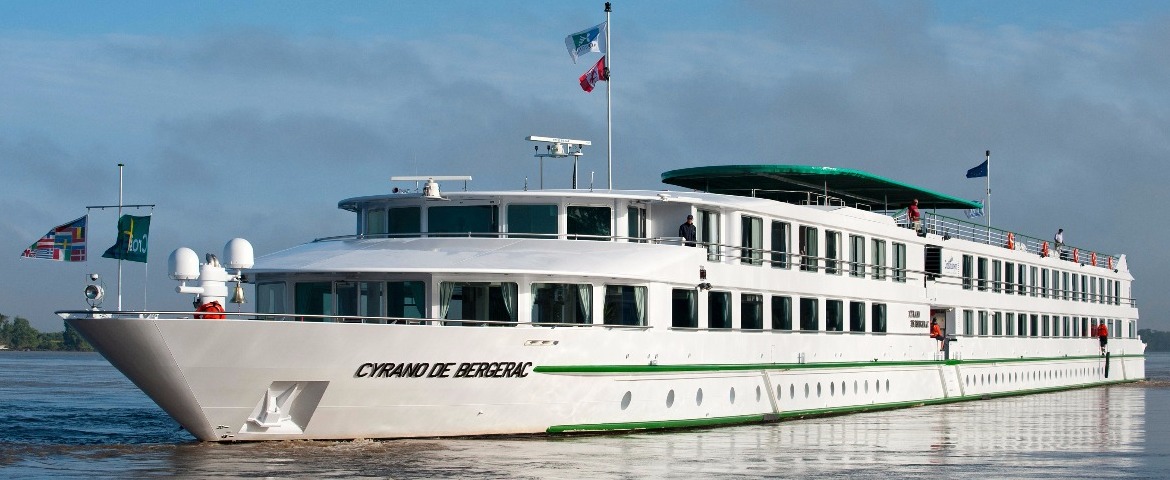
MS Cyrano de Bergerac
6 Cruises

Port of Biarritz, France | Cruise Port Guide
Frequently Asked Questions
By tender, most of the time. The bay has no deep-water pier: ships, usually small upmarket vessels, anchor offshore and tender passengers in, with the Grande Plage and its striped bathing huts straight ahead. Some lines prefer the neighbouring bay of Saint-Jean-de-Luz and bring guests over by coach.
Entirely, once ashore. Strolling the length of the Grande Plage takes twenty minutes, sea spray included, and the main sights are within a fifteen-minute walk.
An empress launched it. Taken with the bay since childhood, Eugénie de Montijo had a villa built facing the ocean in 1854; crowned Europe followed, and the surfers a century later. The villa is now the Hôtel du Palais, a red and white facade you can admire from the promenade.
A reef linked to the shore by a metal footbridge from the Eiffel workshops, fifteen minutes' walk from the tender pier along the coastal path. The statue on top watches the Bay of Biscay swells roll in; in heavy seas, spray reaches the visitors.
A handful of white crampotes, the old fishermen's huts, now small restaurants where you eat facing the boats. It hides below the Atalaye plateau, on the way to the Rocher de la Vierge.
Fishmongers, cheesemongers and pastry cooks, every morning, five minutes from the seafront. Try ossau-iraty, mild peppers and gâteau basque with black cherry; the oyster bars around the market are happy to extend the stop. Think quick lunch rather than a sit-down meal.
Yes, at the Côte des Basques, the European birthplace of surfing since the 1950s, south of town. Watch from the corniche road. At high tide the water covers the sand completely and the figures seem to launch from the foot of the cliff itself.
Yes, at the cost of 248 steps. The Pointe Saint-Martin lighthouse is a twenty-five minute walk from the seafront and the view runs from the Landes beaches to the Pyrenees dropping into the sea. Skip it if your knees or your breath are a concern.
By bus or taxi, about ten kilometres. It is the capital of the French Basque Country and the trip makes sense if you are in port more than six hours.
The euro. French everywhere, Basque on the signs. Cards work in shops and at Les Halles; a little cash is still useful at the market stalls.


