Collonges-au-Mont-d'Or France

39 Cruises availables At departure or passage at this port

CroisiEurope (39 Cruises)

Port of Collonges-au-Mont-d'Or, France | Cruise Port Guide

The ship slows as evening falls, and a red and green façade illuminates on the Saône's right bank. Passengers in evening dress already wait on deck: at Collonges-au-Mont-d'Or, you do not disembark to tour monuments, you disembark to dine. The port-call, brief and precious, organizes itself around a table that changed the history of French cuisine: that of Paul Bocuse.

A Stop Born of a Restaurant

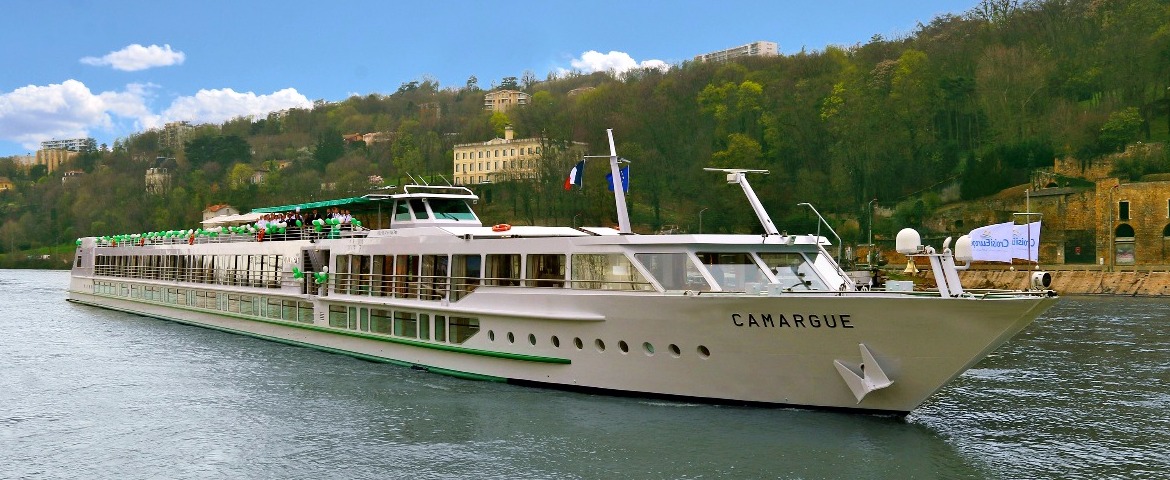
About ten kilometres upstream of Lyon, the town stretches between the river and the slopes of Mont d'Or. CroisiEurope boats make a stop there in the evening, mooring practically opposite the Collonges Bridge Inn, the house that held three Michelin stars for half a century where "Monsieur Paul" reigned over world gastronomy until his death in 2018. Some itineraries include dinner at the Collonges Abbey, the reception hall next door founded by the chef, where the barrel organ and Belle Époque décor accompany a menu in the great Lyonnaise tradition.

The Dinner Ritual

You cross the gangway, walk along a few dozen metres of quay, and enter a world codified with pleasure: white tablecloths, staff in uniform, silver tureens. Depending on the formula chosen, the evening declines the classics that made the house famous—Bresse chicken, quenelles, black truffle soup created for the Élysée in 1975, or a banquet menu in the spirit of the mothers of Lyon, those cooks who trained Bocuse and so many others. The meal constitutes the excursion itself; it extends late, and the return to the boat is made on foot, in just minutes, beneath the plane trees.

A Village of Golden Stone

For those with a moment before service or in the morning, the town merits a visit. It belongs to those localities of the Saône valley built in the blonde limestone that gave its nickname to the Mont d'Or hills. Three hamlets compose it: the town centre near the river, Trèves-Pâques on the heights and Old Collonges, whose steep lanes preserve vintner houses, stone walls and vaulted passages. The Neogothic church points its bell tower above the roofs; from paths climbing toward Mont Cindre, the valley unfolds, with Lyon shimmering to the south.

A River for Gourmands

This stop almost always fits into a gastronomic itinerary between the Rhône and Saône: Lyon and its bouchons the evening before, Beaujolais or Bresse the next day. The river itself participates in the pleasure. Broad and calm, bordered by bourgeois residences and riverside cafés, it has nothing of the Rhône's power; you navigate here as you taste, slowly. The banks welcome joggers, cyclists and evening anglers, and the islands of Roy and the Round Table drift slowly past in the twilight.

What the Port-Call Says About France

It may seem surprising that a cruise stop is devoted to a single meal. It is to underestimate what this table represents: classified in the inventory of intangible cultural heritage through the gesture, transmission and memory it embodies, French cuisine has partly been written here. Cooks from around the world, including several great Québec chefs, have passed through these kitchens before opening their own establishments. Dining within these walls is to touch the source.

At First Light

When the boat casts off toward Mâcon or Trévoux, the painted façade recedes into the morning mist. Breakfast conversations still turn around yesterday's chicken and the dessert cart. Some port-calls are measured in monuments; this one is measured in table memories, and they rank among the most tenacious a voyage can leave behind.

Frequently Asked Questions

On the Saône, about ten kilometres upstream of Lyon, practically opposite the Auberge du Pont de Collonges. You cross the gangway, walk a few dozen metres of quay, and you are there.
To dine, not to see monuments. The call is built around Paul Bocuse's table, three-Michelin-starred for half a century, where Monsieur Paul reigned over world gastronomy until his death in 2018. It is an evening call.
The meal is the excursion. Depending on the arrangement, the evening runs through the house classics — Bresse poultry, quenelles, the black truffle soup created for the Elysée Palace in 1975 — or a banquet menu in the spirit of the mères lyonnaises. The walk back to the ship takes a few minutes.
The nearby reception hall founded by Paul Bocuse, where some itineraries schedule dinner. A fairground organ and Belle Époque decor accompany a menu in the grand Lyonnais tradition. It is as much theatre as gastronomy.
In practice, yes. Passengers go ashore in evening dress: white linen, uniformed brigade, silver tureens. This is not a call for shorts and sandals.
The village is worth a wander if you have time. It is made of three hamlets: the centre near the river, Trèves-Pâques on the heights and Vieux Collonges, whose steep lanes keep their winegrowers' houses, low walls and vaulted passages.
Because the village is built from the blond limestone of the Saône valley, the stone that gave the Monts d'Or their name. From the paths climbing toward Mont Cindre the valley opens up, with Lyon glittering to the south.
Not really. A multi-hour gastronomic dinner tests young children severely, and the village offers nothing aimed at them. This call is designed for adults who love food.
Almost always within a food-focused Rhône and Saône route: Lyon and its bouchons the day before, Beaujolais or Bresse the day after. The Saône, wide and calm, has none of the Rhône's force — you sail it the way you taste, slowly.
The euro, cards accepted without issue. French is spoken; staff at the great houses are used to international guests and manage in English.