In a forest clearing, a railway carriage has twice seen the world's history turn. It was at Compiègne, on 11 November 1918, that Germany signed the Armistice ending the Great War; it was in the same place, through a carefully staged revenge, that France was forced to capitulate in June 1940. Few cities of this size bear such a burden of memory, and cruises of the Oise Valley make it one of their highlights.

A River Port-Call at the Gates of Paris

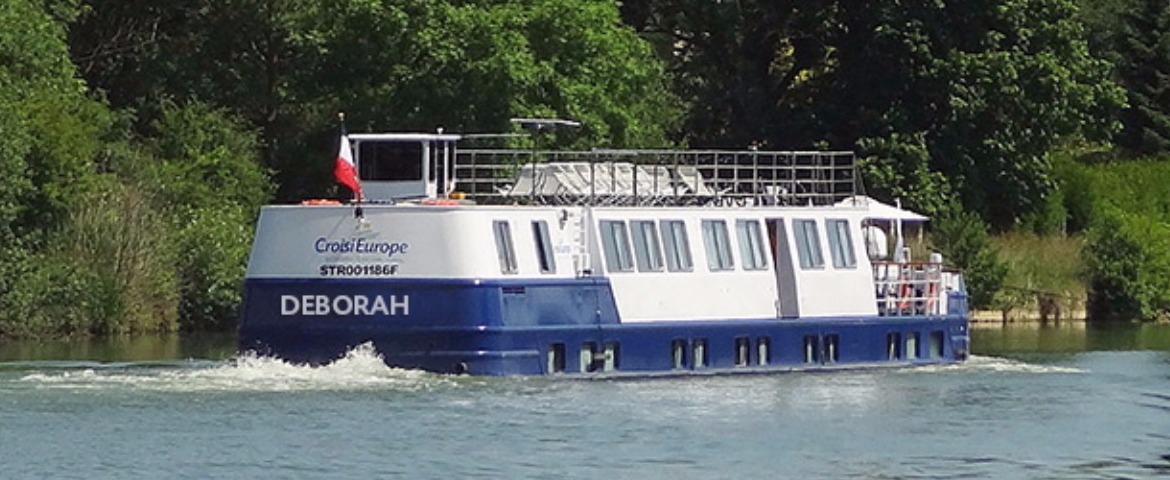
Hotel barges and small vessels that ascend the Oise from the Seine moor in the centre's outskirts, minutes' walk from the monuments. The river, peaceful and bordered by willows, bears nothing of the great tourist routes: you encounter mainly freight convoys and herons. This discretion is the charm of Picard itineraries, which link the gardens of Auvers-sur-Oise, dear to Van Gogh, to the forests of Valois. Compiègne is their patrimonial apex.

The Palace of Kings and Emperors

Facing its gardens that open onto the forest spreads France's largest Neoclassical palace. Louis XV and Louis XVI had it built as a hunting residence; Napoleon I welcomed Marie-Louise of Austria there before their marriage; Napoleon III and Eugenie made it the theatre of the "Series," those autumn celebrations where all Europe pressed in. The visit chains imperial apartments, ball rooms and two unexpected museums: one of the Second Empire and one of the Carriage, where coaches stand beside the first steam automobiles. Budget two good hours for the whole, more if the gardens hold you; the Beaux-Monts lane, cut through for Marie-Louise, runs straight toward the timber stands for more than four kilometres.

The Armistice Clearing

Seven kilometres from the centre, at the end of a forest lane, the Rethondes clearing preserves the memory of both signings. The displayed carriage is a twin of the original, destroyed in Germany in 1945, surrounded by the memorial's period objects, photographs and films. The central slab, the rails and the statue of Marshal Foch compose a place of gripping gravity, where visitors naturally lower their voices. For Québec passengers, many of whose ancestors served in neighbouring Flanders and the Somme, the stop often resonates in a personal way.

An Old Centre at Human Scale

Back toward the town hall, a jewel of Flamboyant Gothic whose belfry houses the picantins, three automata that strike the hours from the sixteenth century onward. Around it, shopping streets lead to the Church of Saint-Jacques, where Joan of Arc came to pray the morning of her capture: it was beneath Compiègne's walls, in 1430, that the Maid was taken by the Burgundians before being sold to the English. A twelfth-century tower bears her name near the bridge, and the city maintains her memory with touching faithfulness.

The Forest: A Vegetative Cathedral

More than 14,000 hectares of beech and oak encircle the city, crisscrossed by straight lanes cut for royal hunts. Excursions sometimes add Pierrefonds Castle, this fairy-tale fortress rebuilt by Viollet-le-Duc, whose crenellated towers surge from the fronds fifteen kilometres away. Cyclists will profit from the path that connects the centre to the Rethondes site, one of northern France's finest woodland rides.

Before Descending the River

Evening returns the quays to calm, troubled only by the passage of a grain convoy and the bells of Saint-Jacques. You leave with contrasting images: imperial gold, the memorial's silence, the belfry's automata. The Oise pursues its modest course toward the Seine, and the traveller understands that in a single day, they have traversed a thousand years of French history concentrated between a river and a forest.

Frequently Asked Questions

On the Oise near the town centre, a few minutes' walk from the monuments. Mostly hotel barges and small vessels come up the river from the Seine. The Oise is no tourist highway: you meet freight convoys and herons.
The palace, the town hall and the church of Saint-Jacques, yes, all within minutes. The Armistice Clearing, however, is seven kilometres away and needs a coach or taxi.
You must choose. The palace and its two museums need a good two hours; the Armistice Clearing needs at least as much with travel. Doing both on a short call means rushing both.
World history turned there twice. Germany signed the armistice of 11 November 1918 on this spot; in the same place, in a carefully staged reversal, France had to surrender in June 1940.
No. The original was destroyed in Germany in 1945; the carriage on display is a sister car. It stands among period objects, photographs and films at the memorial, alongside the central slab, the rails and the statue of Marshal Foch.
The largest neoclassical palace in France, built by Louis XV and Louis XVI as a hunting residence. The visit runs through imperial apartments, ballrooms, the Second Empire Museum and the Carriage Museum, where coaches sit beside early steam automobiles. Allow a good two hours.
It was beneath the walls of Compiègne, in 1430, that the Maid was captured by the Burgundians before being sold to the English. She had prayed that very morning in the church of Saint-Jacques, and a 12th-century tower near the bridge bears her name.
Three automata housed in the town hall belfry, striking the hours since the 16th century. The town hall itself is a gem of Flamboyant Gothic, at the heart of the shopping streets.
Often, yes. So many Canadian forebears served in nearby Flanders and the Somme that the stop at the clearing lands personally. It is a solemn place, where visitors naturally lower their voices.
The euro, cards accepted at the palace, the memorial and in shops. French is spoken; the palace and memorial provide English material, but the town is not especially English-speaking day to day.