Concarneau France
3
Cruises availables
At departure or passage at this port
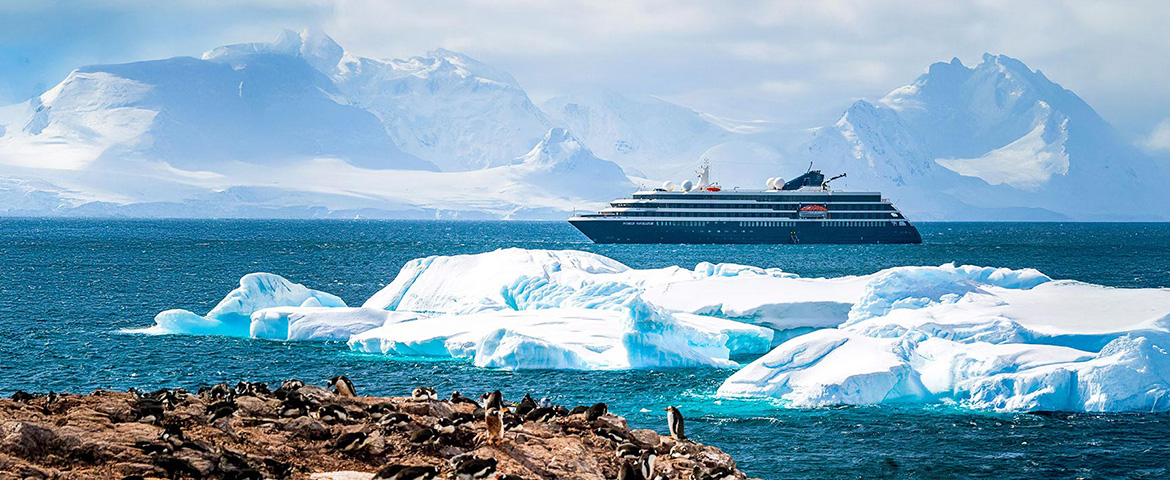
Atlas Ocean Voyages (2 Cruises)

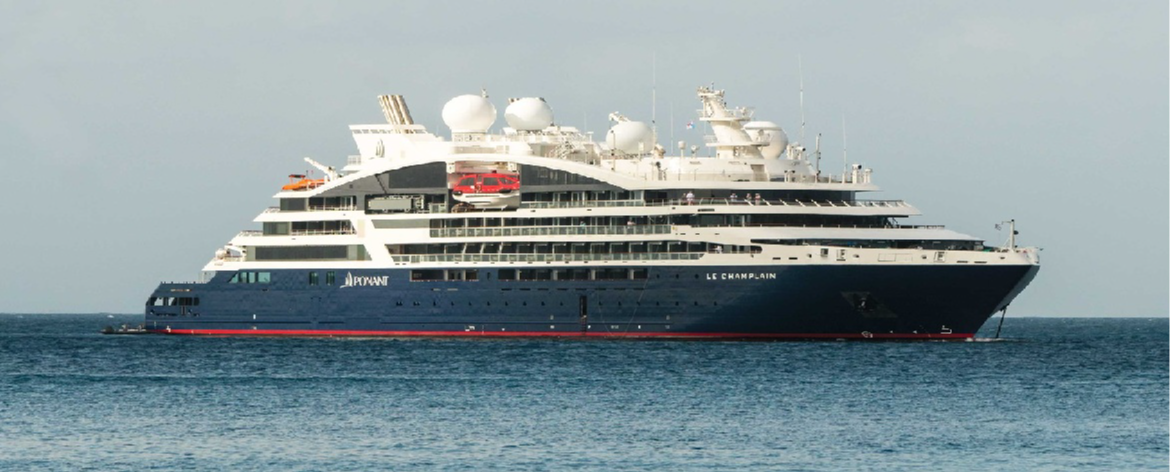
Ponant (1 Cruises)


Port of Concarneau, France | Cruise Port Guide
Frequently Asked Questions
By tender. Mid-sized cruise ships and expedition sailing vessels anchor in the bay and land passengers near the centre. Everything after that is on foot, within a few hundred metres.
A fortified island in the middle of the fishing port, ringed with granite since the 14th century. You enter over a stone bridge beneath a belfry bearing a sundial. Inside, one main street and a tangle of lanes hold crêperies, workshops and biscuit makers.
An hour to wander, two to linger over the shops and viewpoints. The rampart walk, reworked by Vauban, circles the whole islet: the fishing port and its blue hulls on one side, the sail-dotted bay on the other.
The Ville Close and its ramparts, the Fishing Museum with the trawler Hémérica, then the ferry crossing to the Passage quarter. Add the Marinarium if time allows. It all fits comfortably in one call.
Yes, if you are up early. Concarneau remains one of France's leading fishing ports and the auction stirs at dawn, when deep-sea trawlers land monkfish, langoustines and oily fish. Few calls still offer that ballet of crates and buyers.
A small boat crossing 200 metres of water in three minutes to the Passage quarter, which locals wryly call the world's smallest cruise. It costs a few coins and gives the best possible view of the fortifications.
The story of the Newfoundland cod fleets and tuna boats, housed in the old arsenal inside the Ville Close. The visit ends aboard the Hémérica, a 34-metre trawler moored at the quay, which you walk from bridge to hold.
A space devoted to coastal marine life, set inside the marine biology station founded in 1859, one of the oldest still working anywhere. Touch pools, plankton magnified a thousand times, and scientists' view of a changing ocean.
Very much so. The touch pools, the trawler visit and the three-minute ferry all work with children. Do watch the ramparts, which lack railings in places, and the uneven cobbles of the Ville Close.
The euro; keep coins for the ferry, which does not always take cards. French is spoken, with Breton names on every shopfront and hull. English is common in the museums, less so on the quays.


