Villeneuve-les-Maguelone France
17
Cruises availables
At departure or passage at this port
CroisiEurope (17 Cruises)
MS Anne-Marie
17 Cruises
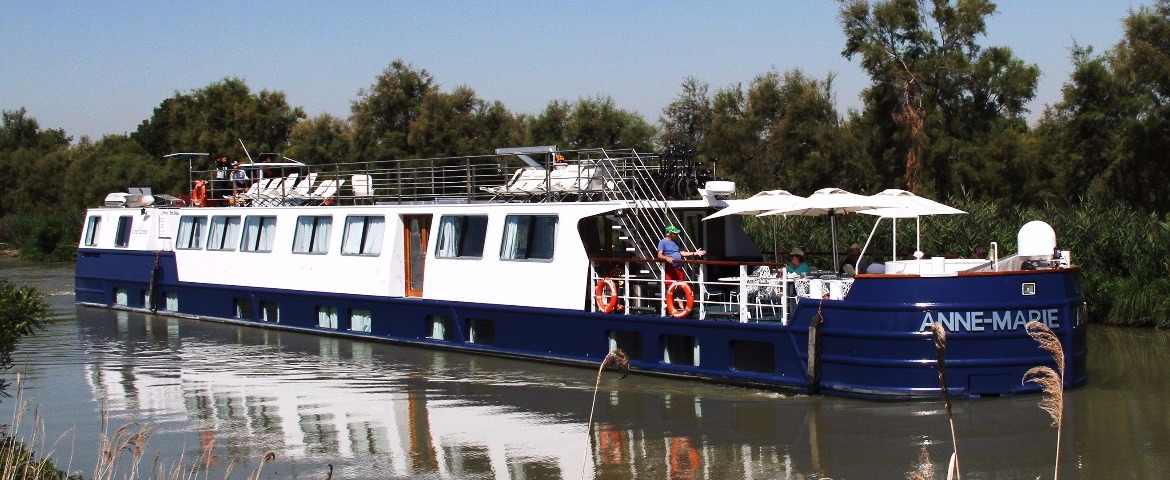

| 1 April | 7 days | One-way from Arles to Sete |
450-628-6241
Call us
|
| 1 April | 6 days | One-way from Arles to Sete |
450-628-6241
Call us
|
| 6 May | 6 days | One-way from Sete to Arles |
450-628-6241
Call us
|
| 6 May | 7 days | One-way from Sete to Arles |
450-628-6241
Call us
|
| 24 June | 7 days | One-way from Arles to Sete |
450-628-6241
Call us
|
| 24 June | 6 days | One-way from Arles to Sete |
450-628-6241
Call us
|
Villeneuve-lès-Maguelone, France | Cruise Port Guide
Frequently Asked Questions
At the river landing on the Rhône-to-Sète canal. A footbridge crosses the canal and opens the path onto the peninsula. From there it is about 800 metres on foot between vines and lagoons to reach the cathedral.
About 800 metres, on flat ground. A free little train shuttles in season for those who would rather not. The walk has its rewards: on both sides of the path the lagoons stretch away, alive with wading birds and, depending on the season, colonies of pink flamingos.
A Romanesque cathedral standing alone between sea and lagoons, and nothing else in the usual sense. There is no historic centre to wander and no string of museums: this is about birds, salt, wind and a thousand-year-old monument. It is a nature call, not a town call, and it is better to know that before going ashore.
A Romanesque building that served as a bishop's seat for nearly a thousand years, and where popes took refuge in the Middle Ages. Its thick walls pierced by narrow openings show it was as much a fortress as a church, facing threats from the sea. The bare interior takes about thirty minutes to visit.
Yes. A nine-kilometre beach lines the Mediterranean behind the cathedral, without a single building to break the line. A few minutes' walk takes you from the Romanesque doorway to the waves. There are no facilities out there, so bring a towel, water and sunscreen.
Often, but nothing is guaranteed: these are wild birds that move with the season and the water level in the lagoons. The lagoons bordering the peninsula path host them regularly, along with other waders. A pair of binoculars changes everything.
Yes. The estate surrounding the cathedral produces organic wines you can taste on site. The old salt pans nearby tell the other half of the local economic story.
Yes, if your children like the outdoors. There is nothing to visit in the museum sense, but the walk between the lagoons, the birds, the wild beach and the little train in season make a simple, successful day. Bring hats and water: shade is scarce on the peninsula.
Across the canal, the village leads the quiet life of a Languedoc commune, with its square, its church and its cafés. Those with spare time watch daily life in a southern wine-growing town, between pétanque games and conversations in the shade of the plane trees. It is not a tourist site, it is a village going about its business.
The euro. Carry cash: the site is isolated, sales points are few and there are no ATMs on the peninsula. Cards work at the estate, but do not count on them alone.


