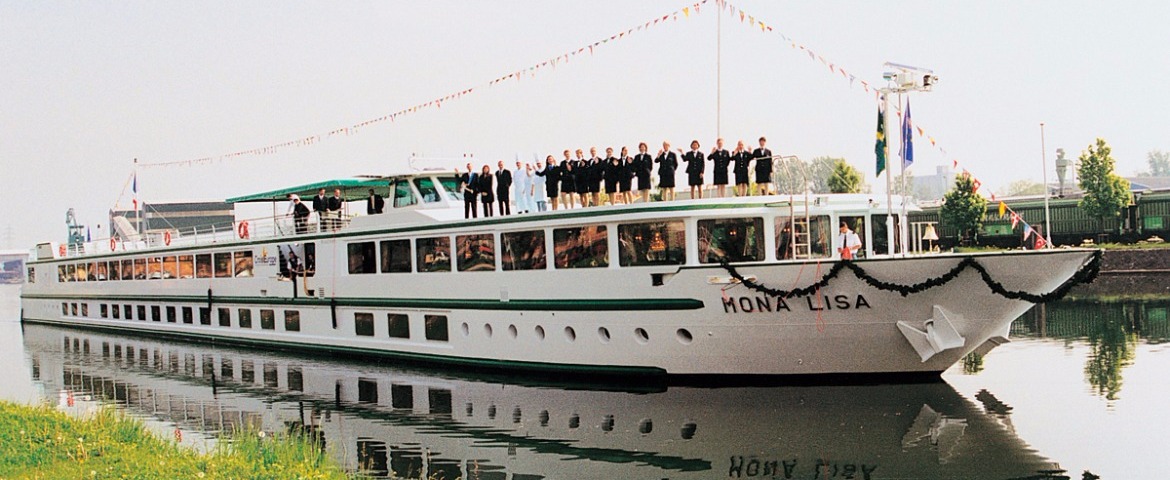
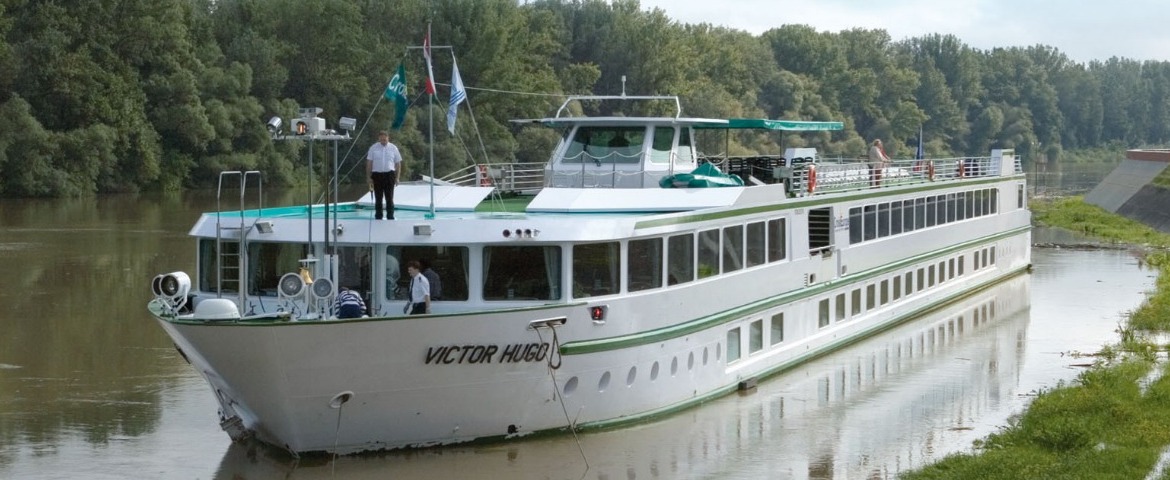
The Mittellandkanal never hurries. Between Magdeburg and Wolfsburg, it draws a calm line of water through the fields of Saxony-Anhalt, and it's along this unhurried stretch that Calvörde appears: a cluster of rooftops around a church spire, tree-lined banks, a town of 3,500 people that has watched boats go by for more than eight centuries. No crowd waits at the dock here. That's exactly what makes the stop worthwhile.

A Ford That Became a Town

Calvörde owes its existence to a river even more modest than the canal: the Ohre, a tributary of the Elbe. Records mention a fording point as early as 1196, where the trade route from Leipzig and Magdeburg crossed the water before continuing on to Lüneburg and Hamburg. Merchants would stop, pay their toll, and move on. The town itself stayed put. Walking its streets today, that same logic of a stopping point remains: everything is clustered around the market square, just a few minutes' walk from the dock.

The Castle and the Market Square

The town's most imposing silhouette belongs to its castle, a 15th-century structure that once guarded the crossing of the Ohre. Restored in recent years, it now hosts exhibitions and events, and its thick walls tell the story of an era when this border between principalities was defended by force of arms, better than any textbook could. Nearby, the market square lines up the town's oldest buildings, including the town hall, built in 1331. Here you can see a rural Germany living at its own pace: the bakery, bicycles leaning against façades, conversations on doorsteps.

Saint Wendelin's, the Region's Oldest

The Church of Saint Wendelin is well worth stepping into. Its origins date back to the 11th century, making it one of the oldest churches in Saxony-Anhalt. The interior is plain, almost bare, and it's that very simplicity that moves visitors: generations of boatmen, farmers, and merchants passed through here long before the canal came to run alongside the river. The contrast between the coolness of the stone inside and the light off the riverbanks outside creates one of those moments that linger long after returning aboard.

The Drömling, at Reed Height

If the stop allows a few extra hours, the Drömling Nature Park lies just nearby. This mosaic of ditches, wet meadows, and woodland, designated a biosphere reserve since 2019, is wonderfully suited to cycling: the paths are flat, the distances manageable, and patient observers can spot storks, cranes, and harriers. Locals nickname this area "the marsh of a thousand ditches." It's easy to see why: water traces straight lines everywhere here, which the vegetation works to soften.

A Few Pointers for This Stop

  • The town centre is reached on foot from the dock in just a few minutes.
  • The castle, market square, and Church of Saint Wendelin can easily be seen in an hour or two.
  • The Drömling suits a two- to three-hour bike outing over flat terrain.
  • Shops here remain those of a village: bring some cash and modest expectations.

The Art of the Small Stop

Calvörde makes no attempt to impress, and that's its strength. River cruises that stop here offer their passengers something rare: a German town with no staging, where everyday life simply carries on around you. You wander, exchange a few words with a fisherman settled on the bank, look up at the church spire, then head back to the boat along perfectly still water. As the lines are cast off, the village returns to its silence — and you carry away, without ever having sought it, the memory of a Germany the big cities never show.

Frequently Asked Questions

On the Mittelland Canal, between Magdeburg and Wolfsburg. The landing stage is a few minutes' walk from the centre: everything is concentrated around the market square.
No, and it is better to know before going ashore: no crowd is waiting at the landing stage. This is a village of 3,500 people that has watched boats go by for more than eight centuries. That is exactly what makes the stop worthwhile.
Because of a river even quieter than the canal: the Ohre, a tributary of the Elbe. As early as 1196, documents record a ford where the trade road from Leipzig and Magdeburg crossed the water before running on to Lüneburg and Hamburg. Merchants stopped, paid, moved on. The village stayed.
The most imposing structure in the village, a 15th-century building that once guarded the Ohre crossing. Restored in recent years, it now hosts exhibitions and events, and its thick walls tell of the era when this frontier between principalities was held under arms.
The oldest buildings in the village, including the town hall raised in 1331. Here you see rural Germany living at its own pace: the bakery, bicycles leaning against the facades, conversations on the doorsteps.
One of the oldest churches in Saxony-Anhalt: its origins go back to the 11th century. The interior is plain, almost bare, and it is that simplicity that moves you. Generations of boatmen, farmers and traders passed through long before the canal doubled the river.
A mosaic of ditches, wet meadows and woodland just outside the village, designated a biosphere reserve in 2019. Locals call it the marsh of a thousand ditches. Patient watchers spot storks, cranes and harriers.
Yes, and it is the best way to see the Drömling: the paths are flat, the distances reasonable, and a two- to three-hour ride is enough to take its measure. The terrain presents no difficulty.
Those of a village, nothing more. Bring a little cash and modest expectations: no souvenir shops, no substantial restaurants, no cash machines on every corner.
The castle, the market square and St Wendelin's church are easily covered in an hour or two, on foot from the landing stage. If the call allows a few more hours, the Drömling lends itself to a two- or three-hour bike ride.