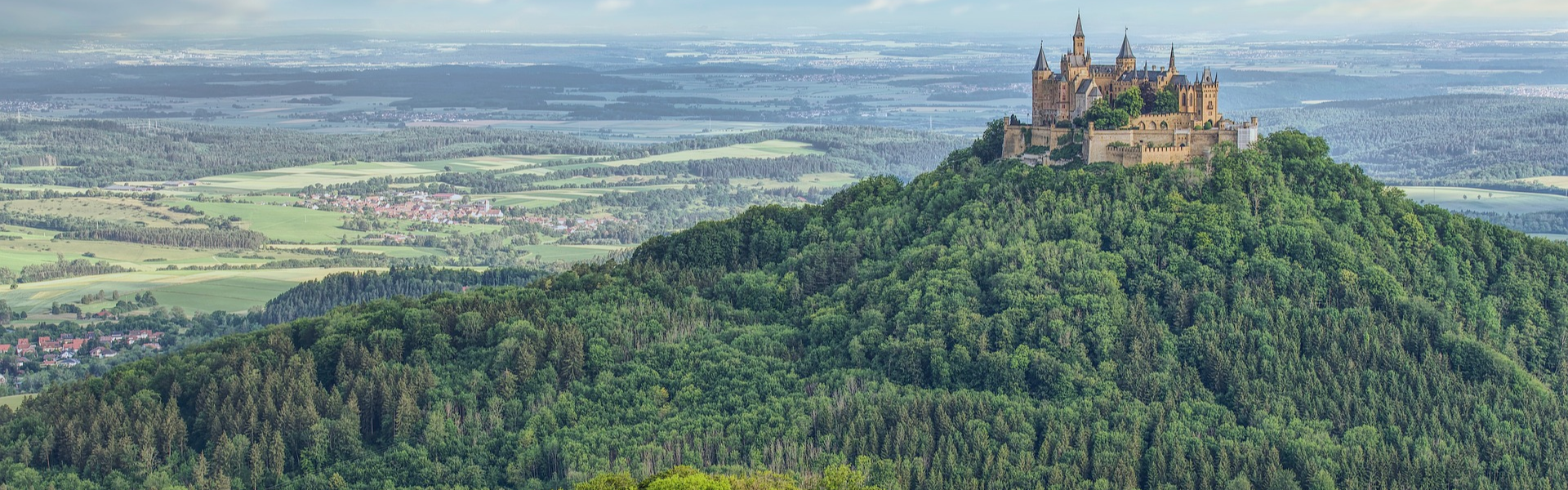
To plan this trip, see also Christmas markets, Europe on a budget and travelling for architecture.
Departure
Return
Loading
Choose a country or city
Frequently Asked Questions
No. Canadian citizens can stay in Germany visa-free for up to 90 days in any 180-day period in the Schengen area. Your passport must be valid for at least 3 months beyond your planned departure from Schengen. Since April 10, 2026, the biometric Entry/Exit System (EES) records a photo and fingerprints on arrival, with nothing to complete before departure.
Nonstop flights take about 7 h 40 min from Montreal to Frankfurt, about 7 h 15 min from Montreal to Munich and about 7 h 45 min from Montreal to Berlin. From Toronto, daily nonstops reach Frankfurt and Munich in roughly 7 h 45 min to 8 h.
May through September, with temperatures of 18 to 25 °C and summer peaks of 30 °C. Late November to December 24 is also popular for Christmas markets, despite temperatures of 0 to 5 °C. Oktoberfest 2026 runs from September 19 to October 4 in Munich.
The Government of Canada advises travellers to "exercise a high degree of caution" because of the terrorist threat affecting Europe generally (travel.gc.ca, updated June 23, 2026). This is not an avoid-travel advisory; normal travel precautions apply.
As a guideline, budget about 100 to 140 CAD per person per day for budget travel, 200 to 280 CAD mid-range and 400 CAD and up for comfort. Add roughly 900 to 1,500 CAD for round-trip airfare from Montreal or Toronto, more in summer and during Oktoberfest.
Germany is 6 hours ahead of Montreal and Toronto, in both summer and winter. When it is noon in Toronto, it is 6 p.m. in Berlin, Munich or Frankfurt.
The 191st Oktoberfest takes place from September 19 to October 4, 2026 on the Theresienwiese in Munich. Flights and hotels reach their highest prices of the year during the festival, so book many months in advance.
Yes. New for summer 2026, Air Canada flies nonstop from Montreal to Berlin three times a week, on Tuesday, Thursday and Saturday, in about 7 h 45 min. Frankfurt and Munich are served nonstop daily from both Montreal and Toronto.
The train covers most itineraries: Deutsche Bahn's ICE trains run at up to 300 km/h and link Berlin to Munich in about 4 hours, and the monthly Deutschland-Ticket covers all regional trains. A car helps for the Black Forest or the Romantic Road; autobahns are toll-free for cars and driving is on the right.
King Ludwig II's castle lies at the end of the Romantic Road, about 2 hours from Munich, making it an easy day trip from the city. Our advisors can build it into a Bavarian itinerary alongside Oktoberfest or the Alps.


