Deggendorf Germany Bavaria
73
Cruises availables
At departure or passage at this port
Uniworld Boutique River Cruise (73 Cruises)
River Beatrice
10 Cruises


S.S. Beatrice
10 Cruises
S.S. Émilie
53 Cruises
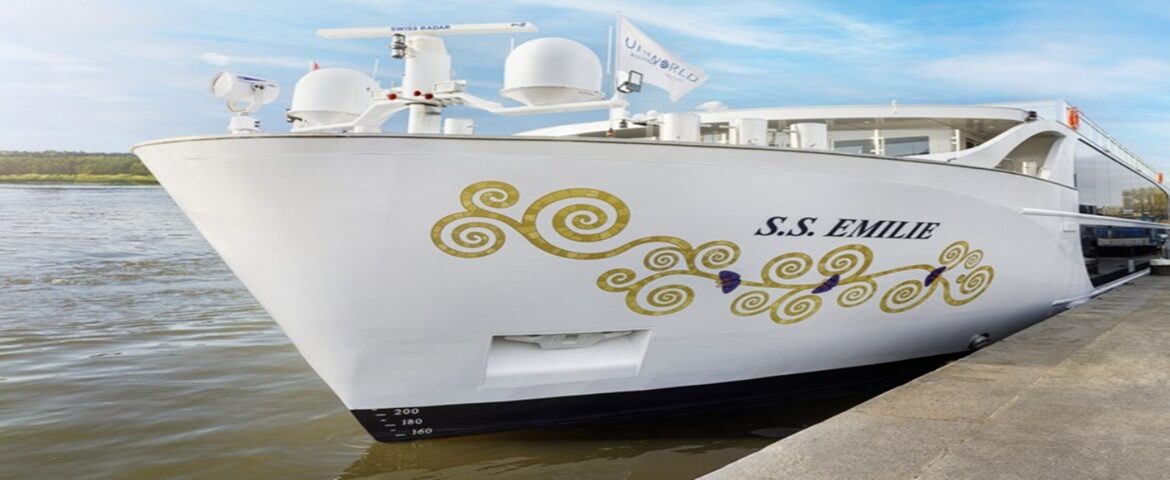
| 30 April | 17 days | One-way from Belgrade to Prague |
450-628-6241
Call us
|
| 30 April | 15 days | One-way from Belgrade to Nuremberg |
450-628-6241
Call us
|
| 7 May | 10 days | One-way from Vienna to Prague |
450-628-6241
Call us
|
| 7 May | 8 days | One-way from Vienna to Nuremberg |
450-628-6241
Call us
|
| 10 September | 8 days | One-way from Vienna to Nuremberg |
450-628-6241
Call us
|
| 10 September | 10 days | One-way from Vienna to Prague |
450-628-6241
Call us
|
Port of Deggendorf, Germany | Cruise Port Guide
Frequently Asked Questions
A couple of minutes from the centre, on the Danube between Regensburg and Passau. A short walk takes you from the upper deck to the market square.
Because the town sits exactly on the seam between river and mountain: the Danube widens here into a fertile plain closed to the north by the first wooded hills of the Bavarian Forest.
The town's heart beats around its elongated square, dominated by the old town hall and its slender tower, a landmark for the whole quarter. On market days, stalls of vegetables, cheese and Bavarian charcuterie spread across it. The tall, colourful facades make up that Danubian townscape where the street-square serves as a collective living room.
The Church of St Peter and St Paul, whose baroque tower is considered one of the finest in southern Germany: an elegant stack of onion domes and lanterns that catches the morning light. The interior, plain and bright, contrasts with the exuberance of some Bavarian churches.
Because of a good story: during a siege, a resident at the end of her resources is said to have thrown Knödel, dumplings as firm as balls, at the attackers' heads, convincing them the town still had food to spare. Discouraged, they broke camp.
Knödel, naturally: Semmelknödel made with bread, Leberknödel with liver, served alongside a roast or a regional beer in the town-centre restaurants. In mid-afternoon, respect the institution of Kaffee und Kuchen: a slice of cake and filter coffee, served without haste.
Yes. Behind the rooftops the hills climb toward Germany's first national park, created in 1970: a deep wooded massif that continues on the Czech side as the Sumava. Excursions sometimes go there, with laid-out trails, observation towers and enclosures where wolves and lynx can be glimpsed. Without an organised excursion, a taxi will get you to the nearby heights.
No, it is a stop for strolling: Deggendorf asks nothing of you. An ice cream on the square, the family-run shops in the side streets, a coffee on a terrace watching residents cycle past. The centre is flat and compact.
Not really, and that is what makes it interesting. The town has about 35,000 residents and a technical university that lends it an unexpected youthfulness in fine weather. You touch everyday Bavaria here rather than postcard Bavaria.
The euro and German, with a strong Bavarian accent and dialect at the market. English is understood at the university and in hotels, less so in family shops. Bring cash: rural Bavaria remains attached to it.


