Greifswald Germany
21
Cruises availables
At departure or passage at this port
CroisiEurope (21 Cruises)
MS Mona Lisa
10 Cruises
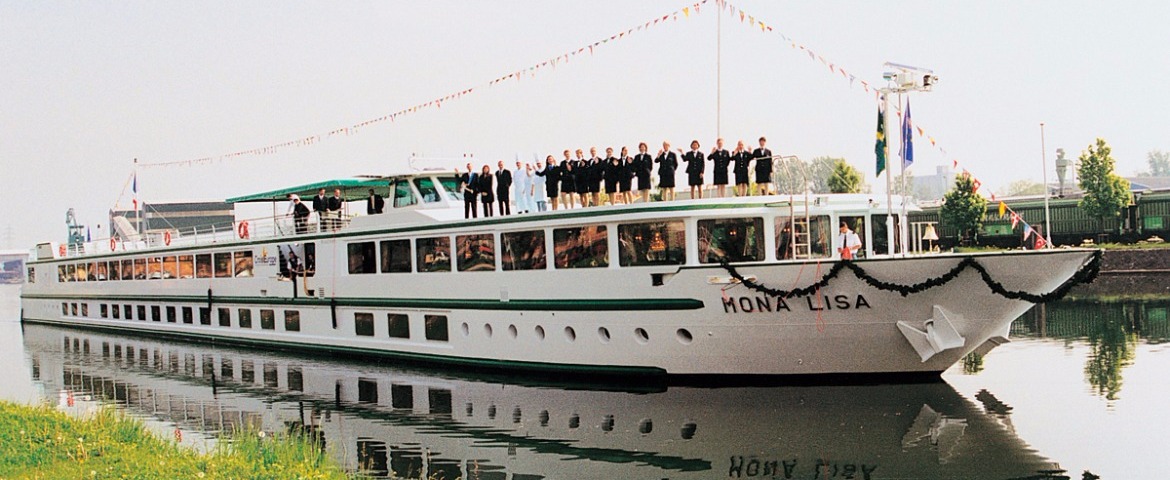

| 16 July | 8 days | One-way from Copenhagen to Berlin |
450-628-6241
Call us
|
| 16 July | 7 days | One-way from Copenhagen to Berlin |
450-628-6241
Call us
|
| 27 August | 8 days | One-way from Copenhagen to Berlin |
450-628-6241
Call us
|
| 27 August | 7 days | One-way from Copenhagen to Berlin |
450-628-6241
Call us
|
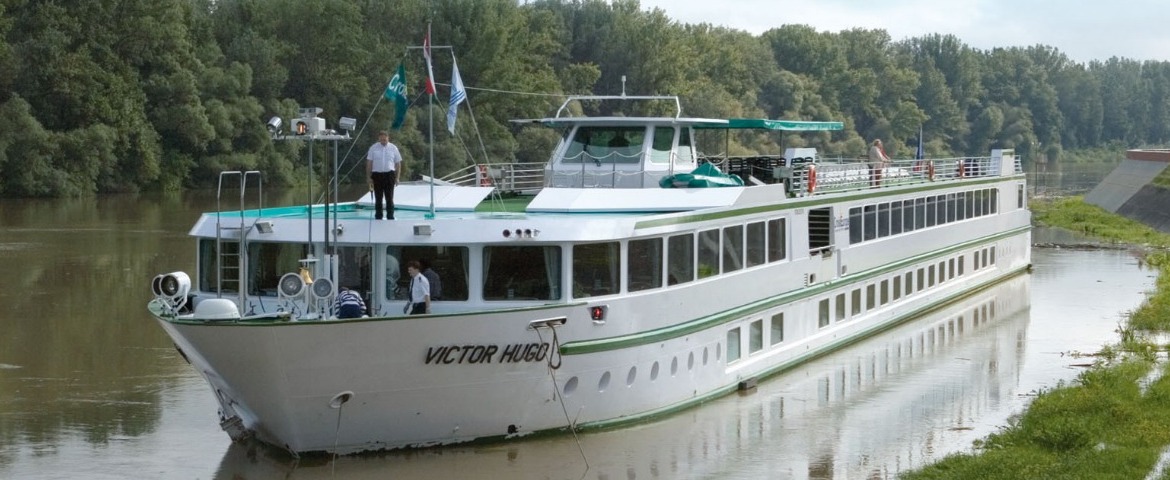
MS Victor Hugo
11 Cruises

Port of Greifswald, Germany | Cruise Port Guide
Frequently Asked Questions
At Wieck, at the mouth of the Ryck river, along a pier reserved for cruise vessels. The setting is a fishing village: thatched cottages, drying nets, moored sailing boats and an 1887 wooden bascule bridge that still lifts to let masts through.
No, the old town is about five kilometres from the pier. You reach it by shuttle, taxi or bicycle along the riverside path. Wieck itself and the Eldena abbey ruins, however, are within walking distance.
Wieck and its bascule bridge, then the ruins of Eldena Abbey a short walk away. After that the Hanseatic old town: St Nicholas cathedral, the market square with its gabled houses, and the Pommersches Landesmuseum.
The master of German Romanticism was born here in 1774. The ruins of Eldena Abbey were among his favourite subjects, and the regional Pomeranian museum holds several of his works. A marked route links the places of his youth and the viewpoints that inspired him.
A Cistercian monastery founded in 1199 by Danish monks, now in ruins. The town itself grew up around it. The remains are freely accessible in a park where the evening light can look remarkably like one of Friedrich's canvases.
Yes. Between the abbey and the open sea lies a family beach bordered by lawns. Locals swim in the calm waters of the bay from the first warm days, among the wicker beach baskets typical of the German Baltic.
The euro. This university town takes cards widely in cafés and shops in the centre, but the smoked fish stalls at the market and the small kiosks in Wieck prefer cash.
Yes, quite well. The university, founded in 1456 and among the oldest in northern Europe, fills the streets with students, bookshops and cafés where English poses no problem. In Wieck it is more hit and miss.
Yes. The bay beach, the museum harbour with its schooners and old cutters maintained by volunteers, and the cycle path along the Ryck easily fill a day. The Eldena ruins can be explored freely, without rigid supervision.
June to September, when swimming is possible and the long Baltic evenings give the light this place is known for. Off season the Pomeranian coast turns windy and daylight shortens quickly.


