Astypalaia Island Astypalea, Greece
6
Cruises availables
At departure or passage at this port
Star Clippers (6 Cruises)
Star Flyer
6 Cruises
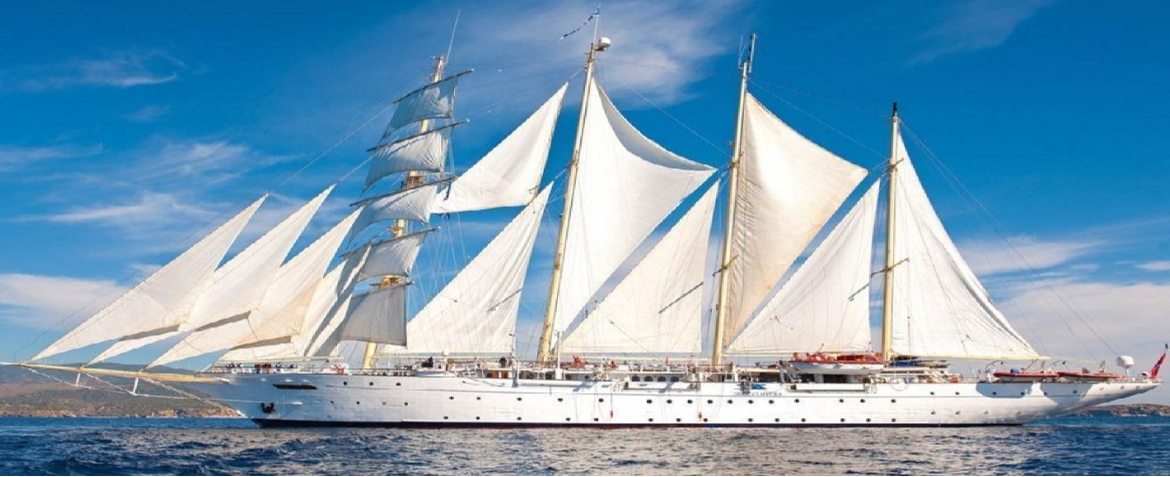

| 3 July | 15 days | Round-trip from Piraeus-Athens, Greece |
450-628-6241
Call us
|
| 3 July | 8 days | Round-trip from Piraeus-Athens, Greece |
450-628-6241
Call us
|

Port of Astypalaia, Greece | Cruise Port Guide
Frequently Asked Questions
By tender. Ships, generally small, anchor offshore and land passengers near Pera Gialos, the old harbour tucked below the main village.
Because from the sea the island forms two wings joined by a narrow isthmus. Set between the Cyclades and the Dodecanese, it borrows from both: whitewashed cubic houses and a Venetian fortress.
The climb to Chora and the Querini castle in the morning, the windmills on the ridge, then lunch at Livadi or a swim at Pera Gialos. Everything sits within a small radius.
It is steep: you go up by steps and lanes from the anchorage. A short taxi ride replaces the climb if you prefer, but each landing opens a new view over the bay, and that is half the pleasure.
The fortress raised by the Venetian Querini family over three centuries of rule, at the highest point of the village. Dark walls enclose a maze of old dwellings, from which rise the domes of the Panagia Evangelistria and Agios Georgios churches.
Yes. The quay at Pera Gialos is edged by a beach of sand and shingle, the most accessible on the island. Agios Konstantinos beach faces the fortified hill, and small boats run to the Kounoupes islets with their shallow, clear water.
A cultivated valley on the far side of the ridge, less than half an hour's walk by road, with gardens, orchards and tavernas at the water's edge. It is the quiet option for the second half of the call.
Yes, a small archaeological museum at Pera Gialos gathers local finds from the Bronze Age to Roman times. A short visit, useful for getting your bearings before the climb.
Partly. The swimming and the boat trips appeal to children, but Chora is reached by steps: with toddlers or a stroller, stay at sea level or take the taxi.
The euro and Greek. The island sits well off the main shipping routes: bring cash, as cards are not accepted everywhere. English is spoken in the tavernas by the anchorage.


