Canda Italy

29 Cruises availables At departure or passage at this port

CroisiEurope (29 Cruises)

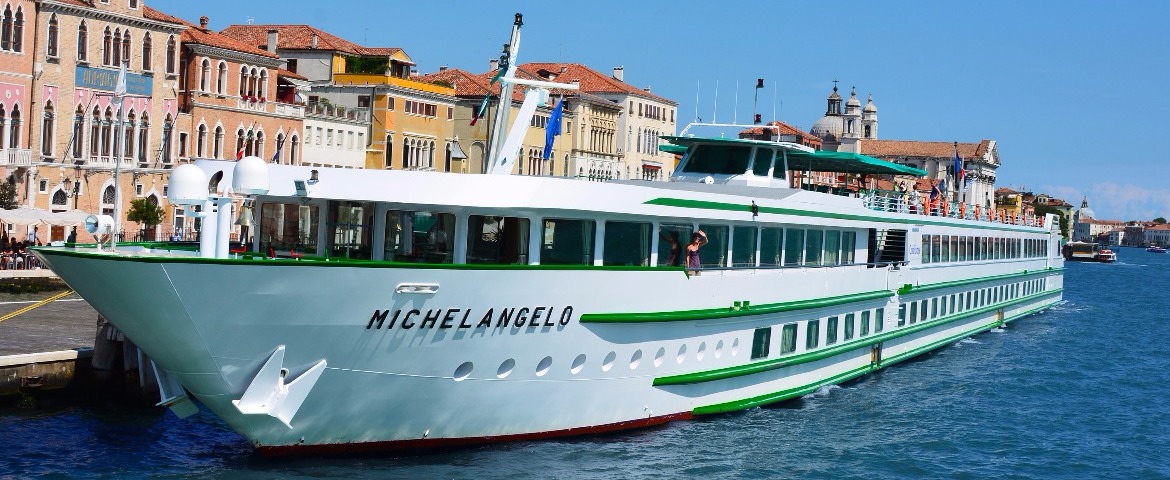
Cruise CE Croisieurope MS Michelangelo ship

MS Michelangelo

150 Passengers
Visit the ship's page

The Canalbianco moves unhurried between two curtains of trees, through countryside so flat that the sky seems to take up all the space. It's on this quiet waterway, between Venice and Mantua, that river boats dock at Canda, often overnight. The village lines up a bell tower and low houses along the bank. Passengers step ashore with no set plan, and that's exactly the right way to approach it.

A Stop Along the Water

Canda belongs to the Polesine, that strip of land between the Adige and the Po rivers, in the province of Rovigo, in the Veneto. For centuries, residents reclaimed these fields from the marshes, ditch by ditch, dike by dike. The landscape still bears the memory of it: straight-lined ditches, isolated farmhouses, poplar groves planted in neat rows. From the boat's deck, this patient work can be read like the pages of an old school notebook.

The boat moors directly against the bank, just steps from the first houses. No shuttle, no terminal: you step onto the grass and the village is right there. Passengers pass cyclists, a few anglers, and locals walking their dogs along the towpath. Greetings come easily, in a mix of Italian and Venetian dialect.

The Villa Nani Mocenigo

Canda's surprise stands immediately east of the village, right on the Canalbianco's dike. The Villa Nani Mocenigo was built between 1580 and 1584 for a patrician family of Venice, its design attributed to Vincenzo Scamozzi, one of the great architects of the Serenissima. Its façade facing the canal, reworked in the 18th century, features a central loggia supported by Corinthian columns and crowned with stone urns.

The property now belongs to a bank, and the interior is not open to visitors. No matter: it's from the bank that it's best admired, sitting right at the water's edge just as it did when Venetian barges once docked at its foot. Through the gates, you can glimpse the walled English-style park, its 18th-century mythological statues, and a 16th-century chapel tucked beneath the trees. Listed among the Venetian villas of the mainland, the whole ensemble tells of an era when the great families of the lagoon came to manage their Polesine estates and spend the summer season here, far from the splendour of the Grand Canal.

Time for a Stroll

The rest of the stop unfolds on foot or by bicycle. The path following the canal makes for an easy walk, in a silence barely broken by waterfowl or the passing of a barge. The parish church and the square form a modest, well-kept scene, where the local café serves as the village forum. Ordering an espresso at the counter and listening to the regulars' conversation remains the best way to take the pulse of the place.

The curious can extend the walk into the surrounding countryside, where irrigation canals trace a checkerboard of green and brown. In spring, fields of wheat and corn frame the road; in autumn, mist rises from the river and softens every edge. The Polesine never tries to impress. It offers something else: a rural, hardworking, unassuming Italy that the classic itineraries overlook.

Evening on the Bank

As the light fades, the canal turns into a mirror. The villa's façade and the trees along the dike sink gently into its reflection, and passengers head back aboard for dinner as the village lights its first windows. Canda will have offered few monuments and a great deal of calm. It's the breathing space of the journey between Venice and Mantua, the moment when it becomes clear that the Po plain is best savoured slowly, at the exact pace of the water carrying the boat.

Frequently Asked Questions

Directly against the bank of the Canalbianco, a few steps from the first houses. No shuttle, no terminal: you step onto the grass and the village is right there. River boats often stay overnight.
In the Polesine, the strip of land between the Adige and the Po, province of Rovigo, in the Veneto. It is a stop on the river route between Venice and Mantua, in countryside so flat the sky seems to fill all the space.
Villa Nani Mocenigo, immediately east of the village on the canal embankment itself. Built between 1580 and 1584 for a Venetian patrician family, its design is attributed to Vincenzo Scamozzi. Its water-facing facade displays a loggia on Corinthian columns crowned with stone urns.
No. The property now belongs to a bank and the interior is not open. It is best admired from the bank, and through the gates you can glimpse the English-style park, its eighteenth-century mythological statues and a sixteenth-century chapel.
Walk or cycle the path along the canal, view the villa from the embankment, take in the parish church and the square. Ordering an espresso at the local cafe counter and listening to the regulars remains the best way to take the pulse of the place.
Very few. A cafe, the church, a few houses along the bank: that is all. Bring cash and expect neither souvenir shops nor cash machines. This is exactly the kind of stop where expecting nothing is how you receive everything.
Land won back from the marshes, ditch by ditch, dyke by dyke, over centuries. The landscape remembers it: straight ditches, isolated farms, poplar groves planted in perfect lines. From the deck you read this patient work like leafing through an old notebook.
Spring and autumn. In spring, fields of wheat and maize frame the road; in autumn, mist rises from the river and softens every outline. Summer is hot and humid on this shadeless plain.
The euro. Italian and a very much alive Venetian dialect are spoken; English is rare in this farming village. Greetings come easily, even without a shared language.
Provided you know what you came for. Few monuments, a lot of quiet, a Venetian villa at the water's edge and a rural Italy that classic itineraries ignore. It is the breathing space on the Venice to Mantua route, not a highlight.