Italy Travel from Canada: The Complete Guide
Italy is one of the easiest European countries to reach from Canada: Air Canada and Air Transat fly nonstop from Montréal to Rome in about 8 hours 15 minutes, while Air Canada, ITA Airways and Air Transat all fly direct from Toronto in about 8 hours 40 minutes. Air Canada also links Montréal to Venice nonstop. Canadian citizens do not need a visa for stays of 90 days or less in the Schengen area. The country rewards visits year-round, with April to June and September to October offering the best mix of weather and crowds. Rome, Florence and Venice form the classic first-trip triangle, but Milan, Naples, Sicily and the Italian Alps each deserve a trip of their own. As a guideline, budget 2,800 to 4,500 Canadian dollars per person for a week, flights included.
The essentials at a glance
| Question | Answer |
|---|
| Flight from Canada | Nonstop Montréal-Rome (about 8 h 15 min) and Toronto-Rome (about 8 h 40 min) with Air Canada, Air Transat and ITA Airways; nonstop Montréal-Venice with Air Canada |
| Visa for Canadians | None for stays of 90 days or less (Schengen area); passport valid 3 months beyond planned departure |
| Time difference | 6 hours ahead of Eastern Time (briefly 5 hours in March and late October) |
| Currency | Euro; 1 euro is worth about 1.62 Canadian dollars |
| Language | Italian; English widely spoken in tourist areas |
| Best time to go | April to June and September to October |
| Driving | Right-hand side; international driving permit required alongside your Canadian licence; beware of ZTL restricted zones in city centres |
| Electricity | 230 V, plug types C, F and L; adapter needed |
Why Italy
Few countries pack this much into so little ground. Italy holds more UNESCO World Heritage sites than any other nation, and its high-speed rail network puts them within easy reach: Rome to Florence in 1 hour 30 minutes, Florence to Venice in just over 2 hours, Rome to Milan in 3 hours. In two weeks you can move from ancient forums to Renaissance palaces to lagoon canals without boarding a single domestic flight.
The food is a destination in itself, and every region defends its own table: cacio e pepe in Rome, bistecca alla fiorentina in Tuscany, cicchetti in Venice, pizza in Naples, arancini in Sicily. Eating remarkably well often costs less than at home; a full meal in a neighbourhood trattoria runs 25 to 35 euros, house wine included.
Italy also rewards repeat visitors. After the classic triangle of Rome, Florence and Venice, there are still the Dolomites, the Cinque Terre, Puglia, the Amalfi Coast, Sardinia and Sicily waiting. Canadians tend to click with the pace of life here: meals stretch out, evenings happen on public squares, and walking is the default way to see a city.
When to go
| Period | Climate and atmosphere | Verdict |
|---|
| December to February | Mild in Rome and the south (8 to 14 °C), cold in the north; Christmas markets, Venice Carnival, very few crowds | Excellent value for art cities |
| March to April | Changeable spring, 12 to 19 °C; Easter draws huge crowds to Rome | Good period, avoid Easter week in Rome |
| May to June | Sunny, 20 to 28 °C, long days, green countryside | Ideal window, book early |
| July to August | Hot (30 to 38 °C in the cities), peak crowds, Italian holidays around August 15 | Best saved for coasts and mountains |
| September to October | Gentle warmth, 18 to 27 °C, grape harvest in Tuscany, sea still warm | Ideal window, our advisors' favourite |
| November | Rainy, 8 to 15 °C, acqua alta risk in Venice, quiet cities | Fine for museums and food, low prices |
How to get there from Canada
Rome is the simplest gateway. From Montréal-Trudeau, Air Canada operates one to two daily nonstops to Fiumicino and Air Transat flies its own daily service in high season, both taking about 8 hours 15 minutes eastbound. From Toronto Pearson, Air Canada, ITA Airways and Air Transat all fly nonstop in about 8 hours 40 minutes. Air Canada also serves Venice nonstop from Montréal about three times a week depending on the season. For Milan, Florence, Naples, Palermo or Catania, the smoothest connections run through Rome or through major European hubs such as Paris, Amsterdam, Frankfurt, Munich and Zurich, for a total journey of 10 to 12 hours.
Once on the ground, trains replace domestic flights. High-speed Frecciarossa and Italo services run city centre to city centre with none of the airport overhead. A classic open-jaw routing lands in Rome, works north through Florence to Venice by rail, then flies home nonstop from Venice, so you never backtrack.
Italy's essential regions
Rome and Lazio
The capital deserves four nights on its own: the Colosseum, the forums, the Pantheon, the Vatican and the baroque squares all connect on foot. Book the Colosseum and the Vatican Museums several weeks ahead, as timed tickets sell out fast. Our Rome guide covers neighbourhoods, budgets and the traps to skip.
Florence and Tuscany
The cradle of the Renaissance concentrates the Uffizi, Michelangelo's David and Brunelleschi's dome in a centre you can cross in twenty minutes. Florence also works as a base for Siena, San Gimignano, Pisa and the Chianti wine roads. See our Florence travel page to build the Tuscan leg of your trip.
Venice and the Veneto
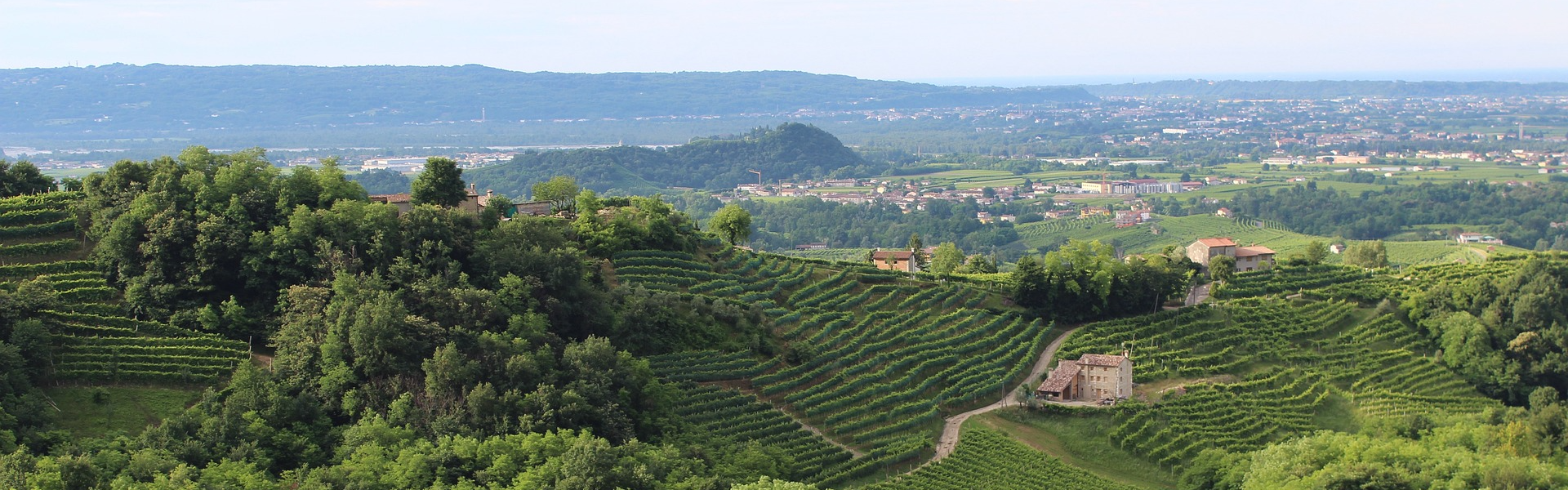
The lagoon is best experienced by sleeping in the city for two nights, after the day-trippers have gone. Since 2024, Venice has charged day visitors an access fee on peak spring dates, which overnight guests avoid. Nearby, Verona, Padua and the prosecco hills round out the region; our Venice guide explains how to dodge the crowds.
Milan and the northern lakes
Italy's business and fashion capital, Milan earns a stop for its Duomo, Leonardo da Vinci's Last Supper and its design districts. Less than an hour away by train, Lake Como and Lake Maggiore deliver villas, gardens and mountain views. Skiers and hikers continue into the Italian Alps and the Dolomites.
Naples, the Amalfi Coast and the south
Naples is loud, generous and proud of it: pizza was born here, the historic centre is UNESCO-listed, and Pompeii and Mount Vesuvius sit thirty minutes away. The Amalfi Coast (Positano, Amalfi, Ravello) and the island of Capri follow by ferry or coach. The south also offers the gentlest prices in the country.
Sicily
The Mediterranean's largest island layers Greek temples, Arab-influenced markets, Spanish baroque towns and active volcanoes. Palermo, Taormina, Syracuse and Mount Etna fill a full week on their own, with swimming weather that stretches into October. Our Sicily travel page maps out the itineraries.
The budget, in Canadian dollars
| Item | Budget | Mid-range | High-end |
|---|
| Round-trip flight from Canada | $800 to $1,100 | $1,100 to $1,600 | $3,500 to $6,500 (business class) |
| Accommodation (per night, 2 people) | $100 to $180 | $200 to $350 | $400 to $900 |
| Meals (per day, per person) | $40 to $60 | $70 to $110 | $130 to $220 |
| Local transport (per day) | $10 to $20 | $25 to $50 | $80 to $150 |
| Activities and sightseeing (per day) | $15 to $30 | $40 to $80 | $100 to $200 |
These ranges are provided as a guideline, based on exchange rates and prices observed in 2025-2026. The euro (about 1.62 Canadian dollars), the season and the region all move the needle: the south and Sicily cost noticeably less than Venice, Milan or the Amalfi Coast.
Entry requirements and health for Canadian citizens
- Visa: no visa required for tourist stays of 90 days or less within any 180-day period in the Schengen area.
- Passport: must be valid for at least 3 months beyond your planned departure from the Schengen area; check that you have blank pages left.
- EES and ETIAS: since October 2025, the European EES system records your photo and fingerprints on first entry to the Schengen area. ETIAS is not yet in force; launch is expected in late 2026. Check travel.gc.ca before departure.
- Official advisory: the Government of Canada advises exercising a high degree of caution in Italy due to the threat of terrorism in Europe. Pickpocketing targeting tourists is common in stations, transit and busy sights.
- Health: no mandatory vaccines; make sure routine immunizations, including measles, are up to date. Tick-borne encephalitis vaccination may be worth discussing if you plan to hike between April and November.
- Travel insurance: essential, since provincial health plans cover very little abroad; include medical care, cancellation and baggage.
- Driving: an international driving permit is required alongside your Canadian licence; camera-enforced ZTL zones in historic centres generate fines that follow you home through the rental company.
- City taxes: most cities charge a tourist tax of 1 to 10 euros per person per night, payable at your hotel; Venice adds an access fee for day visitors on peak dates.
One last tip: for a first trip, two weeks and three or four bases beat a checklist sprint. A Rome, Florence and Venice circuit combines naturally with rural Tuscany, the Amalfi Coast or the northern lakes depending on the season.
Ready to plan your own Italian route, high-speed trains and hill towns included? Les conseillers de Voyages AquaTerra bâtissent votre itinéraire sur mesure. 450-628-6241 | 1-866-628-6241 | info@voyagesaquaterra.com
Voyages AquaTerra est titulaire d'un permis du Québec.