Rovigo Italy
20
Cruises availables
At departure or passage at this port
CroisiEurope (20 Cruises)
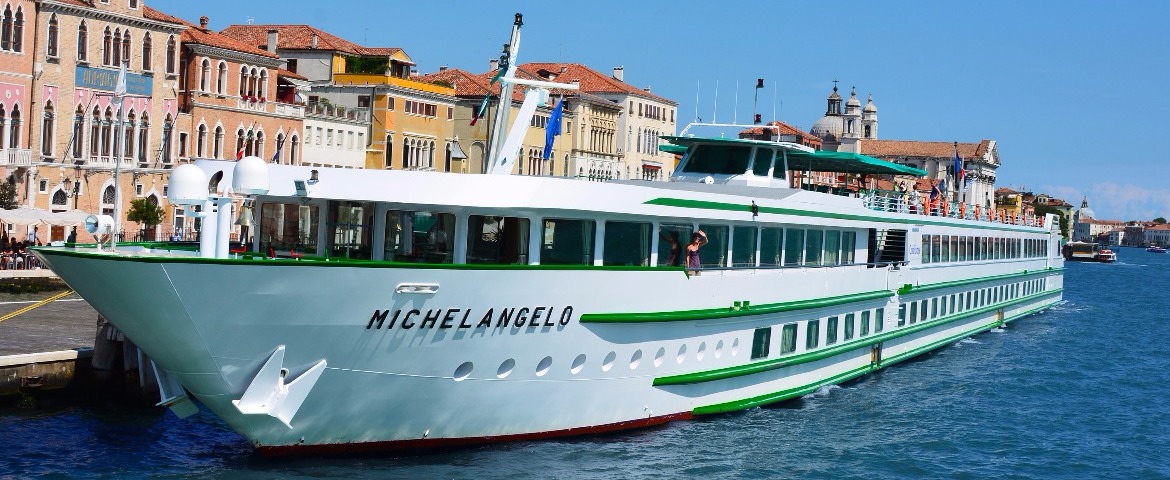
MS Michelangelo
20 Cruises

Frequently Asked Questions
On the Canalbianco, the waterway that skirts the city to the south. A short transfer then takes you to the historic centre: Rovigo has no quay in the city itself, but the distance is modest.
Yes, entirely and without any climbing. Once in the centre, the walk takes in arcaded squares, quiet palaces and cafés where locals put the world to rights at aperitivo hour.
Piazza Vittorio Emanuele II, the Torre Donà and the Palazzo Roverella, then La Rotonda on the edge of the centre. That is the fullest walking programme. The Po delta and Villa Badoer each require a full excursion of their own.
The temple of the Beata Vergine del Soccorso, universally known by that nickname because of its octagonal plan ringed by a portico. Begun in the late 16th century, it hides behind a plain exterior an interior entirely lined with large baroque canvases. Its slender bell tower, designed by a pupil of Palladio, is a landmark across the whole plain.
What remains of the 10th-century medieval castle: a brick tower some sixty metres tall, among the highest medieval towers in Italy — and leaning just enough to intrigue photographers.
It depends on the programme. This carefully restored Renaissance palace hosts art exhibitions of national standing that draw visitors from across the region. Check what is showing before committing: between exhibitions, the interest is more limited.
Yes, by excursion. The regional delta park is one of Italy's great natural landscapes: the river splits into slow branches among reed beds, lagoons and fish farms. Flat-boat trips allow sightings of herons, flamingos and pochards.
A villa by Andrea Palladio at Fratta Polesine, inscribed on the UNESCO World Heritage list with the master's other villas. Its Ionic portico looks out over the countryside, and the hour-long visit recalls the era when Venetian patricians managed their Polesine estates from houses built like ancient temples.
Cooking where fresh water meets salt: Comacchio eels, risottos made with lagoon produce, delta fish. Local kitchens follow the rhythm of the river rather than any fashion.
It is not in the same category and does not pretend to be. Rovigo is the quiet capital of a flat country, the Polesine, wedged between the Adige and the Po. What you get is everyday Italy, unstaged. Anyone after spectacular monuments will be disappointed; anyone after a quiet halt will be well served.


