Ras Al Khaimah RAK City, UAE
UAE

29 Cruises availables At departure or passage at this port

Celestyal Cruises (23 Cruises)

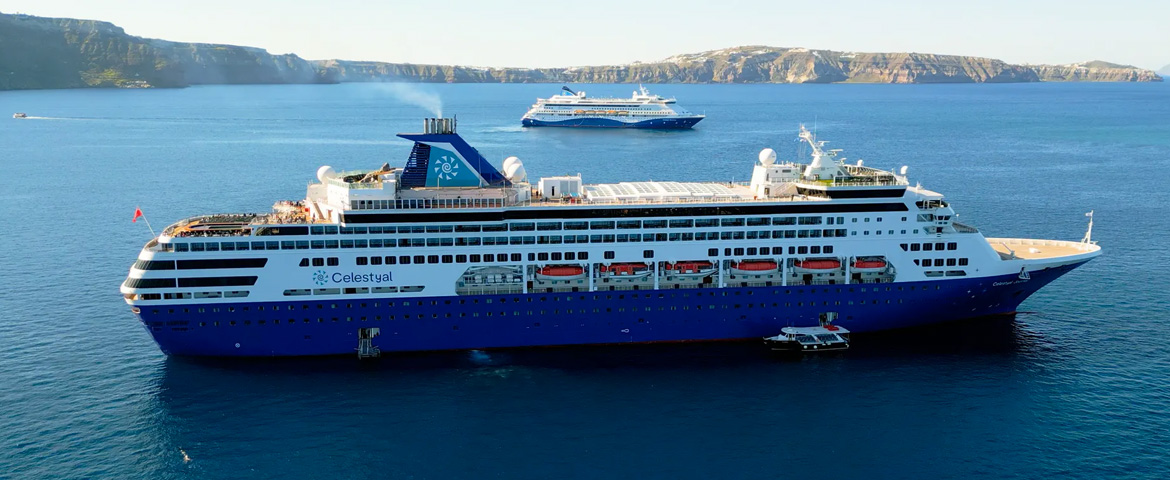
Celestyal Discovery

1828 Passengers
Visit the ship's page

Ras Al Khaimah, UAE | Cruise Port Guide

Far from the skyscrapers of Dubai, the northernmost emirate of the United Arab Emirates cultivates another face of the Gulf: ochre mountains plunging into a milky sea, palm groves, mud-brick forts and sleepy pearl-diving villages. The Ras Al Khaimah cruise terminal is right next to the old town: ships dock a few minutes from the historic centre, and formalities are quickly completed in a modern building equipped with electronic gates.

The old town and its museum

The natural first stop is the National Museum, housed in a former residential fort of the ruling family. Its rooms bring together archaeological pottery, Bedouin jewellery, model dhows and the tools of the divers who brought up pearl oysters, the coast's wealth long before oil. Around it, the lanes of the old town lead to the souk and the corniche, where traditional wooden dhows rock gently along the creek. The atmosphere remains resolutely local: here, merchants don't call out to passersby, and fishers mend their nets without paying any attention to cameras.

Dhayah, the hilltop fort

North of the city, Dhayah Fort crowns a hillock amid the palm groves, facing the Hajar Mountains. The climb up the zigzag staircase takes a little effort, rewarded by a panoramic view of the date plantations, the bay and the desert ridges that close off the horizon. It was on this height that local resistance to the British expeditions played out in 1819: guides are happy to recount the episode to breathless visitors.

Al Jazirah Al Hamra, the pearl divers' ghost village

Between the port and the resorts to the south lies a place unique in the Gulf: Al Jazirah Al Hamra, a pearl-diving village abandoned in the mid-20th century and frozen in time ever since. You wander freely among houses of coral stone, the mosque with its squat minaret and courtyards invaded by sand, in a silence broken only by the wind and a few stray goats. Photographers find striking compositions here, especially late in the day when the light skims the crumbling walls and lengthens the shadows in the deserted lanes.

Jebel Jais, the roof of the Emirates

For active port calls, the road climbs in spectacular hairpin bends to the lookouts of Jebel Jais, the country's highest point at nearly 1,900 metres. The air is noticeably cooler than on the coast, sometimes by ten degrees or more. The most daring launch themselves onto the giant zipline that speeds over the ravines, one of the longest in the world; others are content with the panoramic terraces and a coffee facing the folded strata of the mountain. Allow half a day for the round-trip excursion. Sand lovers may prefer outings to the dunes inland, where Bedouin camps welcome visitors for cardamom tea, a camel ride or a falconry demonstration.

Suggestions according to the time available

DurationProgram
2 to 3 hoursNational Museum, souk and corniche on foot
Half dayDhayah Fort and the village of Al Jazirah Al Hamra
Full dayJebel Jais and relaxing on a beach

Before sailing

As the call to prayer drifts over the creek, the mountains turn mauve. Ras Al Khaimah offers what many travellers seek in vain elsewhere in the Gulf: an emirate still close to its maritime past, where you can touch the stone of the forts and the silence of the desert in the same day. A port call that makes you want to follow the coast farther, toward the fjords of the neighbouring peninsula.

Frequently Asked Questions

At the cruise terminal, right beside the old town. Ships tie up minutes from the historic centre and formalities move quickly through a modern building fitted with e-gates.
Yes for the old town, the souk and the corniche, all walkable from the terminal. Jebel Jais, Dhayah Fort and the Khatt hot springs require a taxi or an organised tour.
The National Museum, housed in a former residential fort of the ruling family, then the souk and the corniche where wooden dhows rock along the creek. With a longer call, the road to Jebel Jais climbs to the country's highest peak.
Scale and scenery. The northernmost emirate kept its ochre mountains, its palm groves, its mud-brick forts and its sleepy pearl-diving villages. Anyone hunting skyscrapers and giant malls will be disappointed; anyone after the pre-oil Gulf will not.
Yes, the emirate's coast lines up white sand and calm water, but mostly in front of the hotels south of the port. Expect a short taxi ride from the terminal.
The UAE dirham (AED). Cards work in hotels, restaurants and malls, but the souk and taxis run more smoothly on cash.
Arabic officially, English in practice: drivers, shopkeepers and museum staff all speak it. French is rare.
Yes, unlike neighbouring Sharjah, but only in licensed venues, meaning hotels and a few restaurants. Nothing of the sort in the souk or on the street.
Yes, within reason. The museum and the corniche are easy with children; the Jebel Jais zipline enforces age and weight minimums. Heat remains the real limiting factor.
November through March, which is when ships call anyway. Summer routinely tops 40 °C and walking the old town becomes hard work.