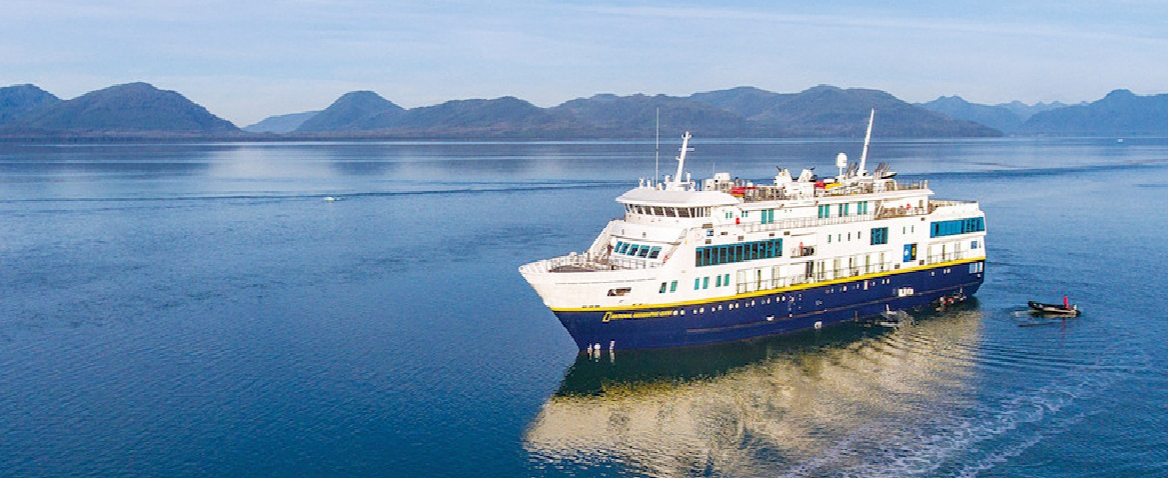
Two rivers meet here. The Snake, flowing down from the mountains of Idaho, ends its journey in the Columbia, which continues on toward the Pacific. It's near this confluence, in southeastern Washington State, that river ships stop at Burbank, a farming community set amid rolling wheat fields and orchards. There's no church steeple here, no old town square: the scenery is made up of water, sky, and cultivated land stretching as far as the eye can see. This stop is worth it for what it opens up to — one of the most respected wine regions in the American West and a defining chapter in the exploration of the continent.

The Explorers' Confluence

In October 1805, the Lewis and Clark expedition reached this exact spot, where the Snake meets the Columbia. On the opposite bank, Sacajawea State Park marks this meeting point and honours the role of the young Shoshone woman who accompanied the explorers. From the pier, passengers can imagine what those men must have felt: two powerful rivers, arid plateaus, a horizon that seems to belong to no one. Ships travelling up the Columbia and the Snake today follow, lock by lock, the reverse of that journey down to the ocean.

The Birds of the McNary Refuge

A few minutes from the pier lies the McNary National Wildlife Refuge, a network of marshes and ponds developed along the Pacific migratory corridor. Flat trails run alongside the wetlands, where, depending on the season, geese, ducks, herons, and white pelicans gather. An hour is enough to make the full loop; binoculars lent aboard some ships find their best use of the trip right here. The contrast is striking: on one side, dry, straw-coloured hills; on the other, these wetlands humming with life. Photography enthusiasts find crisp, clear light here, especially early in the day.

Walla Walla, the State's Wine Capital

The stop's signature excursion leads to Walla Walla, about an hour's drive to the east. This small university town has preserved a carefully restored red-brick downtown, where tasting rooms sit alongside cafés, bookshops, and artisan boutiques. Around it, vineyards blanket the slopes of an irrigated valley, planted with the cabernet sauvignon and syrah that built the region's reputation. Several wineries welcome groups for guided tastings, often paired with local products.

Downtown, a few landmarks help organize the walk:

  • the main street and its early twentieth-century façades;
  • the tasting rooms clustered in the heart of downtown;
  • terraces for sampling regional cuisine between visits;
  • galleries and artisan shops housed in period buildings.

A Landscape Shaped by Water

On the road leading to the wine valley, travellers pass through a land of rippling wheat fields, dotted with grain silos and isolated farms. These semi-arid lands owe everything to irrigation and to the dams that tamed the Columbia in the last century. Here, the river isn't just scenery: it's the reason for being of every orchard, every vineyard, every village. Understanding that is understanding the American interior West, less well known than its coastline, but just as pivotal to its history.

Back to the Pier

By late afternoon, the ship waits along the Snake River, in light that gilds the hills. Passengers bring back a bottle or two, a few photos of birds in flight, the memory of a red-brick street. Burbank will have shown neither monuments nor crowds. What the stop leaves behind is something else: the feeling of having touched a land of pioneers where rivers still decide everything — and a fresh curiosity about what the next lock has in store.

Frequently Asked Questions

Along the Snake River, close to its confluence with the Columbia, in the southeast corner of the state. It's a river cruise stop set among wheat hills, with no terminal and no downtown.
Very little. Burbank is a farming community with no old quarter or shopping street. The value of the call is in the excursions: the McNary wildlife refuge nearby, and the Walla Walla wine valley further out.
The Walla Walla excursion, about an hour's drive, fills most of the day: red-brick downtown, tasting rooms, vineyards. For a shorter half day, the McNary refuge takes about an hour.
A set of managed marshes and ponds along the Pacific Flyway, minutes from the dock. Flat trails follow the water where geese, ducks, herons and white pelicans gather depending on the season.
Because the expedition reached this exact confluence in October 1805. Across the water, Sacajawea State Park marks where the Snake meets the Columbia and recalls the role of the young Shoshone woman who travelled with the explorers.
It is the signature excursion of the call. Count about an hour's drive east. The small university town has a carefully restored red-brick downtown, and cabernet sauvignon and syrah vines cover the surrounding slopes.
US dollars and English. Cards are accepted at wineries and Walla Walla shops; keep some cash for tips.
Late spring through fall, when Columbia and Snake River cruises operate. The September harvest is the valley's liveliest moment; summers here are dry and hot.
Moderately. The bird refuge appeals to curious young visitors, but the day revolves around wine and landscapes. A pair of binoculars solves much of the problem.
Yes. Ships come up the Columbia and then the Snake through several locks. A lock transit is a show in itself and worth going up on deck for.