Aigues-Mortes France
27
Cruises availables
At departure or passage at this port
CroisiEurope (27 Cruises)
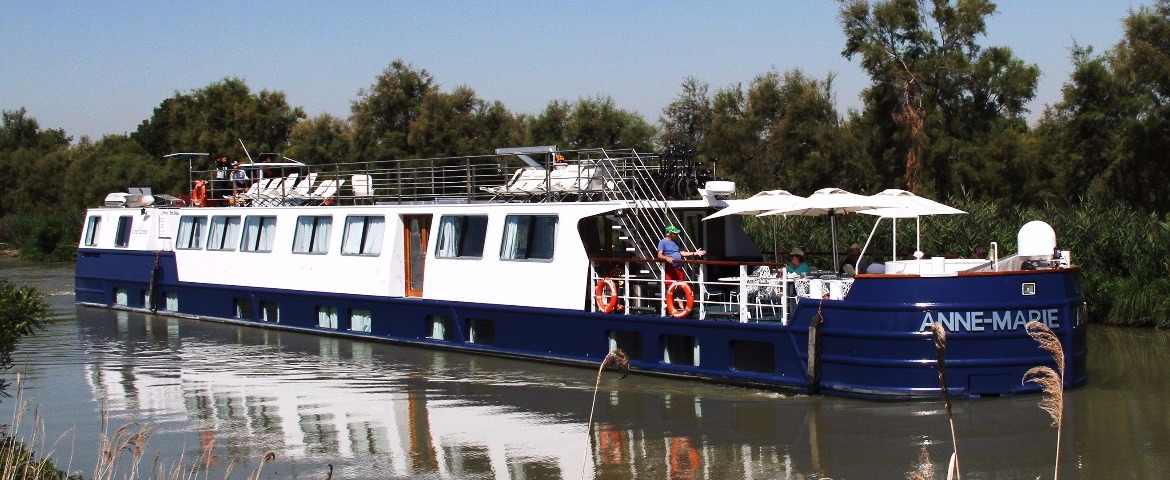
MS Anne-Marie
27 Cruises

| 1 April | 7 days | One-way from Arles to Sete |
450-628-6241
Call us
|
| 1 April | 6 days | One-way from Arles to Sete |
450-628-6241
Call us
|
| 6 May | 7 days | One-way from Sete to Arles |
450-628-6241
Call us
|
| 6 May | 6 days | One-way from Sete to Arles |
450-628-6241
Call us
|
| 24 June | 7 days | One-way from Arles to Sete |
450-628-6241
Call us
|
| 24 June | 6 days | One-way from Arles to Sete |
450-628-6241
Call us
|
| 5 August | 6 days | One-way from Arles to Sete |
450-628-6241
Call us
|
| 19 August | 6 days | One-way from Arles to Sete |
450-628-6241
Call us
|
| 19 August | 7 days | One-way from Arles to Sete |
450-628-6241
Call us
|
| 7 October | 7 days | One-way from Sete to Arles |
450-628-6241
Call us
|
| 7 October | 6 days | One-way from Sete to Arles |
450-628-6241
Call us
|

Port of Aigues-Mortes, France | Cruise Port Guide
Frequently Asked Questions
Right at the foot of the ramparts, on the Rhône-to-Sète canal. Only a few dozen metres separate the gangway from the Porte de la Gardette.
Yes, in five minutes through the Porte de la Gardette. No transport is needed: the whole town fits inside its walls.
The ramparts and the Tour de Constance on a combined ticket, about an hour and a half, then Place Saint-Louis and the church of Notre-Dame-des-Sablons. If time allows, the salt pans three kilometres away.
A round keep 33 metres high at the northwest corner of the walls, long used as a state prison. Huguenot women were held here after the revocation of the Edict of Nantes; Marie Durand spent thirty-eight years inside, and the word REGISTER carved on the well curb, still visible, is attributed to her.
Because they were barely touched. The 1,640-metre rectangle, finished after Louis IX, stands as built: original pale stone, no later rebuilding, no decorative additions, set flat on sand with no hill to support it.
Because in the mid-thirteenth century the kingdom of France had no direct access to the Mediterranean. Louis IX had this anchorage built among the lagoons and sailed from here on crusade in 1248, and again in 1270.
Yes. They lie three kilometres beyond the gates and are toured by little train, by bicycle or on an excursion. A micro-algae turns the basins pink, spectacular in summer, and salt workers still harvest fleur de sel by hand.
Yes, but on an organized excursion and only if the call lasts the day. Black bulls, white horses, reed beds and manades begin just past the salt pans.
Reasonably so: the little train through the salt pans and the climb onto the ramparts appeal to younger visitors. Be aware, though, that the wall walk and the Tour de Constance are reached by stone stairs with no lift, which rules out strollers.
The euro and French. Cards are accepted throughout the town's shops; a few producers in the covered market still prefer cash for small purchases.


