Winningen-Mosel Germany Rhineland-Palatinate
256
Cruises availables
At departure or passage at this port
Uniworld Boutique River Cruise (6 Cruises)

Viking River Cruises (250 Cruises)
Viking Longships Alsvin
6 Cruises
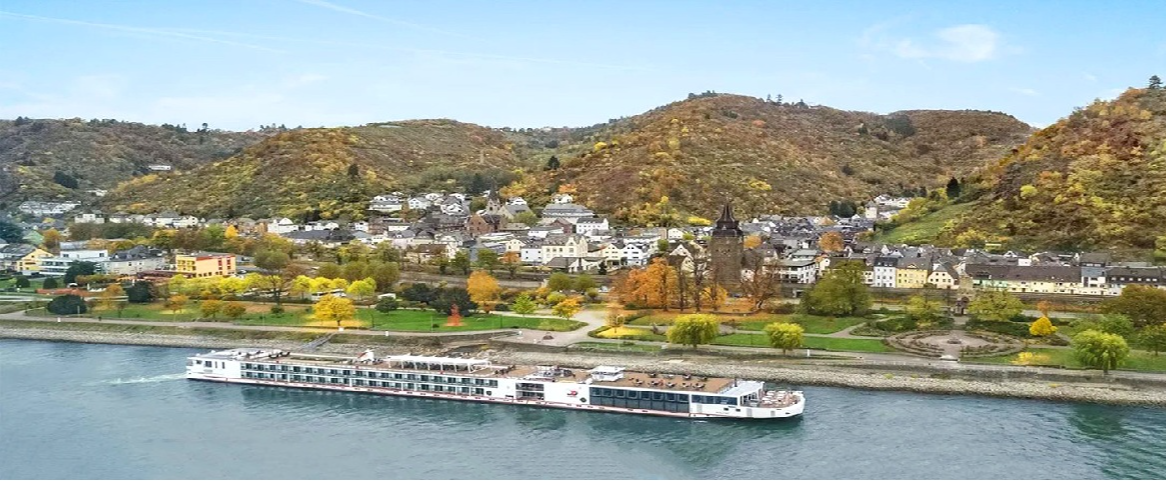
Viking Longships Herja
121 Cruises
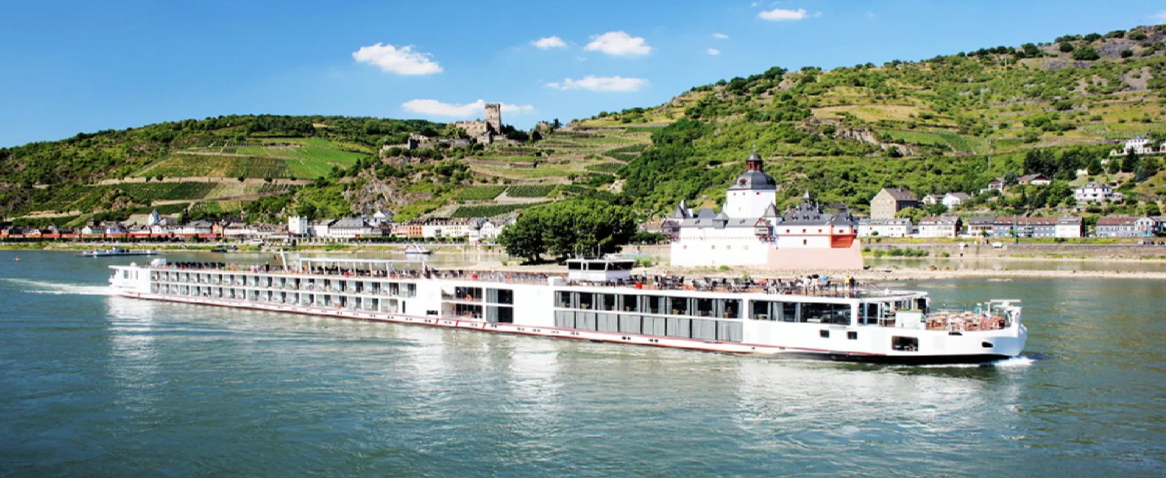
Viking Longships Hild
120 Cruises
Frequently Asked Questions
On the Moselle bank, a few steps from the lanes: from the gangway you are straight into the old village. Winningen lies only about ten kilometres from Koblenz, on the Lower Moselle.
The village's favourite fountain, where a bronze witch pours a drink in the middle of the square. It playfully celebrates the wine witch, but it covers a darker memory: the witch trials that struck the valley in the 17th century.
Timber-framed houses packed around growers' courtyards, and the Hornpforte, the last of the six gates of the vanished wall, still arching over the way through. The façades carry vintage dates, carved grape clusters, sometimes an entire vine trellis.
They are among the steepest on the continent. The Uhlen and Röttgen slopes are slate terraces held by kilometres of dry-stone walls, and small monorails hoist the crates into the steepest plots — the only machines that can work there.
Half an hour up from the village, on a path threading between the vines. The viewpoint gives you the bend of the Moselle, the blue-grey slate roofs and, in the distance, the huge motorway viaduct crossing the valley, one of the highest bridges in Germany.
Autumn, when the whole slope turns gold and the village holds its wine gathering, presented as the oldest wine festival in Germany. In spring, wild flowers colonize the stones of the dry-stone walls, which has its own appeal.
August Horch, born in 1868, the engineer who founded the marque that became Audi. The contrast raises a smile: a child of these narrow lanes who went off to motorize the world, while the village keeps to other speeds, those of the press and the cool cellar.
Yes, the open courtyards serve the house wine in the shade of an arbour, and a few food shops let you stock up on Moselle specialities. This is a village where you move at the pace of the residents.
Yes, the riverside path: orchards, gardens, anglers, small boats working upstream in no hurry. It is flat and short, unlike the vineyard trail, and it suits anyone who would rather not climb.
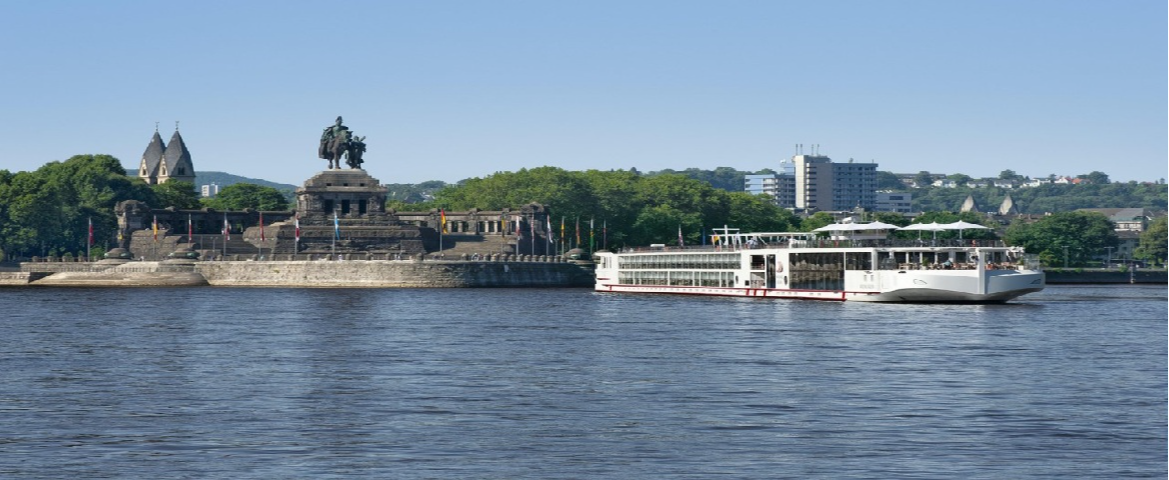
Often, yes. The Moselle slides downstream towards Koblenz, where it joins the Rhine at the foot of the Deutsches Eck, and several itineraries make Winningen the final stop before the confluence. Currency: the euro, with cash for the growers' courtyards.


