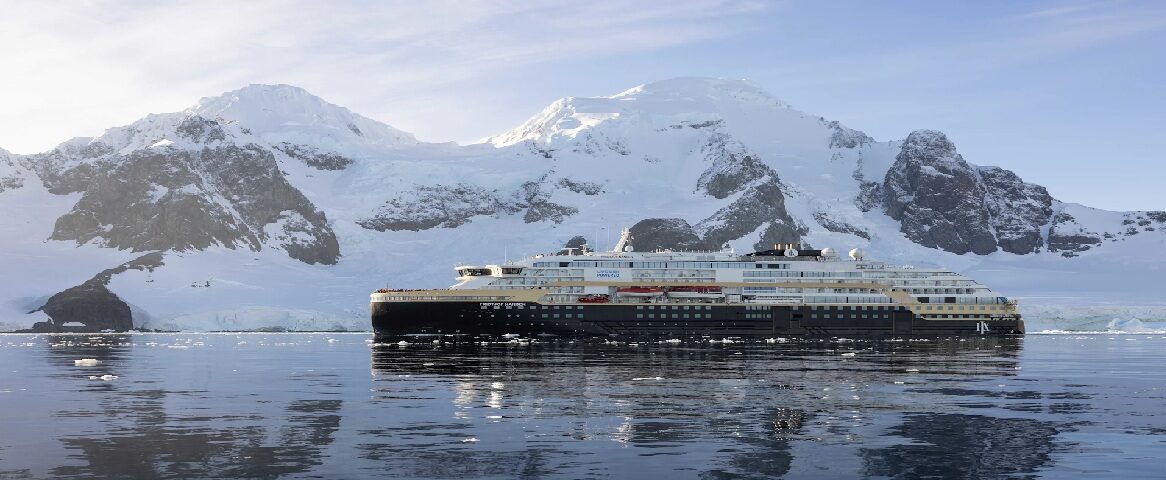
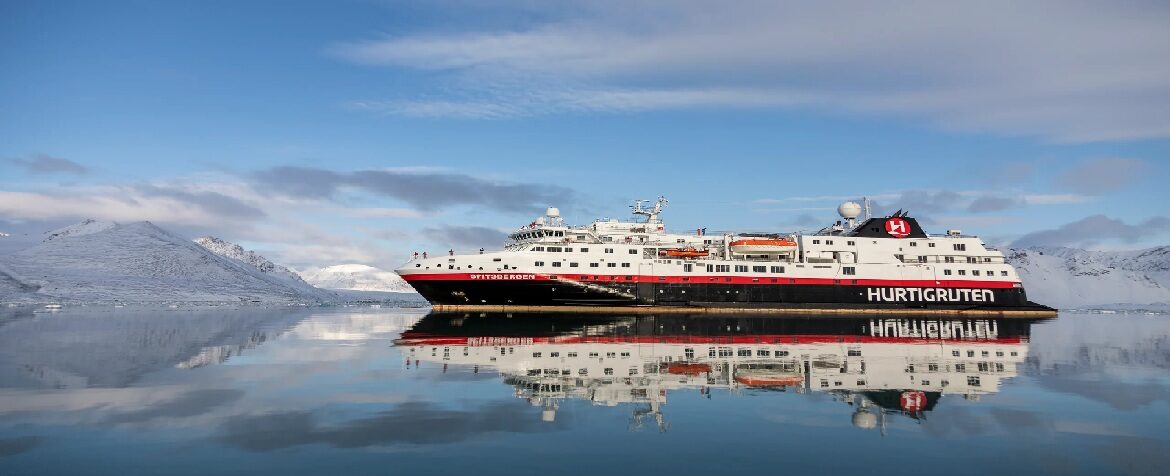
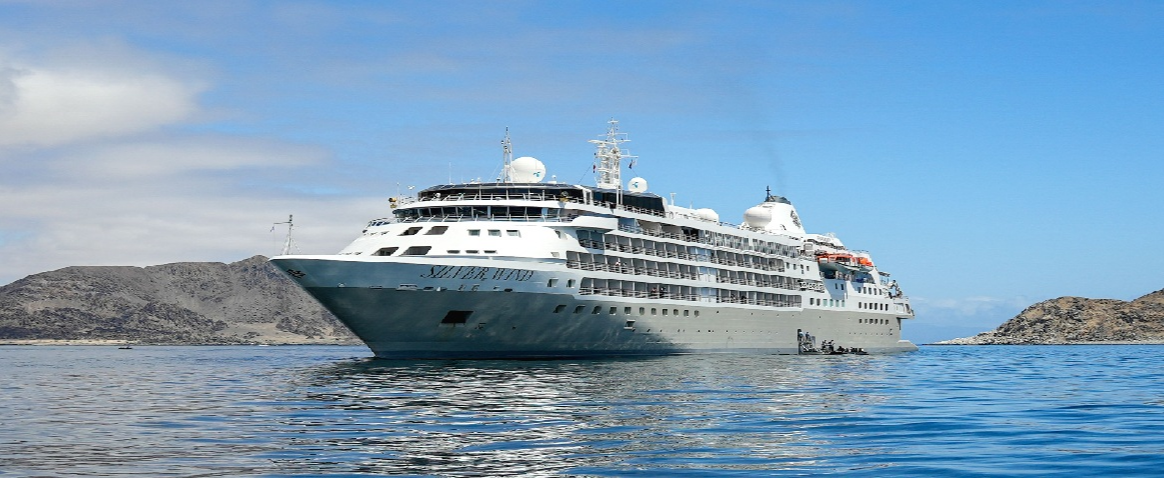
Silence is the first thing that hits you. As the expedition ship drops anchor in Borgarfjörður Eystri fjord, on Iceland's east coast, all that remains to be heard is the wind, the cries of seabirds and the lapping of water against the Zodiacs bringing passengers ashore. Ahead lies Bakkagerði, a village of about a hundred people, scattered between the shoreline and rhyolite mountains whose slopes shift through pink, orange and pale green depending on the light. Few Icelandic ports of call give such a strong sense of arriving at the edge of the inhabited world.

Hafnarhólmi, the Bird Island

The small wonder of this place sits right by the fishing harbour: the islet of Hafnarhólmi, connected to shore and fitted with wooden platforms and stairs. Every summer, around ten thousand pairs of Atlantic puffins come here to dig their burrows, joined by fulmars and black-legged kittiwakes. From mid-April to mid-August, visitors can watch from just a few metres away without disturbing the birds: puffins land awkwardly, waddle to their burrows, then head back out to fish. No giant telephoto lens or long hike required; it's one of the most accessible bird-watching sites anywhere in the country, and visitors tend to linger far longer than planned.

Álfaborg, the Elf Queen's Hill

Between the village and the mountains rises a rocky knoll with an evocative name: Álfaborg, the "City of the Elves." Local tradition places the home of the queen of the hidden people here, the huldufólk who have populated Icelandic stories for centuries. A short trail, no more than fifteen minutes' walk, leads to the top, where a viewpoint panel identifies the rooftops below, the fjord and the jagged peaks of the Dyrfjöll, the "Door Mountains." Whether or not you believe in elves hardly matters: standing up there, facing this treeless, light-swept landscape, it's easy to understand why locals populated these hills with invisible beings.

Quiet Treasures of the Hamlet

Bakkagerði can be explored in just a few minutes, and every detail counts. Lindarbakki House, with its turf walls and bright red facade, is one of the last inhabited turf houses left in Iceland; visitors photograph it discreetly, since people still live there. The church holds an altarpiece painted by Jóhannes S. Kjarval, one of Iceland's most beloved artists, who grew up in the region; it depicts Christ preaching from Álfaborg, with the local mountains in the background. A handful of colourful houses, a café, a tiny harbour where nets hang out to dry: life here is made of very little, and that's exactly what draws visitors.

Making the Most of This Expedition Port Call

  • Clothing: layer up with windproof and waterproof gear, even in the height of summer; weather changes fast in the Eastfjords.
  • Footwear: boots or hiking shoes for landings and trails.
  • Photography: puffins allow a close approach, but visitors should stay on the platforms and follow guides' instructions.
  • Pacing: two to three hours are enough for the islet, the hill and the village, with no need to rush.

Weighing Anchor, Reluctantly

Eventually the boats carry passengers back to the ship; the puffins keep up their steady traffic between sea and burrow, indifferent to the departure. Bakkagerði settles back into its silence, its colourful mountains and its stories of a hidden people. This port call appears on no list of major cruise highlights, and those who've set foot here seem almost glad of it: they get to keep, just for themselves, the memory of a tiny village, somewhere between elves and seabirds, that showed them Iceland's most secret face.

Frequently Asked Questions

By Zodiac. The expedition ship anchors in Borgarfjörður Eystri and passengers are landed by inflatable boats: there is no cruise berth here. This is an expedition call, with all the weather dependence that implies.
Three things, all within walking distance: the puffin islet of Hafnarhólmi, the hill of Álfaborg, and the hamlet itself — around a hundred residents scattered between the shore and rhyolite mountains tinted pink, orange and pale green. Two to three hours cover the lot without rushing.
Yes, and it is the main reason for the call. Beside the fishing harbour, the islet of Hafnarhólmi is connected to land and fitted with wooden platforms and stairs. Each summer roughly ten thousand pairs of Atlantic puffins dig their burrows there, alongside fulmars and kittiwakes. You watch from a few metres away, with no giant telephoto lens or long hike needed.
From mid-April to mid-August. Outside that window the birds are back out at sea and the islet loses most of its point. It is the one part of the programme that genuinely depends on the calendar.
A rocky knoll whose name means "the city of the elves". Local tradition places the home of the queen of the hidden people, the huldufólk of Icelandic tales, on this hill. A short path, a quarter of an hour at most, leads to the top, where an orientation table takes in the roofs, the fjord and the jagged Dyrfjöll, the "door mountains".
No, and it is worth knowing before you arrive. Lindarbakki, with its turf walls and bright red front, is one of the last inhabited turf houses in Iceland: people live there. Photograph it discreetly from the road, without crossing the fence.
An altarpiece painted by Jóhannes S. Kjarval, one of Iceland's best-loved artists, who grew up in the district. It shows Christ preaching from Álfaborg, with the local mountains behind him — a major work in a tiny village church.
Waterproofs, even in high summer: weather turns fast in the Eastfjords. Boots or walking shoes for the Zodiac landing and the paths. On the islet, stay on the platforms and follow the guides' instructions, even when a puffin lands a metre away.
Very few. A handful of colourful houses, one café, a tiny harbour where nets dry — life here fits into very little, and that is exactly what visitors come for. Do not count on shops, ticket offices or a choice of restaurants.
Almost, except those who dread inflatable boats. Once ashore the distances are short and the ground manageable, with the climb up Álfaborg the only real slope. That said, this call appears on no list of great cruise destinations: anyone looking for monuments and shopping will be disappointed.