Amorgos Island Katapola, Greece

21 Cruises availables At departure or passage at this port

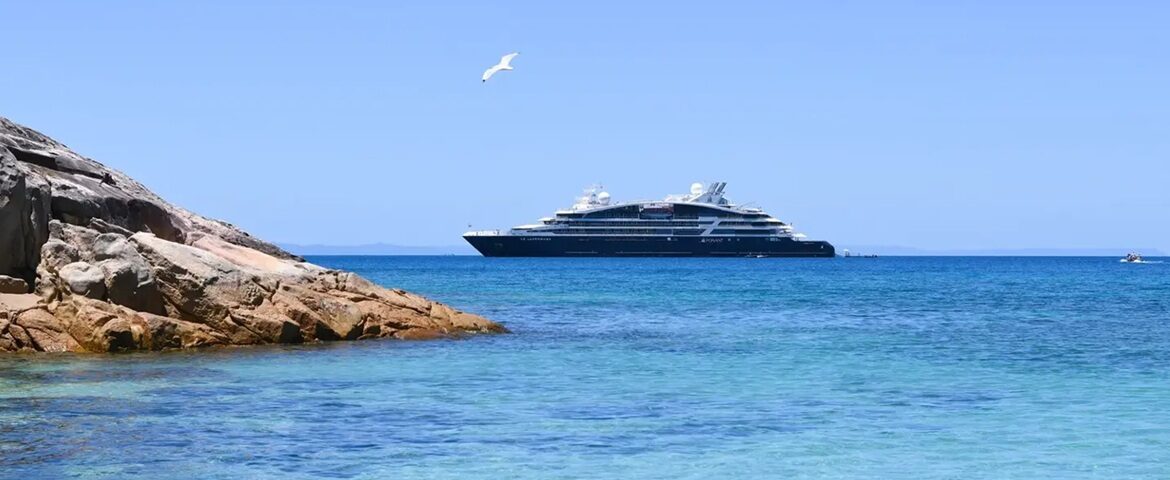
There are islands that cinema revealed to the world. Amorgos is one of them: Luc Besson shot scenes of The Big Blue there, and the sea indeed appears of a particular depth, almost inked. Ships anchor off Katapola, at the head of a sheltered bay where three hamlets share the shore, and the shuttle sets passengers ashore, between caïques and café terraces.

Katapola: First Contact

The bay itself deserves a glance: three hamlets face one another, linked by a shoreline road you traverse in minutes. On the hill that dominates the anchorage, archaeologists have uncovered remnants of ancient Minoa, a city active from the Bronze Age; a path climbs there for those wanting height early in the port-call.

On the main dock, the waterfront is toured without haste. Tamarisk trees shade the tables, fishers untangle their nets, a white chapel marks each turn. The island counts barely two thousand year-round residents, and you feel it: no one hurries, no one hails the passer-by. You take the place's pulse in minutes, a Greek coffee in hand, before heading to the heights, where the day's substance will play out between perched village and cliffs.

The Chora: A Village Around Its Rock

A bus climbs from the dock to the Chora, the main town, nestled in the heights around a peak crowned with the remains of a fortress. Lime-washed lanes slip under vaulted passages, between chapels, small squares and tiny gardens. Residents live there year-round, which preserves the place from interchangeable shop fronts: you still find the grocer, the cobbler, the kafenion where the elders play cards in the shade.

Hozoviotissa: The Monastery in the Cliff

Two kilometres from the Chora, a path then stairs of about three hundred steps lead to the sanctuary of the Panagia Hozoviotissa, founded in 1017 and rebuilt in 1088, making it one of Greece's oldest. The building, dazzling white, is wedged in a wall that falls three hundred metres into the Aegean Sea; eight storeys of cells fit within a few metres of rock's depth. At the end of the climb, monks receive visitors with Turkish delight and a glass of local liqueur. Covering dress is required: trousers for men, long skirt and covered shoulders for women.

The Blue Below

Below the monastery, the Agia Anna cove lines flat rocks and limpid water; it is one of the Cyclades' most photographed landscapes, and one of Besson's film locations. You can dip quickly before heading back, if the port-call schedule permits. Late-day light takes on tints there that photographers sometimes wait hours to catch.

Practical Reference Points

Disembarkation by shuttle to Katapola dock; the hamlet is toured entirely on foot. The Chora is accessible by bus or taxi from Katapola. The monastery involves about 300 stairs; bring water and covering dress. Agia Anna cove lies below the monastery, a short descent by road.

Descending back to the bay, the eye returns again and again to that wall where eight centuries of prayer hold in balance. The ship departs, the cliff fades, but the blue of Amorgos travels long in the memory of those who saw it close.

Frequently Asked Questions

By tender. Ships anchor off Katapola at the head of a sheltered bay, and passengers land at the main quay among the caiques and cafe terraces.
Entirely. Three hamlets face each other at the head of the bay, linked by a shore road you can cover in minutes. A path also climbs to the remains of ancient Minoa on the hill above the anchorage.
The bus up to Chora, then the monastery of Panagia Hozoviotissa and, if the schedule allows, a dip at Agia Anna cove. That is the classic plan, and it is a full one.
A sanctuary founded in 1017 and rebuilt in 1088, set into a cliff that drops three hundred metres to the Aegean. Eight storeys of cells fit into a few metres of rock depth: it is one of the oldest monasteries in Greece.
Yes, and it is worth knowing before you set off: roughly three hundred steps after a footpath, in full sun. Bring water. The monks welcome visitors at the top with a loukoumi and a glass of local liqueur.
Yes, covered clothing is required: trousers for men, long skirt and covered shoulders for women. It is not a formality; entry can be refused.
Yes, Luc Besson filmed scenes there, notably around Agia Anna cove below the monastery. It is one of the most photographed landscapes in the Cyclades.
A bus climbs from the quay to the main village, clustered around a crag topped by the remains of a fortress. It still has its grocer, its cobbler and the kafenion where the old men play cards.
With reservations. Katapola and Chora are easy to walk, but the three hundred steps to the monastery rule out toddlers and anyone with limited mobility. Swimming at Agia Anna is off flat rocks, not sand.
The euro and Greek. The island has barely two thousand year-round residents: bring cash, as cards are not accepted everywhere. English is spoken in the harbour tavernas, less so in the hamlets.