Hvalsey Greenland
Greenland

59 Cruises availables At departure or passage at this port

Seabourn Cruise Line (41 Cruises)

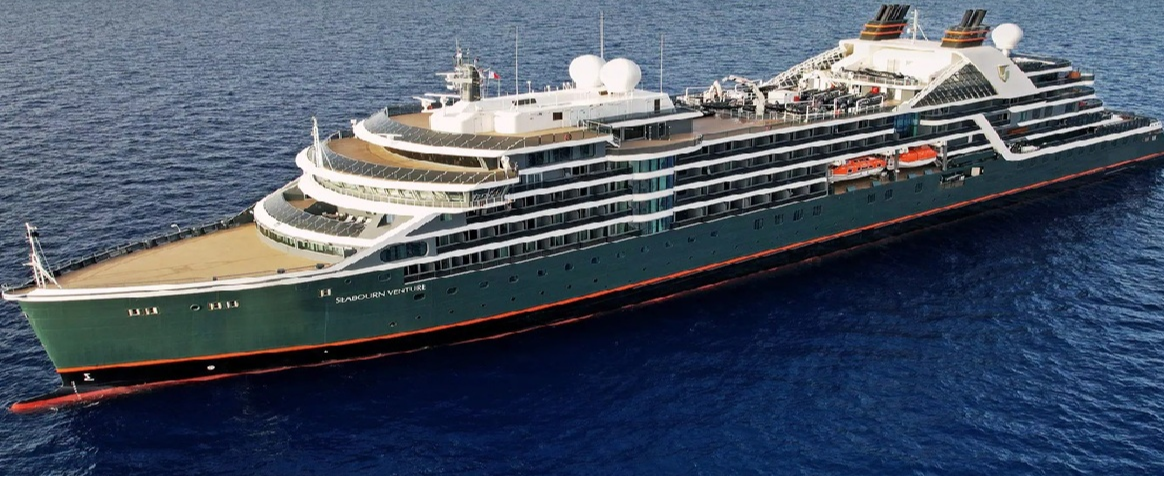
Seabourn Venture

Seabourn Venture

Visit the ship's page

Hvalsey, Greenland | Cruise Port Guide

Only grey stone walls remain, open to the sky, on the shore of a fjord in southern Greenland. No ticket booth, no road, not a roof for miles around. Hvalsey is a place you have to earn: it's reached by sea, by Zodiac from an expedition ship anchored in Hvalseyjarfjord, about a dozen nautical miles from Qaqortoq. Those who set foot on this shore walk toward the best-preserved Norse ruin in Greenland, and toward one of the great mysteries of North Atlantic history.

Landing in a Silent Fjord

The ship drops anchor facing the site, and Zodiacs shuttle back and forth to the shore. Landing depends on weather and swell, as always in these waters; the expedition team marks out the site and posts guides at key points. All around, the fjord unfolds like an amphitheatre of bare mountains, sometimes dotted with grounded icebergs. The silence is so complete you can hear water trickling down the slopes and the lone cry of a raven.

A Farm Founded by Erik the Red's Family

The story begins at the end of the 10th century, when Thorkell Farserk, a relative of Erik the Red, established his farm here among the first settlers to arrive from Iceland. For more than four centuries, these Norse families raised sheep and cattle on these slopes, hunted seal, and traded with Europe by ship. The remains of the barn, the great hall, and the enclosures can still be traced in the grass, like a floor plan laid out on the ground itself. Guides help bring to life the everyday existence of this surprisingly organized corner of the medieval world.

The Church of the Last Written Record

At the centre of the site stands the church, built in the early 14th century, its stone walls still rising several metres high. Its gables cut a startlingly sharp line against the sky after seven centuries of Arctic winters. This is where the mystery lies: in September 1408, a wedding was celebrated here, and the account of that ceremony is the last written trace of the Norse Greenlanders. After that date, nothing. The settlements vanished with no witness, climate cooling, isolation, and declining trade all playing a part, though exactly how the story ended remains unknown. Standing in the open-air nave where the last guests once danced leaves few visitors unmoved.

What You Need to Know

  • Access by sea only, via Zodiac; landing depends on weather conditions.
  • Easy walking on grassy, sometimes damp terrain; boots recommended.
  • No services on site: everything must be prepared aboard ship.
  • The site is part of South Greenland's Norse and Inuit farming heritage, listed by UNESCO under the name Kujataa.

Reading the Landscape

Beyond the stones, the land itself tells a story. The green slopes rising behind the ruin explain why the Norse chose this fjord: grass for livestock, a sheltered cove for boats, fresh water from a stream. Today, Greenlandic sheep once again graze nearby, raised by the region's Inuit farmers, a quiet echo of the vanished centuries. Photographers would do well to wait until the end of the stop: the low, raking light of southern Greenland turns the grey walls to pale gold.

The Weight of Silence

Passengers climb back into the Zodiacs quieter than they were on the way out. Hvalsey offers no gift shop, no built-up viewpoint, only a question posed between four stone walls: how can an entire world disappear, leaving behind no farewell but a marriage record? The ship raises anchor, the fjord closes behind it, and everyone carries away a fragment of that mystery, somewhere between the grass, the wind, and memory.

Frequently Asked Questions

Nowhere: there is no pier. The expedition ship anchors in Hvalseyjarfjord facing the site, and Zodiacs land passengers directly on the shore. Landing depends entirely on weather and swell.
By sea only. No road reaches Hvalsey. The site lies about twelve nautical miles from Qaqortoq and is reached by boat or inflatable.
The best-preserved Norse ruins in Greenland: the early 14th-century stone church, whose walls still stand several metres high, plus the byre, the great hall and the enclosures still legible in the grass like a floor plan traced on the ground.
Because a wedding was held there in September 1408, and the account of that wedding is the last written record of the Norse in Greenland. After that date the colonies died out without a witness.
A few hours: the Zodiac landing, the guided walk through the site and the return to the ship. There is not enough here to fill a full day, and no one pretends otherwise.
No. The ground is grassy and nearly flat, but often soaked. Boots or waterproof shoes with good grip are worth having.
None. No ticket office, no café, no toilets, no souvenir shop. Everything is prepared on board before landing: water, snacks, warm layers.
For children who can walk and listen, yes. The Zodiac ride is a thrill and the ground is safe, but nothing is set up for them: the interest of the visit rests entirely on the guide's storytelling.
The Danish krone (DKK) throughout Greenland, but there is nothing to buy at Hvalsey itself. Save your kroner for Qaqortoq or Narsaq.
June through early September, when expedition ships work their way up southern Greenland and the grass is green. Low evening light turns the grey walls pale gold.