Lofoten Islands Norway
Norway
18
Cruises availables
At departure or passage at this port
Hurtigruten (12 Cruises)
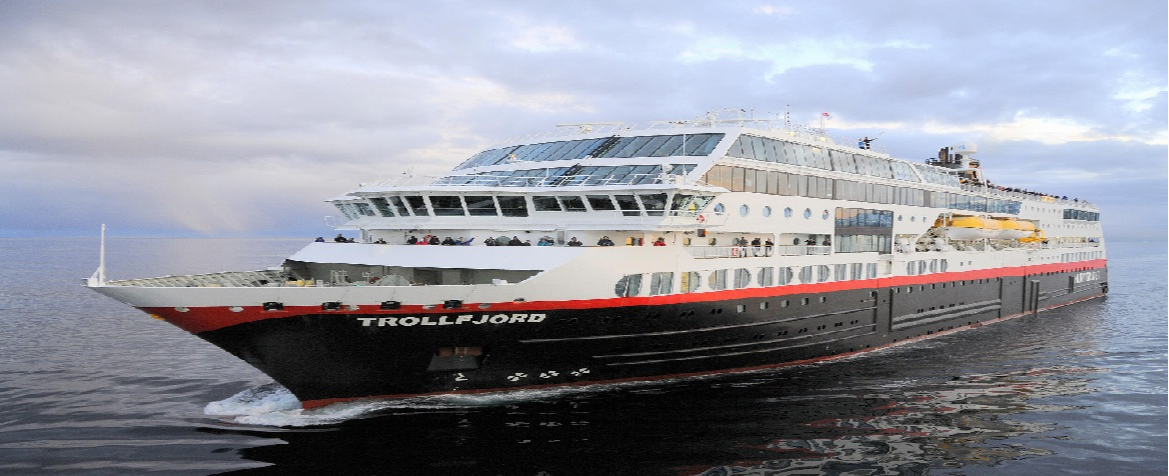
MS Trollfjord
12 Cruises

HX Expeditions (4 Cruises)


Lofoten Islands, Norway | Cruise Port Guide
Frequently Asked Questions
Because seen from the sea the range rises as a single mass: a granite rampart more than 100 kilometres long standing above the Norwegian Sea, north of the Arctic Circle. Then the ship draws near, the wall splits open, and the islands reveal villages of red cabins at the foot of the cliffs.
Most stop at Svolvaer, the archipelago's main town, where they berth alongside or tender in depending on size. The centre is walkable: artists' galleries drawn by the northern light for a century, harbour cafes, photographers' studios.
Svolvaer's goat, a two-horned rock pinnacle standing above the rooftops. Climbers go up it to leap from one horn to the other while onlookers watch. You can see it perfectly well from the harbour without climbing anything.
By fast boat from Svolvaer, several of them quiet electric craft, running up the Raftsundet strait. Allow two to three hours return. The walls drop hundreds of metres straight into ink-black water, and the cleft is barely 100 metres wide.
Yes, white-tailed sea eagles, those giant fishing eagles, often wheeling above the boats in the Raftsundet and the Trollfjord. It is one reason the quiet electric boats change the experience so much.
A fishing village turned artists' haunt, about 25 km from Svolvaer, reached by a road that hops from islet to islet. Wooden houses crowded around the basin, galleries in former cod warehouses, and that football pitch set on a rocky islet, regularly named among the most spectacular on earth. Allow half a day.
Because every winter the skrei, the Arctic cod, leaves the Barents Sea to spawn right here. Dried on those racks between February and June, the fish was already shipping to Italy in the Middle Ages, and Italy still wants it. This migration has fed these coasts for more than a thousand years.
Only on long calls: Reine and the western islands are about 130 km away by road. On an ordinary call you are better off choosing the Trollfjord or Henningsvaer than spending the day on a coach.
It depends entirely on the season. The midnight sun bathes the islands from late May to mid-July, and any sense of clock time dissolves. The first auroras sometimes dance above the masts from September. You will never see both on the same day.
Weather that changes fast in any season: showers pass through, the light comes back sharper than before. Dress in layers with a waterproof shell. The currency is the Norwegian krone (NOK) and cards work everywhere.


