Aalborg Denmark
Denmark

50 Cruises availables At departure or passage at this port

Viking Ocean Cruises (19 Cruises)

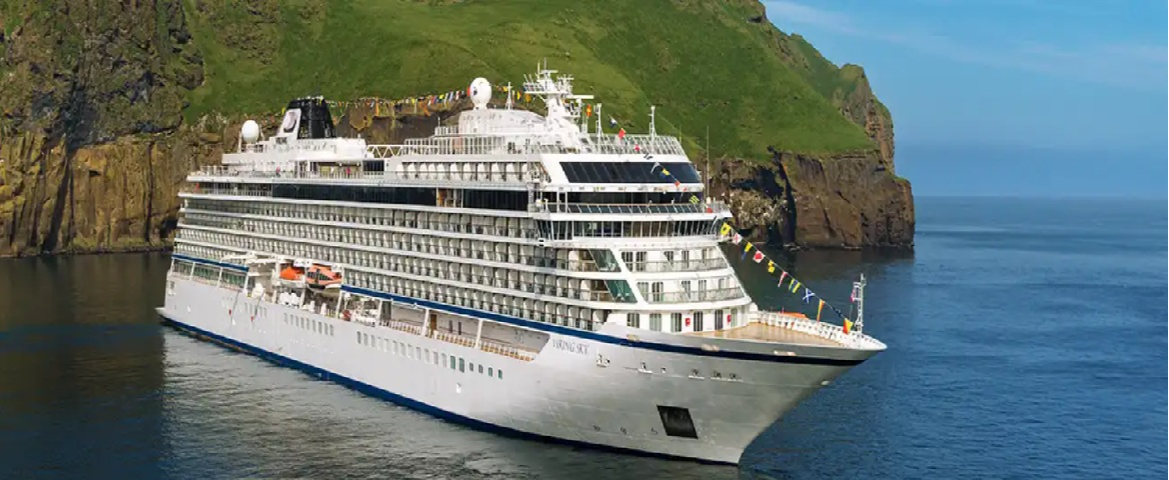
Viking Sky.

Viking Sky

48000 tons
Visit the ship's page

Twenty years ago, Aalborg's docks belonged to factories and warehouses. Denmark's fourth-largest city has since turned its face toward the Limfjord, the inland strait that crosses all of northern Jutland, and this rebirth is what the cruise passenger sees first: a lively riverside promenade, bold buildings, cafés facing the water. Your ship moors at Honnørkajen, right in the town centre. No shuttle to wait for: two minutes after the gangway, you're already walking its streets.

A Waterfront Designed by Utzon

A few hundred metres west of the dock, two buildings catch the eye. The Utzon Centre, with its curved roofs inspired by ships, pays homage to Jørn Utzon, the architect of the Sydney Opera House, who grew up in Aalborg; design and architecture exhibitions succeed one another inside. Nearby, the House of Music rises with its contemporary silhouette facing the fjord. The walk between the two, flat and open, sets the tone for your port call: here, heritage and creation coexist without conflict.

Old Aalborg, Merchant and Proud

Turning your back on the water, you reach the shopping streets of Algade and Bispensgade in five minutes. Between them lies the old core: cobblestone lanes, timber-framed houses leaning with age, courtyards flowering with colour. The most photographed building remains Jens Bangs Stenhus, a Renaissance mansion from 1624 whose red carved façade witnesses the fortune—and the unapologetic vanity—of a merchant who never won the city council seat he coveted. Nearby, Aalborghus Castle, a modest 16th-century timber-framed fortress, opens its courtyard to visitors. Add a stop at St. Budolfi Cathedral, whose carillon marks the hours of the neighbourhood, and leave room for serendipity: street sculptures, painted façades and hidden squares emerge around every corner in this compact centre.

The Vikings of Lindholm Høje

On the north shore of the Limfjord, about 10 minutes by taxi, the hill of Lindholm Høje preserves one of Scandinavia's largest Viking Age cemeteries: hundreds of graves marked by standing stones, some shaped like ships, scattered across a slope with far-reaching views. The adjoining museum displays objects excavated on site and reconstructs daily life in the communities that occupied the hill for more than a thousand years. For a half-day port call, this is the shore excursion that delivers the most.

AttractionDistance from the dockGetting there
Shopping streets and old town400 to 800 metresOn foot, flat terrain
Utzon Centre and House of MusicAbout 1 kilometreOn foot via the promenade
Lindholm HøjeAbout 7 kilometresTaxi, about 10 minutes

Aquavit and Danish Table Culture

Aalborg long distilled the country's aquavit, and the caraway-flavoured spirit remains linked to the city's name. You taste it, in moderation and well chilled, alongside smørrebrød, the Danish open-faced sandwich, in one of the surrounding restaurants. Those seeking atmosphere will spot Jomfru Ane Gade, a lane entirely devoted to bars and terraces: quiet in the morning, it awakens as the day advances. Those with a sweet tooth will search out a bakery for a kanelsnegl, the cinnamon-rolled brioche that accompanies every Danish coffee.

Walking back to your ship along the fjord, you appreciate the distance travelled by this former industrial city turned haven for architects and students. The Limfjord still flows at the same pace past the docks; it is the city itself that has changed course, and it gives you reason to return and see where that course is taking it.

Frequently Asked Questions

At Honnørkajen, right in the city centre on the Limfjord. There is no shuttle to wait for: two minutes after the gangway you are already on the pavements of Denmark's fourth city.
Yes, nearly all of it. The shopping streets and old town are 400 to 800 metres away over flat ground; the Utzon Center and the House of Music about 1 kilometre along the waterfront promenade. Only Lindholm Høje, some 7 kilometres out, needs a taxi.
The waterfront promenade to the Utzon Center, then the old core with Jens Bangs Stenhus and Budolfi Cathedral. If the call lasts half a day, the Lindholm Høje excursion gives the most in return.
A building with curved, ship-inspired roofs honouring Jørn Utzon, architect of the Sydney Opera House, who grew up in Aalborg. Design and architecture exhibitions follow one another there. Close by, the House of Music raises its contemporary outline facing the fjord.
The most photographed house in Aalborg: a Renaissance mansion from 1624 whose carved red facade attests to the fortune, and the unashamed vanity, of a merchant who never got the seat on the city council he coveted.
One of the largest Viking-age burial grounds in Scandinavia: hundreds of graves outlined by standing stones, some shaped like ships, scattered across a slope with a long view. The adjoining museum displays the objects unearthed on site.
The Danish krone. Denmark has not adopted the euro. Cards are accepted everywhere, even for a coffee: there is no need to withdraw cash for the day.
Danish, with fluent English throughout the population — the city has tens of thousands of students and the habit is entirely natural. French is rare, but English works everywhere.
A caraway spirit long distilled here for the whole country, still tied to the city's name. Drink it very cold and in moderation, alongside a smørrebrød, the Danish open sandwich, in one of the restaurants downtown.
A lane given over entirely to bars and terraces. Dormant in the morning, it wakes as the day goes on: if your call ends early, you will only see the sleeping version. Those with a sweet tooth should find a bakery and a kanelsnegl, the rolled cinnamon bun.