Departure

Return


Loading

Porto Travel from Canada: The Complete Guide

Porto is an easy transatlantic hop: Air Transat and Air Canada fly nonstop from Montréal in about 6 hours 40 minutes, and Air Transat links Toronto to Porto several times a week in roughly 7 hours. Canadian citizens do not need a visa for stays of 90 days or less in the Schengen area. Portugal's second city is at its best from May to September, when dry weather shows off the azulejo-covered churches, the bridges over the Douro and the riverside terraces of the Ribeira. The historic centre has been a UNESCO World Heritage Site since 1996, and the port wine lodges of Vila Nova de Gaia sit a ten-minute walk from the heart of town. Add a Douro Valley day trip and you get one of Europe's most complete city breaks.

The essentials at a glance

QuestionAnswer
Flight from CanadaNonstop from Montréal (about 6 h 40, Air Transat and Air Canada) and Toronto (about 7 h, Air Transat)
Visa for CanadiansNone for stays of 90 days or less (Schengen area)
Time difference5 hours ahead of Montréal and Toronto (4 hours for short periods in March and late October)
CurrencyEuro; 1 € is worth about 1.60 $ CA
LanguagePortuguese; English widely spoken in tourist spots
Best time to goMay to September; Douro harvest in September
DrivingRight-hand side; no car needed in the city, metro and walking cover it
Electricity230 V, European type F plugs; adapter required

Why Porto

Porto distils the best of Portugal into a compact package: a historic centre you can cross on foot in twenty minutes, a river spanned by six bridges, churches wrapped in blue tiles and century-old wine cellars right across the water. The city has character without feeling staged: laundry still hangs from Ribeira windows, tascas serve francesinha at shared tables and the renovated Bolhão market remains a genuine locals' market.

Value is among the best in Western Europe. A four-star hotel in the centre costs what a three-star charges in Paris, a hearty dinner runs 15 to 20 euros and a three-glass port tasting at a respected lodge is often under 25 euros. For travellers from Montréal and Toronto, the sub-7-hour nonstop changes the equation: leave Friday evening, wake up Saturday morning with breakfast overlooking the Douro.

Porto also works as an exceptional base. The Douro Valley, Guimarães, Braga and the beaches of Matosinhos are all reachable by train or metro, so a rental car stays optional. Many visitors start their Portuguese circuit here and continue south to Lisbon by train, a 3-hour ride that avoids backtracking.

When to go

PeriodClimate and atmosphereVerdict
December to FebruaryMild (9 to 15 °C) but rainy; quiet city, Christmas lights, lowest ratesFor flexible budget travellers
March-AprilCool spring (12 to 18 °C), frequent showers; camellias blooming in the gardensDecent, pack a rain jacket
May-June20 to 25 °C, long days; São João festival lights up the night of June 23-24Prime time
July-AugustWarm but tempered by the Atlantic (25 to 28 °C); full terraces, busy river cruisesVery good, book early
September-OctoberStill mild, Douro grape harvest, golden light on the riverPrime time, our favourite
NovemberRain returns (11 to 17 °C); new wine and roasted chestnut seasonOne for food lovers

How to get there from Canada

From Montréal-Trudeau, Air Transat and Air Canada both fly nonstop to Porto in about 6 hours 40 minutes, with early-evening departures arriving the next morning. From Toronto Pearson, Air Transat operates the direct route about five times a week, in roughly 7 hours, with a late-night departure. In low season some frequencies drop, and one-stop itineraries via Lisbon with TAP Air Portugal, via the Azores or through a European hub take over, adding one short connecting flight.

Francisco Sá Carneiro Airport sits 11 km from downtown: metro line E reaches Trindade station in about 25 minutes for a few euros, while a taxi or private transfer costs 20 to 30 euros. If your trip covers the whole country, consider an open-jaw ticket landing in Porto and returning from Lisbon: the Alfa Pendular train links the two cities in about 3 hours from Campanhã station.

Porto's neighbourhoods and must-sees

The Ribeira and the Dom Luís bridge

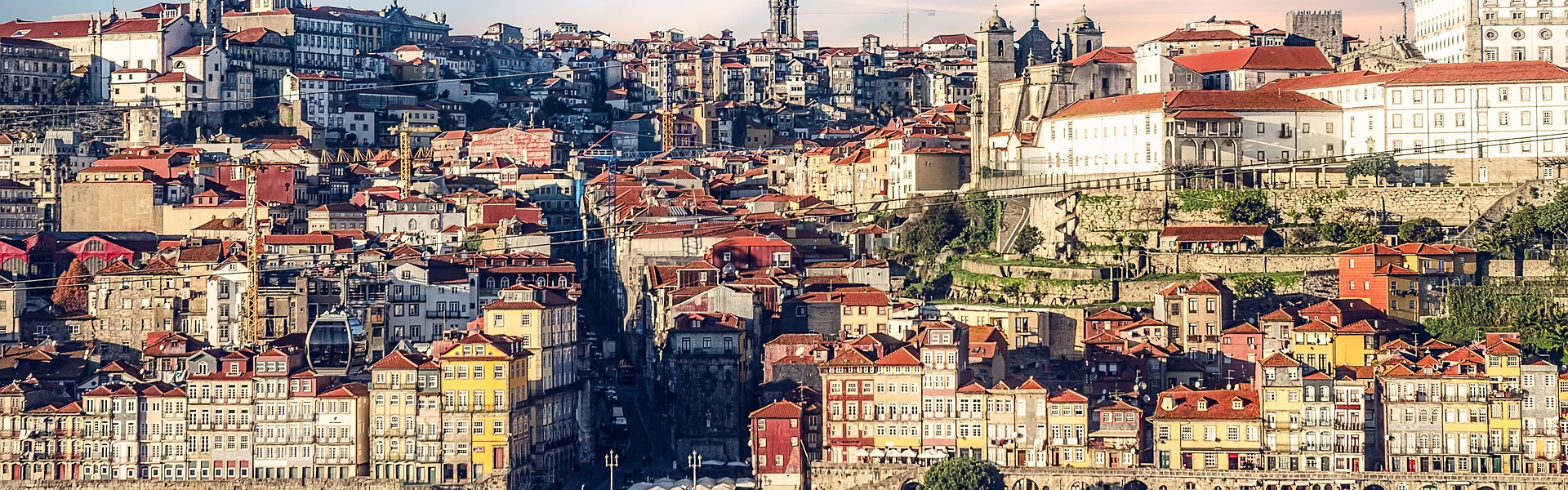
The UNESCO-listed riverside district lines up its colourful facades along the Douro. Walk across the upper deck of the Dom Luís bridge, designed by a disciple of Eiffel, for the most photographed view in Portugal, ideally at sunset. Quayside terraces cater to tourists; for better food, climb a street or two toward rua de São João.

Vila Nova de Gaia and the wine lodges

On the south bank, the great port houses open their cellars to visitors: Graham's, Taylor's, Sandeman, Cálem and Ferreira, each tour ending with a tasting. Book online in summer. The Gaia cable car makes a scenic descent to the quays, and the WOW district adds wine museums, restaurants and a panoramic terrace facing the old town.

Baixa, São Bento and the Lello bookshop

Downtown concentrates the icons: 20,000 azulejo tiles in the hall of São Bento station, the 240-step Clérigos tower, the Aliados avenue and the Lello bookshop, whose crimson staircase draws long lines; buy the timed ticket online, redeemable against a book purchase. Take a break at Café Majestic, the Belle Époque institution on rua Santa Catarina.

Cedofeita and Boavista

This more residential quarter holds the Casa da Música concert hall by Rem Koolhaas and the Serralves contemporary art museum, set in a remarkable park. Rua Miguel Bombarda clusters art galleries and independent shops; its simultaneous gallery openings on select Saturdays take the pulse of the city's creative scene.

Foz do Douro and Matosinhos

Historic tram number 1 follows the river out to Foz, where the Douro meets the Atlantic: a seafront promenade, the Felgueiras lighthouse and cafés facing the waves. Farther north, Matosinhos grills the best fish in the region on the streets behind its port, twenty minutes away on metro line A.

The Douro Valley day trip

Allow a full day: the Douro line train to Pinhão, a cruise from the Gaia quays or the scenic N222 road between Peso da Régua and Pinhão. Family-run quintas host tastings overlooking the terraced vineyards; September, harvest month, requires booking well ahead. Our Portugal guide covers the region in detail.

The budget, in Canadian dollars

ItemBudgetComfortHigh end
Round-trip flight from Montréal$700 to $900$900 to $1,300$2,800 and up (business class)
Accommodation (per night, 2 people)$80 to $140$150 to $280$320 to $650
Meals (per day, per person)$30 to $50$60 to $100$120 and up
Local transport (per day)$5 to $12$12 to $30$40 to $90 (taxis, transfers)
Activities and sightseeing (per day)$10 to $25$30 to $60$80 to $150 (private Douro tour)

These ranges are provided as a guideline, based on exchange rates and prices observed in 2025-2026. Porto runs slightly cheaper than Lisbon; prices climb noticeably in July-August and during the September harvest in the Douro.

Entry requirements and health for Canadian citizens

  • Visa: none required for tourist stays of 90 days or less in the Schengen area within any 180-day period.
  • Passport: must be valid for at least 3 months beyond your planned departure from the Schengen area.
  • EES: since October 2025, the European Entry/Exit System records your photo and fingerprints on first entry; allow a few extra minutes at border control.
  • ETIAS: this travel authorization is not yet in force; launch is expected in late 2026. Check travel.gc.ca before departure.
  • Official advisory: the Government of Canada recommends taking normal security precautions in Portugal, its lowest advisory level.
  • Health: keep routine vaccinations up to date; hepatitis B is suggested for most travellers. Porto's hospitals are of good quality.
  • Travel insurance: essential, since provincial health plans cover only a fraction of medical costs abroad; choose coverage that includes medical evacuation.
  • Footwear and hills: the city climbs steep slopes over cobblestones that turn slippery when wet; sturdy shoes save the day.

One last tip: three to four nights cover Porto plus a Douro excursion. The classic pairing with Lisbon, by train or on an open-jaw ticket, fills ten days without a dull moment.

A glass of port over the Douro at sunset sound like your kind of evening? The advisors at Voyages AquaTerra build your custom itinerary. 450-628-6241 | 1-866-628-6241 | info@voyagesaquaterra.com

Voyages AquaTerra est titulaire d'un permis du Québec.

Frequently Asked Questions

No visa is required for stays of 90 days or less in the Schengen area within any 180-day period. Your passport must remain valid for at least 3 months beyond your planned departure from the Schengen area. Since October 2025, the EES system records your photo and fingerprints on first entry, and ETIAS is expected to launch in late 2026. Check travel.gc.ca before you go.
About 6 hours 40 minutes nonstop from Montréal with Air Transat or Air Canada, and about 7 hours from Toronto with Air Transat, which flies the route several times a week. Departures leave in the evening and land early the next morning, local time. Connecting options via Lisbon or European hubs fill the gaps in low season.
May through September, with temperatures of 20 to 26 degrees and mostly dry weather; the São João festival on the night of June 23 to 24 is the city's biggest party. September adds the grape harvest in the nearby Douro Valley. Winters stay mild at around 14 degrees but are noticeably rainier than in Lisbon.
Yes. The Government of Canada advises taking normal security precautions for Portugal, its lowest advisory level. As anywhere, watch your belongings in busy spots like the Ribeira and São Bento station. The tourist core is comfortable to explore on foot, even in the evening.
As a guideline, plan on 1,900 to 3,200 Canadian dollars per person for a comfortable week including flights. Porto runs cheaper than Lisbon for both hotels and restaurants. A full meal in a neighbourhood tasca often costs under 18 euros, roughly 29 Canadian dollars.
Porto is 5 hours ahead of Montréal and Toronto for most of the year. The gap narrows to 4 hours for about two weeks in March and one week in late October, because Europe and North America change their clocks on different dates. Noon in Toronto is 5 p.m. in Porto.
At the lodges of Vila Nova de Gaia, on the south bank of the Douro facing the Ribeira. Graham's, Taylor's, Sandeman, Cálem and Ferreira all run guided tours ending with tastings; book online in high season. The WOW cultural district adds wine museums and terraces with views over the old town.
Yes, easily as a day trip. The Douro line train reaches Pinhão in about 2.5 hours, hugging the river on its most scenic stretch, and day cruises depart from the Gaia quays. By car, the N222 between Peso da Régua and Pinhão crosses the UNESCO-listed terraced vineyards.
Three full days cover the historic centre, the Gaia wine lodges and a sunset from the Dom Luís bridge. Add a fourth day for the Douro Valley or for Guimarães and Braga, both under 75 minutes away by train. Many travellers then continue to Lisbon by train, about 3 hours away.
Porto's signature dish: a grilled-meat sandwich blanketed in melted cheese and doused in a beer and tomato sauce, usually served with fries and topped with an egg. Café Santiago and Brasão are reliable addresses. Come hungry, because one francesinha is a full meal on its own.
  • #Travel
  • #Tourism
  • #What to do
  • #History
  • #Gastronomy
  • #Neighborhoods
  • #Culture
  • #Museums
  • #Nightlife
  • #Shopping
  • #Parks
  • #Monuments
  • #Art
  • #Architecture
  • #Portuguese Cuisine
  • #Beaches
  • #Markets
  • #Budget
  • #Travel Tips
  • #Transportation
  • #Airport
  • #Tourist Guide
  • #Excursions
  • #Activities
  • #Attractions
  • #Itineraries
  • #Accommodation
  • #Weather
  • #Climate.